
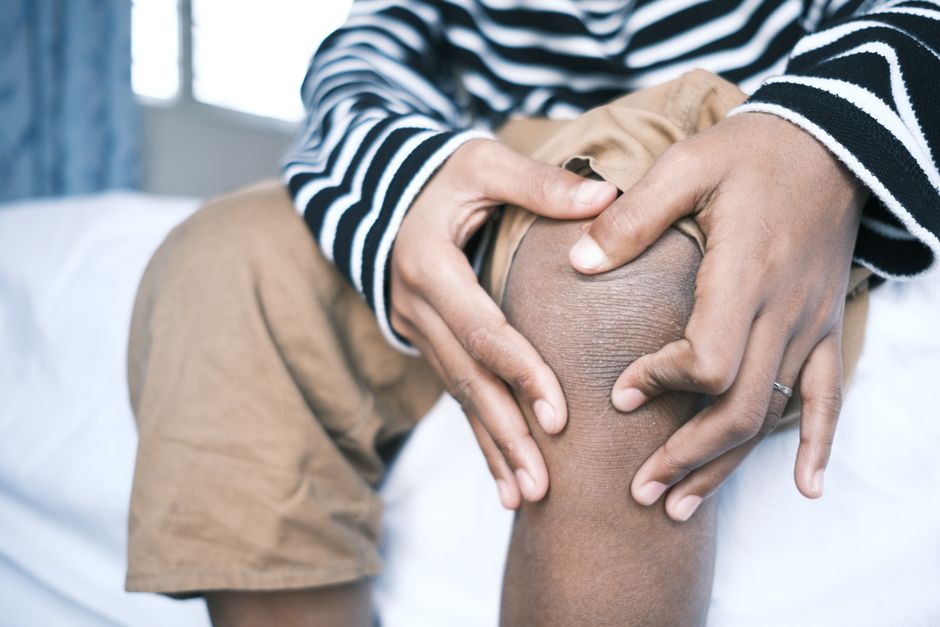
You walk fine on flat ground. Going down stairs is no problem. But every time you climb a set of stairs, your knee sends a sharp message that something is wrong. This specific pain pattern points directly to how your kneecap moves against your thigh bone. The short answer is that going upstairs puts roughly three to four times your body weight through the joint at an angle that your kneecap was not designed to handle when it is out of alignment. The most common cause is a condition called patellofemoral pain syndrome, and the good news is that most people can fix it without surgery or strong medications.
What Exactly Happens in Your Knee When You Go Up Stairs?
Your knee is not a simple hinge. It is a complex joint where your thigh bone meets your shin bone, with your kneecap floating in front. The kneecap sits in a groove at the bottom of your thigh bone. When you climb stairs, your knee bends to about 90 degrees. At this angle, the pressure between your kneecap and the thigh bone increases significantly.
Research published in the Journal of Orthopaedic Research found that the force across the patellofemoral joint can reach 3.3 times your body weight during stair climbing. Compare that to walking on flat ground, where the force is only about half your body weight. That is a massive difference. If your kneecap is not tracking perfectly in its groove, that extra force gets concentrated on a small area of bone and cartilage rather than being spread evenly.
Think of it like pressing your thumb into a piece of clay. Light pressure leaves a small dent. Heavy pressure pushes deep. That concentrated force is what causes the sharp pain. The mechanics explain why you feel nothing on flat ground but something on stairs. Your body is simply telling you that a specific movement pattern is causing abnormal stress in a small area.
Is It Arthritis or Something Else?
Many people assume knee pain means arthritis is starting. That is not always the case, especially with stair-specific pain. Arthritis typically causes a dull ache that gets worse with activity in general and often feels better with rest. Stair-only pain is more mechanical and positional.
The most common cause of stair pain is patellofemoral pain syndrome, sometimes called runner’s knee. This is not arthritis. It is a tracking problem. Your kneecap is pulled slightly to one side as you bend your knee, usually toward the outside of your leg. The cartilage underneath the kneecap gets irritated, but it is not worn away like in arthritis.
Another possibility is patellar tendinitis, which is inflammation of the tendon connecting your kneecap to your shin bone. This usually causes pain at the front of the knee just below the kneecap. Stair climbing loads this tendon heavily. If you feel pain right at the bottom edge of your kneecap, tendinitis is more likely than a tracking problem.
Meniscus tears can also cause stair pain, but they usually hurt going down stairs too. A torn meniscus often causes a catching or locking sensation. If your knee feels like it is getting stuck or you hear a click with pain, a meniscus issue is worth discussing with a doctor.
Why Do I Have Knee Pain Only When Going Up Stairs and Not Down?
This question gets to the heart of the mechanics. Going up and down stairs are different movements. Going up is a concentric movement, meaning your quadriceps muscle shortens as it contracts to lift your body. Going down is an eccentric movement, where your quadriceps lengthens under tension to control your descent.
During stair ascent, your kneecap is compressed against your thigh bone at maximum force right when your foot pushes off the step. This is the moment of peak pressure. The angle of your knee at push-off is exactly where many people have poor tracking. Your quadriceps muscle pulls your kneecap upward, but if the inner part of that muscle is weak, the kneecap gets pulled to the outside instead of staying centered.
Going down stairs also loads the knee, but the angle is different and the force is distributed more across the entire joint surface. The pain pattern of up-only stairs is so specific that physical therapists often use it as a diagnostic clue. It strongly points to a muscle imbalance problem rather than a structural joint disease.
Some studies suggest that weakness in the vastus medialis obliquus, which is the teardrop-shaped muscle on the inner side of your thigh, is a major contributor. This muscle is responsible for the final 30 degrees of knee extension and helps keep your kneecap centered. When it is weak, your kneecap drifts laterally, and stairs become painful.





What Can You Actually Do About It?
The evidence is clear that strengthening exercises are the most effective treatment for patellofemoral pain syndrome. A 2018 review in the British Journal of Sports Medicine analyzed 31 studies and found that exercise therapy significantly reduces pain and improves function. The key is targeting the right muscles.
| Exercise | What It Targets | Why It Helps |
|---|---|---|
| Straight leg raises | Quadriceps without knee bending | Strengthens without compressing kneecap |
| Step-ups (low step) | Controlled stair movement | Retrains proper tracking at low load |
| Clamshells | Hip abductors | Stabilizes hip, reducing knee stress |
| Wall sits (partial range) | Quadriceps endurance | Builds strength without full compression |
Hip strength matters more than most people realize. Your knee does not exist in isolation. Your hip controls where your thigh goes, and that directly affects how your kneecap tracks. Weak hip muscles allow your thigh to rotate inward, which pulls your kneecap out of alignment. Strengthening your glutes and hip abductors often reduces knee pain even without doing direct knee exercises.
Stretching is less important than strengthening for this condition. Tight hamstrings or calves can contribute, but the primary driver is weakness, not tightness. If you stretch for 10 minutes and never strengthen, you will likely see minimal improvement. Focus your energy on strength work.
When Should You See a Doctor?
Most stair-related knee pain improves with consistent exercise within four to six weeks. If you have been doing targeted strengthening for two months with no change, it is time for a professional evaluation. A physical therapist can assess your specific movement patterns and identify exactly which muscles are weak or tight.
See a doctor sooner if you have any of these signs:
- Swelling that does not go down with rest
- Pain that wakes you up at night
- Your knee gives out or buckles
- You cannot bear weight on that leg
- The joint feels hot or looks red
These symptoms can indicate a more serious issue like a stress fracture, infection, or ligament tear. Stair pain alone rarely points to these problems, but it is worth ruling them out if something feels off.
Imaging is not always needed. The American Academy of Orthopaedic Surgeons recommends against routine X-rays or MRIs for suspected patellofemoral pain unless conservative treatment fails. Imaging often shows age-related changes that are not actually causing your symptoms, which can lead to unnecessary worry or procedures. Let your symptoms guide the decision, not a scan.
Common Misconceptions About Stair Knee Pain
One widespread claim is that stair pain means you need to stop all activity. That is not supported by evidence. Complete rest can actually make the problem worse by allowing your muscles to weaken further. The goal is to find activities that do not provoke pain while you strengthen the supporting muscles. Swimming and cycling with low resistance are usually well tolerated.
Another myth is that knee braces or tape will fix the problem long term. Taping can provide temporary relief by changing how your kneecap tracks during a specific activity. A 2019 study in the Journal of Athletic Training found that taping reduced pain during stair climbing immediately in some people. But it does not address the underlying weakness. If you rely on tape alone, the pain returns when you stop using it. Use tape as a short-term tool, not a solution.
Some people believe that cracking or popping in the knee means something is wrong. This is not necessarily true. Many healthy knees make noise without pain. The sound itself is not a problem. It is only concerning if the noise is accompanied by pain, swelling, or a catching sensation. Painless clicking can usually be ignored.
The idea that glucosamine or chondroitin supplements fix stair pain is not backed by strong evidence for this specific condition. The largest studies on these supplements have focused on osteoarthritis, not patellofemoral pain syndrome. For tracking problems, the research consistently points to exercise as the primary treatment, not supplements.
Frequently Asked Questions
Can weak glutes cause knee pain going up stairs?
Yes, weak glutes allow your thigh to rotate inward, which pulls your kneecap out of its groove. Strengthening your hip muscles often reduces stair pain even without direct knee exercises.
How long does it take to fix knee pain from stairs?
Most people see improvement within four to six weeks of consistent strengthening exercises. Full recovery can take up to three months depending on how long you have had the pain.
Is it safe to keep walking up stairs with knee pain?
If the pain is mild and goes away quickly after you stop, walking stairs is probably safe. If pain is sharp, lasts more than an hour, or causes limping, avoid stairs until you have addressed the muscle weakness.
Does losing weight help knee pain going up stairs?
Yes, every pound of body weight adds roughly three to four pounds of force across your kneecap during stair climbing. Weight loss reduces the mechanical load on the joint significantly.
