
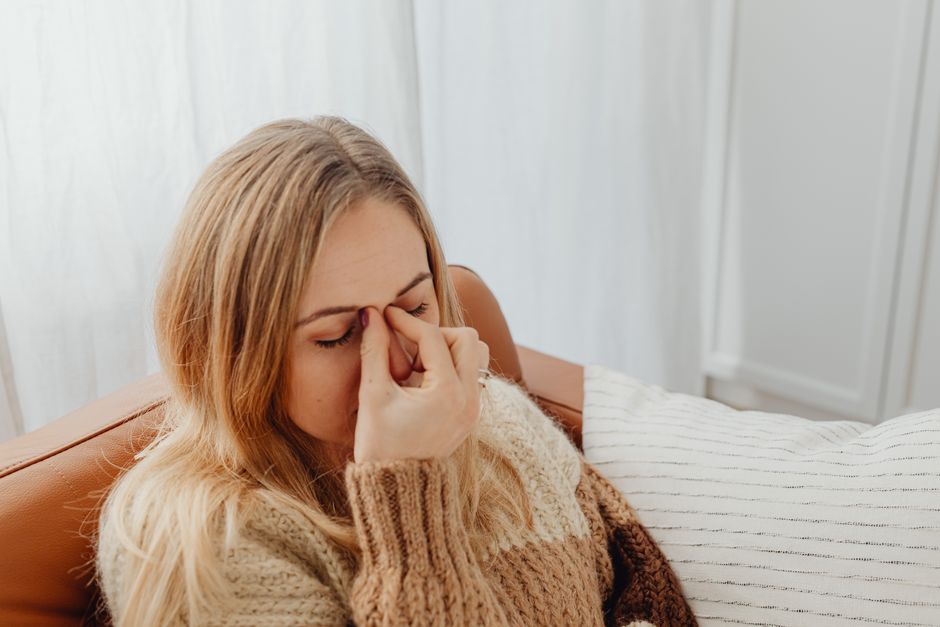
Feeling unsettled at home usually comes down to your body staying on alert in a place it should read as safe. That can happen for several reasons: a real change in your health, a stressful event that never fully resolved, a sensory or environmental trigger you have not noticed yet, or a mental health condition such as an anxiety disorder. The feeling is common. It is also something you can learn to recognize and describe clearly, which is the first step toward getting the right help.
This guide explains what that unease often means, what it does not mean, and when it deserves a conversation with a doctor.
What Does It Mean When Your Own Home Feels Unsettling?
Home is where your nervous system is supposed to downshift. When it does not, something is keeping your body in a mild state of readiness.
The most useful way to think about this is through arousal. Your brain has a system that scans for threat and a system that stands down when no threat is found. Chronic stress, poor sleep, grief, and some medical conditions can keep the first system running and the second one from doing its job. The result is a background hum of unease that follows you from room to room.
There is also a memory component that gets overlooked. If something difficult happened in your home, or if your home became the place where you worried, paced, or waited for bad news, your brain can start linking the environment itself to that state. This is not weakness or imagination. It is how context-based learning works.
What this usually does not mean is that something is wrong with the house. Haunted-house framing aside, the feeling is almost always about your internal state meeting your environment, not about the building.
Why Do I Feel Unsettled In My Own House?
The causes fall into a few broad groups, and most people are dealing with more than one at the same time.
- Stress that never resolved. A job loss, a health scare, a relationship rupture, or a long stretch of caregiving can leave your body primed long after the event passed.
- Anxiety disorders. Generalized anxiety, panic disorder, and post-traumatic stress disorder all produce a sense of threat that does not match the moment.
- Depression. Depression is not only sadness. Restlessness, irritability, and a flat, uneasy feeling at home are common.
- Sleep debt. Even short-term sleep loss raises emotional reactivity and makes neutral settings feel off.
- Medical causes. An overactive thyroid, abnormal heart rhythms, low blood sugar, and some medications can all produce a physical sense of agitation that gets misread as a feeling about the house.
- Substance effects. Alcohol, cannabis, stimulants, and caffeine can all raise baseline anxiety, sometimes hours after use.
- Environmental triggers. Noise, poor air quality, harsh lighting, and clutter can raise stress load without you consciously noticing.
The distinction that matters most is whether the feeling is tied to your thoughts or to your body. If your heart races and you feel shaky before any worried thought arrives, a medical or substance cause deserves attention first.
Is It Anxiety Or Something Physical?
This is the question that trips up the most people, because the two overlap heavily.
Anxiety produces real physical symptoms: a fast heartbeat, tight chest, sweaty palms, a churning stomach, and muscle tension. A medical condition can produce those same symptoms with no anxiety involved. That is why the physical symptoms alone cannot tell you which one you are dealing with.
A few patterns do point in different directions. Symptoms that come in sudden peaks and then pass are more typical of panic. A constant, day-long hum of worry that moves between topics is more typical of generalized anxiety. Symptoms that are worst in the morning, or that come with unexplained weight change, heat intolerance, or a visibly irregular pulse, are worth a medical workup.
There is no blood test for anxiety. There is also no reliable way to rule out a thyroid or heart issue from how you feel. If the physical symptoms are new, worsening, or frightening, see a clinician. That is not overreacting. It is the correct sequence.





What Your Body Is Doing When You Feel On Edge At Home
Your body is running a stress response without a clear external threat to point at, and that mismatch is what makes the feeling so hard to name.
When your brain perceives threat, it releases hormones including adrenaline and cortisol. Heart rate rises, breathing speeds up, muscles tense, and attention narrows. This system is built for short bursts. When it stays switched on, you get the familiar set of complaints: trouble concentrating, feeling jumpy, a tight chest, and a sense that you cannot fully relax even in your own living room.
Breathing is the part you can actually influence, and it is the reason slow breathing shows up in so many stress-management approaches. Slow, extended exhales shift the balance toward the part of your nervous system that supports rest. This is well established as a short-term calming tool. What it is not is a treatment for an anxiety disorder or a substitute for care.
One clarification worth holding onto: a racing heart does not prove you are anxious, and feeling calm does not prove you are well. Symptoms and causes do not line up that neatly.
When Should You Take This Feeling Seriously?
Take it seriously when it starts costing you something.
That includes avoiding rooms in your own home, sleeping poorly for weeks, withdrawing from people, drinking more to take the edge off, or noticing that the feeling is getting worse rather than settling. Any of those is a reason to talk to a doctor or a licensed mental health professional.
Seek care urgently if you have thoughts of harming yourself or someone else, or if you feel unable to keep yourself safe. In the US, you can call or text 988 to reach the Suicide and Crisis Lifeline at any time.
There is no blood test or scan that diagnoses this feeling, and there is no single threshold that says you have crossed a line. The practical rule is simpler: if it is interfering with your daily life, it is worth an appointment.
What Helps, And What The Evidence Actually Shows
The approaches with the strongest support are the ones that address the underlying driver, not the feeling itself.
For anxiety disorders, cognitive behavioral therapy has the most consistent evidence behind it, and it is widely used as a first-line treatment. For some people, medication is also effective, and the choice is made with a clinician based on the specific condition and history. These are well-established directions, not fringe ideas.
For general stress and poor sleep, the evidence is more modest but still reasonable. Regular physical activity, consistent sleep and wake times, limiting alcohol and caffeine, and structured relaxation practices all show up in the research as helpful for stress and mood. They work gradually. They are not fast fixes.
What the evidence does not support is the idea that clearing clutter, rearranging furniture, or buying a specific product will resolve a persistent sense of unease. Those changes can make a room more pleasant. No clinical evidence confirms they treat anxiety or an underlying medical condition.
If you want somewhere to start while you wait for an appointment, the most useful step is tracking. Note when the feeling appears, what you were doing, how long it lasted, and whether it came with physical symptoms. That record is genuinely useful to a clinician, and it often reveals a pattern you could not see in the moment.
Frequently Asked Questions
Why do I feel uneasy in my own home for no reason?
A persistent sense of unease usually reflects an ongoing stress response, an anxiety or mood condition, poor sleep, or a medical issue such as thyroid problems. It rarely means the house itself is the problem.
Can anxiety make your own house feel strange or unfamiliar?
Yes. Anxiety and dissociation can make familiar settings feel distant or unreal, which is a recognized symptom rather than a sign of something supernatural. If it happens often, it is worth discussing with a clinician.
Is it normal to feel unsettled at home after a stressful event?
It is common, and for many people it fades as the stress resolves. If it lasts for weeks, gets worse, or starts affecting sleep and daily life, that is the point to seek help.
When should I see a doctor about feeling on edge at home?
See a doctor if the feeling is interfering with sleep, work, or relationships, or if it comes with physical symptoms like a racing heart or unexplained weight change. Seek urgent help if you have thoughts of harming yourself.
