
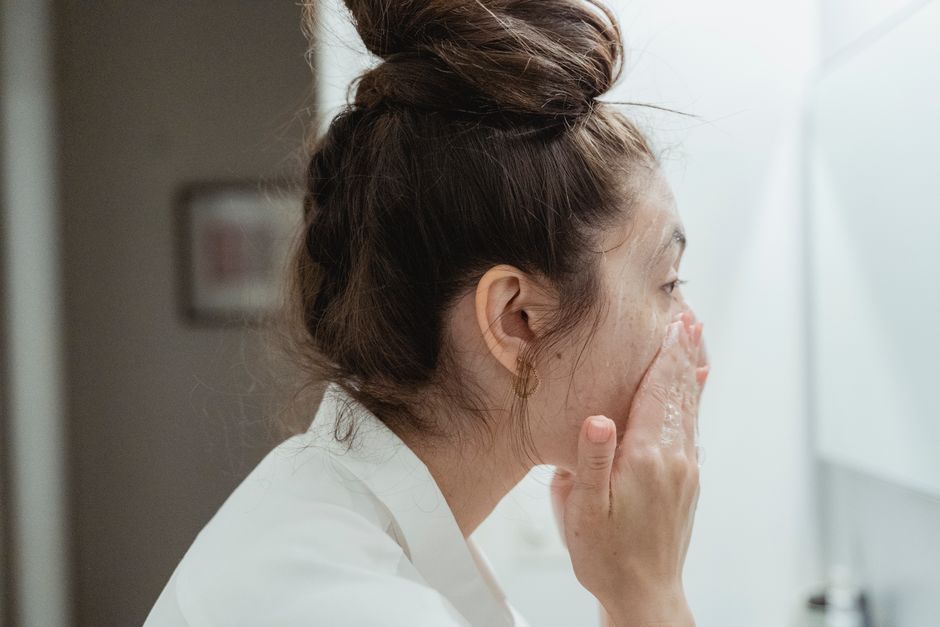
You wash your face to get clean, not to wake up with new pimples. If you notice fresh breakouts right after washing, the problem is usually one of three things: the cleanser is stripping your skin, the product contains something your skin reacts to, or the washing itself is physically irritating your pores.
The short answer: breakouts after washing are not caused by “releasing toxins” or by dirt being pushed deeper. They come from irritation, barrier damage, or a reaction to an ingredient. Once you identify which of those is happening, the fix is usually simple.
Why Do I Break Out When I Wash My Face Causes Fixes?
There are four real mechanisms behind post-wash breakouts, and they are not equally common.
Irritation from harsh cleansing. Soap-based cleansers and products with high concentrations of surfactants strip the skin’s lipid barrier. When that barrier is damaged, the skin loses water, becomes red and inflamed, and becomes more vulnerable to bacteria. This can look like acne even when it is really irritation. The bumps tend to appear quickly, often within hours, and are frequently accompanied by tightness, stinging, or flaking.
Contact reaction to an ingredient. Fragrances, essential oils, preservatives, and some botanical extracts are common triggers. A contact reaction can produce small red bumps or a rash that resembles acne. The key difference is that true acne takes days to form, while a reaction can show up the same day.
Physical friction. Scrubbing with a washcloth, using a rough exfoliating brush, or rubbing hard with your hands creates micro-trauma. Friction can push bacteria and debris into hair follicles, and it can also rupture existing pimples, spreading inflammation to nearby skin.
Over-washing. Washing more than twice a day, or using hot water, strips the barrier repeatedly. The skin responds by producing more oil, which does not itself cause acne but can worsen the environment for clogged pores.
What is not happening: your face is not “detoxing.” Skin does not release toxins through pimples. That claim has no basis in human physiology.
Is It the Cleanser or Something Else?
Most people blame the cleanser first, and often correctly. But the cleanser is not always the culprit.
If breakouts appear within hours of washing and are accompanied by redness or stinging, the cleanser is the likely cause. If breakouts appear in the same spots you normally get acne, and washing only seems to make existing acne more visible, the cleanser may be incidental.
Consider these possibilities:
- You changed cleansers recently and the timing lines up.
- You started using a new moisturizer, sunscreen, or makeup at the same time.
- You began washing more often, or with hotter water.
- You started using a new towel, pillowcase, or laundry detergent.
- You are taking a new medication that can cause acne as a side effect.
If more than one thing changed at once, it is hard to know what caused what. The practical approach is to change one thing at a time and wait at least two weeks before judging.
What Ingredients in Cleansers Cause Breakouts?
Not every ingredient that gets blamed for acne actually causes it. Some have solid evidence, some have weak evidence, and some are myths.
Well-established irritants: Sodium lauryl sulfate (SLS) is a strong surfactant that can strip the skin barrier in people who are sensitive to it. Fragrance is a common cause of contact dermatitis. Essential oils like citrus, peppermint, and eucalyptus can irritate sensitive skin.
Commonly blamed but not well-supported: Mineral oil has been used in skincare for decades and is generally considered non-comedogenic in cosmetic grades. Silicones like dimethicone are often blamed for clogging pores, but the evidence for this in leave-on products is weak. Coconut oil is comedogenic in some testing models, but those models do not perfectly predict what happens on the face.
Ingredients that can genuinely clog pores: Some heavier oils and butters, including cocoa butter and wheat germ oil, score high on comedogenicity scales. These scales are imperfect, but they are a reasonable starting point if you are trying to identify a trigger.
The honest position: ingredient lists are a guide, not a guarantee. Two people can use the same product and have completely different reactions. Patch testing on your jawline for a few days is more useful than reading every label.




How Should You Wash Your Face to Avoid Breakouts?
The mechanics of washing matter as much as the product.
Use lukewarm water, not hot. Hot water strips lipids faster. Apply cleanser with clean fingertips, not a cloth or brush. Use light circular motions for about 30 seconds, then rinse thoroughly. Pat dry with a clean towel — do not rub.
Wash twice a day at most. If your skin feels tight or squeaky after washing, the cleanser is too harsh. That tight feeling is not a sign of cleanliness; it is a sign of barrier disruption.
If you wear makeup or sunscreen, a single gentle cleanser is usually enough. Double cleansing with an oil-based cleanser followed by a water-based one is popular, but there is no strong evidence that it is necessary for everyone, and it can be too much for dry or sensitive skin.
Change your pillowcase regularly. Wash your hands before touching your face. These are small habits, but they reduce the chance of introducing bacteria or irritants.
What Actually Helps When Your Skin Reacts to Washing?
If you suspect your cleanser is the problem, stop using it. Switch to a gentle, fragrance-free cleanser for at least two weeks. Do not add new products during this time. If the breakouts improve, you have your answer.
If your skin is irritated and red, simplify everything. Use only a gentle cleanser, a basic moisturizer, and sunscreen. Give your barrier time to recover. Most mild irritation improves within one to two weeks once the trigger is removed.
If the breakouts are truly acne — blackheads, whiteheads, and inflamed bumps that persist regardless of what you wash with — the cause is more likely hormonal, genetic, or related to the way your follicles behave. In that case, changing your cleanser will not fix it. Acne treatments that have evidence behind them include topical retinoids, benzoyl peroxide, and salicylic acid. These are not the same as “gentle cleansing,” and they work through different mechanisms.
If you have tried gentle cleansing for several weeks and your skin is not improving, or if you have deep, painful nodules, a dermatologist can help. Prescription treatments exist and are far more effective for moderate to severe acne than anything you can buy at a drugstore.
When Is It Not Acne at All?
Not every bump on the face is acne. This matters because the treatments are completely different.
Rosacea can cause redness, flushing, and small bumps that look like acne but are not. It is often triggered by heat, spicy food, and harsh skincare. Using acne treatments on rosacea can make it worse.
Perioral dermatitis is a rash of small red bumps around the mouth and nose. It is frequently linked to heavy moisturizers, fluorinated toothpaste, or topical steroids. It is not acne, and acne treatments do not help it.
Folliculitis is inflammation of the hair follicles, often from bacteria or friction. It can look like acne but tends to be itchier and appears in areas where hair grows.
Keratosis pilaris causes rough, small bumps, usually on the arms but sometimes on the face. It is not acne and does not respond to acne treatments.
If your breakouts do not behave like typical acne — if they itch, burn, or appear in unusual patterns — it is worth getting a proper look rather than guessing. A dermatologist can usually tell the difference quickly.
What About “Purging”?
Purging is a real phenomenon, but it is often misunderstood. When you start using an active ingredient like a retinoid or an exfoliating acid, the skin can go through a period where existing clogs come to the surface faster. This looks like a breakout, but it is not caused by the product irritating the skin. It is caused by the product speeding up cell turnover.
Purging typically happens in the areas where you normally break out. It usually improves within a few weeks. Irritation, by contrast, can happen anywhere and often comes with redness, stinging, or flaking.
If you are using a new active and breaking out in new places, that is more likely irritation than purging. If you are breaking out in your usual spots and it is gradually improving, that is more consistent with purging.
Purging does not happen with gentle cleansers. If a cleanser is causing breakouts, that is irritation or a reaction, not purging.
Frequently Asked Questions
Why do I break out every time I wash my face?
The most common cause is irritation from a cleanser that is too harsh or contains an ingredient your skin reacts to. Barrier damage from over-washing or hot water can also trigger bumps that look like acne.
Can washing your face too much cause acne?
Yes, washing more than twice a day can strip the skin barrier and lead to irritation that resembles acne. It can also trigger more oil production, which may worsen clogged pores.
How do I know if my cleanser is causing breakouts?
Stop using it for two weeks and use only a gentle, fragrance-free cleanser instead. If the breakouts improve, the cleanser was likely the trigger.
Does washing your face push dirt deeper into pores?
No, that is a myth. Cleansing removes surface oil and debris. Breakouts after washing come from irritation, barrier damage, or a reaction to an ingredient, not from dirt being pushed inward.
