
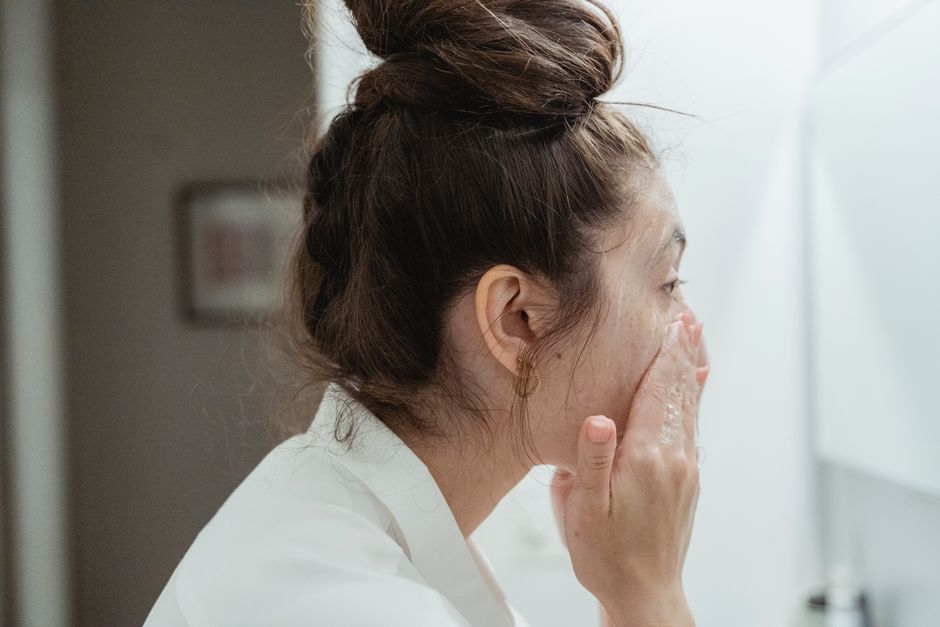
Washing your face should calm your skin, not cause new pimples. If you notice breakouts right after cleansing, the most common reason is that the wash itself is disrupting your skin barrier or leaving behind a residue that clogs pores. The breakout is usually a response to how you washed, not proof that your skin is dirty. In many cases, the cleanser, the water temperature, or the scrubbing motion is the trigger.
Why Do I Break Out After Washing My Face?
Breakouts that appear within hours of washing are usually irritation, not true acne. True acne forms over days to weeks as a pore becomes blocked with oil and dead skin cells, and bacteria that normally live on the skin multiply inside it. That process does not happen in the ten minutes after you rinse.
What can happen quickly is a reaction. A cleanser that strips too much oil leaves the skin tight and dry. The skin then responds by producing more oil, and that rebound can leave pores feeling congested. Harsh surfactants, fragrances, and certain preservatives can also irritate the follicle lining directly, which looks a lot like a fresh pimple.
There is a second, less obvious cause. If you wear makeup, sunscreen, or heavy moisturizer, a gentle cleanser may not remove all of it. Leftover product sits in the pore and can trigger a blockage over the following hours. So the breakout looks like it came from washing, when the real problem is what the wash failed to remove.
Is It Acne or Just Irritation?
The two look similar but behave differently, and telling them apart guides what you do next. Irritation tends to show up fast, often as redness, stinging, or small bumps in the areas you scrubbed hardest. Acne tends to appear in the same predictable zones over time — the chin, jawline, forehead, and cheeks — and follows a slower cycle.
Signs the breakout is likely irritation:
- It appears within minutes to a few hours of washing
- Your skin feels tight, hot, or stings
- Bumps are small, uniform, and clustered where you rubbed
- The reaction fades when you stop using the product
Signs it is more likely acne:
- Bumps have a white or dark center
- They appear in the same spots repeatedly
- They take days to surface and days to fade
- They continue regardless of which cleanser you use
This distinction matters because the fix is different. Irritation calls for removing the trigger. Acne calls for a consistent routine that addresses the underlying process, which takes weeks to show results, not hours.
How Your Cleanser Can Cause Breakouts
The single biggest culprit is a cleanser that is too harsh for your skin. Ingredients that create a lot of foam — often called sulfates — clean effectively but can strip the skin’s natural oils. When the outer layer of skin loses too much of its protective lipid barrier, it becomes more vulnerable to irritants and to the bacteria involved in acne.
Fragrance is another frequent trigger. “Fragrance” on a label can represent dozens of individual compounds, and any one of them can irritate sensitive skin. The same is true for some botanical extracts and essential oils, which are natural but not automatically gentle.
There is a counterintuitive point here. Some people break out from cleansers designed to fight acne. Ingredients like salicylic acid and benzoyl peroxide are effective for many people, but they can also cause purging — a temporary worsening as the skin adjusts. Purging is different from a true allergic reaction. It usually settles within a few weeks, while a genuine irritation reaction does not improve with continued use.





Does Water Temperature Matter?
Hot water can strip oils from the skin faster than lukewarm water, which can leave the barrier compromised and the skin more reactive. Very hot water also increases blood flow to the face, which can make existing redness more visible. It does not create acne, but it can make skin look angrier right after washing.
Cold water is not a treatment for acne, despite what some viral posts claim. It can feel soothing and may temporarily reduce puffiness, but there is no strong evidence that cold water prevents or clears pimples. Lukewarm water is the practical middle ground for most people.
Rinsing, Drying, and Other Habits That Trigger Breakouts
How you finish the wash matters as much as the wash itself. Leftover cleanser residue can irritate the skin, so rinsing thoroughly — including along the hairline and jaw — helps. So does patting dry instead of rubbing, since friction can inflame follicles.
Other common habits that contribute:
- Washing too often, which repeatedly strips the barrier
- Using a rough washcloth or scrub brush on active breakouts
- Reusing a damp towel that harbors bacteria
- Not cleaning your phone, pillowcase, or hands, which transfer oil and bacteria to your face
- Applying heavy products immediately after washing, before the skin has settled
None of these alone causes acne, but together they can keep skin irritated and make existing acne look worse.
What Actually Helps If You Break Out After Washing
Start by simplifying. Switch to a gentle, fragrance-free cleanser and use lukewarm water. Wash twice a day at most — morning and night — and after heavy sweating. If your skin feels tight or squeaky-clean after washing, the cleanser is likely too harsh.
Give any change several weeks before judging it. Skin cell turnover takes time, and irritation from a new product can take days to settle. If you suspect a specific product, stop it and reintroduce it slowly to see whether the reaction returns.
For persistent acne that does not improve with gentle cleansing, over-the-counter options like salicylic acid or benzoyl peroxide are supported by evidence for many people. They work gradually. If acne is moderate to severe, painful, or leaving marks, a dermatologist can offer treatments with stronger evidence behind them, including prescription options. No cleanser alone resolves moderate to severe acne.
When to See a Doctor
See a dermatologist if breakouts are widespread, deep, painful, or leaving scars, or if they are affecting your confidence. Also seek care if you develop signs of a true allergic reaction — swelling, significant redness, or hives — after using a product.
If acne is not responding to consistent over-the-counter care after a few months, that is a reasonable point to get professional input. Earlier treatment can reduce the risk of scarring, which is harder to reverse than the acne itself.
Frequently Asked Questions
Why do I break out right after washing my face?
Most often it is irritation from a cleanser that is too harsh, from hot water, or from leftover product still in your pores. True acne takes days to form, so bumps appearing within hours usually point to a reaction rather than new acne.
Can washing your face too much cause acne?
Over-washing can strip the skin’s protective oils and trigger more oil production, which can worsen congestion. Washing twice a day is generally enough for most people.
Is it bad to wash your face with hot water?
Hot water can strip oils faster than lukewarm water and leave skin more reactive. Lukewarm water is the safer choice for most skin types.
How long should I wait to see if a new cleanser helps?
Give a new cleanser several weeks, since skin adjusts slowly and irritation can take days to settle. If a product clearly stings or causes swelling, stop it right away.
