
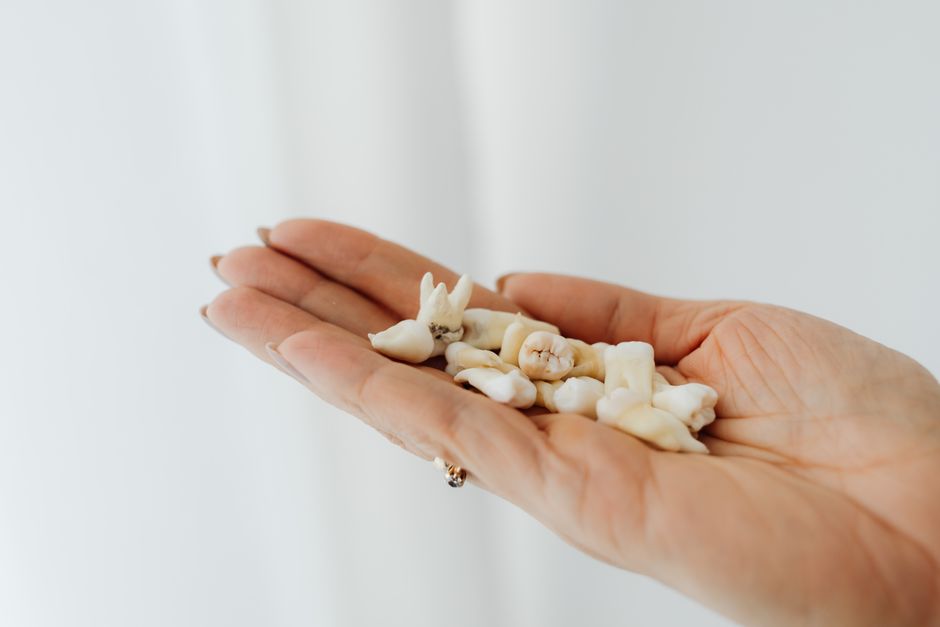
Wisdom teeth get their name from the age at which they usually appear. Most people do not develop them until their late teens or early twenties, a stage of life once associated with growing maturity and sound judgment. Because they arrive so much later than the rest of the teeth, they were called “teeth of wisdom.” That name has stuck for centuries, even though the teeth themselves have nothing to do with intelligence.
They are also the most common teeth to cause trouble. Many people simply do not have room for them, which is why dentists watch them closely and often recommend removal. Understanding why they exist, and why they so often fail to fit, comes down to a mismatch between our ancient jaw size and our modern diet.
Why Are They Called Wisdom Teeth?
The name is about timing, not brains. The third molars are the last teeth to come in, typically emerging between the ages of 17 and 25. In older cultures, that was the period when a young person was expected to take on adult responsibilities and make their own decisions. The teeth that showed up around that time were linked to this new stage of life.
The label appears in written records going back several centuries, and it was likely used in everyday speech well before that. It reflects a simple observation: these teeth show up late, alongside adulthood. There is no biological link between the teeth and the mind. You can have all four wisdom teeth or none at all, and it says nothing about your intelligence.
What is worth knowing is that not everyone gets them. Some people never develop third molars. Others develop one, two, or three instead of the full set of four. This variation is normal and is largely inherited.
What Are Wisdom Teeth and Where Do They Come From?
Wisdom teeth are the third set of molars, located at the very back of the mouth. Humans have three sets of molars in each jaw: the first molars appear around age 6, the second molars around age 12, and the third molars much later. That is the whole story of their anatomy. They are ordinary teeth that happen to sit at the end of the row.
Their deeper history is more interesting. Early humans ate a diet of tough, coarse foods — raw plants, nuts, roots, and uncooked meat. That kind of chewing wore teeth down and required a wider, more powerful jaw. A third set of molars helped replace the chewing surface lost to wear over a lifetime.
As humans shifted to softer, cooked, and processed foods, jaws became smaller over many generations. The teeth did not shrink at the same pace. The result is a jaw that often has room for 28 teeth but not always for 32.
Why Do Wisdom Teeth Cause So Many Problems?
Most problems come down to space. When there is not enough room for a third molar to come through normally, it can become impacted — meaning it stays trapped in the jawbone or gum tissue, or pushes in at an angle. Impacted teeth are the main reason wisdom teeth cause trouble.
Common issues that can follow include:
- Pain and swelling as a tooth pushes against neighbors or breaks partway through the gum.
- Damage to nearby teeth, including the second molars, which can be pushed out of position or develop decay where the two teeth meet.
- Gum inflammation around a partially erupted tooth, which is hard to keep clean.
- Cysts or other growths in rare cases, when a trapped tooth sits inside the jaw for years.
- Crowding, though the evidence that wisdom teeth shift the front teeth out of line is weaker than many people assume.
That last point is worth stating plainly. Many people believe wisdom teeth push the front teeth crooked. Some research suggests this is not the main cause of late-life crowding, and other factors like natural aging of the jaw play a larger role. The evidence is mixed, so it should not be treated as settled.





Does Everyone Need Their Wisdom Teeth Removed?
No. Removal is recommended when a wisdom tooth is causing problems or is likely to cause them — not simply because it exists. A wisdom tooth that has come through fully, sits in a healthy position, and can be cleaned properly may be left alone and monitored.
The decision usually rests on a few factors:
- Whether the tooth is impacted or partly trapped.
- Whether it is damaging a neighboring tooth or gum.
- Whether it can be kept clean during normal brushing and flossing.
- Whether it is causing pain, infection, or other symptoms.
Some clinicians recommend removing certain impacted wisdom teeth early, before the roots are fully formed, because the procedure tends to be simpler in younger patients. This is common clinical practice, though it is not universally agreed upon. If your dentist recommends removal, it is reasonable to ask why — what problem the tooth is causing or is expected to cause — and what happens if you wait.
When Should You See a Dentist About Wisdom Teeth?
See a dentist if you have pain, swelling, or tenderness at the back of your mouth, or if you notice a tooth breaking through the gum. These are the usual signs that a wisdom tooth is coming in or causing a problem. Some people have no symptoms at all and only find out from a routine X-ray.
Dentists often track wisdom teeth with X-rays during the late teen years, when the teeth are forming but may not yet have erupted. That imaging shows the position, angle, and stage of development, which helps predict whether a tooth is likely to cause trouble.
Do not wait out severe pain or facial swelling. A partially erupted wisdom tooth can allow bacteria to build up under the gum, and in some cases that leads to a spreading infection. Fever, difficulty swallowing, or swelling that reaches the jaw or neck are reasons to seek care promptly rather than wait for a routine appointment.
What Happens During Wisdom Tooth Removal?
Removal is a common procedure, and the experience depends on how the tooth sits. A fully erupted tooth can often be removed like any other tooth. An impacted tooth may require a small incision in the gum and, sometimes, sectioning the tooth into pieces to lift it out. Most people have local anesthesia, and sedation or general anesthesia is an option for more complex cases.
Recovery varies from person to person. Swelling and soreness are common in the days after the procedure, and the gum usually heals over the following weeks. A dentist or oral surgeon will give specific aftercare instructions, and those instructions should be followed closely — especially about not disturbing the blood clot that forms in the socket, since that clot protects the healing tissue underneath.
As with any procedure, there are risks, including bleeding, infection, and in rare cases nerve injury near the lower jaw. These are uncommon, but they are real, and worth discussing with the person doing the procedure.
Do Wisdom Teeth Serve Any Purpose Today?
For most people, no. With a modern diet and a smaller jaw, there is rarely a functional need for third molars. In a small number of people, a healthy wisdom tooth can serve as a backup if a neighboring molar is lost, but this is not common and depends entirely on the tooth’s position and health.
The more useful way to think about wisdom teeth is as a leftover from a different time. They are not a flaw in your body and they are not a sign of anything wrong. They are simply teeth that evolved for a diet and jaw size that most people no longer have.
Frequently Asked Questions
Why are they called wisdom teeth?
They are called wisdom teeth because they usually appear between ages 17 and 25, a stage of life historically linked to adulthood and maturity. The name refers to the timing of their arrival, not to intelligence or wisdom itself.
Does everyone have wisdom teeth?
No. Some people never develop third molars, and others develop only one, two, or three instead of the full set of four. This variation is normal and is largely inherited.
Do all wisdom teeth need to be removed?
No. Removal is generally recommended only when a wisdom tooth is impacted, causing symptoms, or likely to damage nearby teeth or gums. A healthy, fully erupted wisdom tooth that can be kept clean may be left in place and monitored.
At what age do wisdom teeth come in?
Most wisdom teeth emerge between the late teens and the mid-twenties, though the exact timing varies widely. Some appear earlier, some later, and some never come through at all.
