
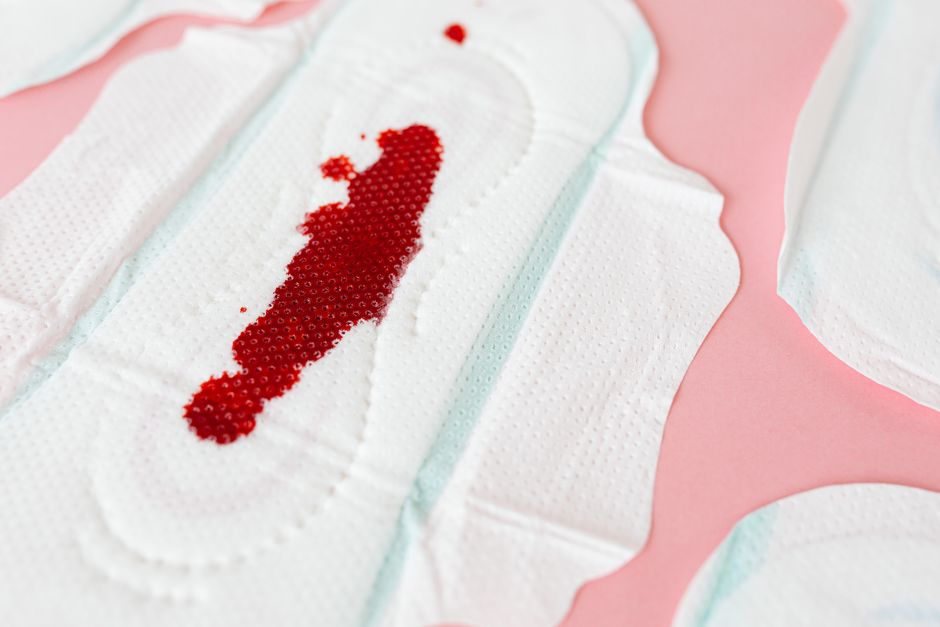
You expected your period. Instead, you see light bleeding — brown, pink, or red — that barely needs a panty liner. This is spotting, not a period. Spotting happens for many reasons: hormonal shifts, stress, birth control, pregnancy, thyroid problems, or structural issues in your uterus. Most causes are not serious. Some require medical attention. Knowing the difference between spotting and a true period helps you decide what to do next.
What Counts as Spotting and What Counts as a Period?
Spotting is light bleeding that does not require a pad or tampon. It might show up as a few drops on toilet paper or light brown discharge in your underwear. A period is heavier. It lasts 4 to 7 days and involves enough blood that you need protection.
The color matters too. Fresh red blood usually means active bleeding. Brown blood means older blood leaving the body slowly. Pink spotting can happen when blood mixes with cervical fluid. Spotting can last a few hours or several days. If your bleeding feels like a normal period in flow and timing, it is not spotting.
A true period sheds the entire uterine lining. Spotting is just a small amount of blood breaking through. Think of it like a faucet dripping versus a faucet running. Both release water. They are not the same thing.
Why Hormonal Imbalance Is the Most Common Cause
Hormones control your menstrual cycle. Estrogen builds the uterine lining. Progesterone stabilizes it. When these two hormones get out of balance, the lining can shed early. That shedding shows up as spotting.
Several things throw off this balance. Stress is a big one. High cortisol levels can suppress ovulation. Without ovulation, your body does not produce enough progesterone. The lining becomes unstable and spots. Research published in the journal Fertility and Sterility found that women with high perceived stress were twice as likely to have irregular bleeding.
Weight changes matter too. Rapid weight loss or gain affects estrogen production. Fat cells produce estrogen. Losing too much fat drops estrogen. Gaining too much raises it. Both scenarios can cause spotting instead of a period. The CDC reports that women with a BMI under 18.5 or over 30 have higher rates of menstrual irregularities.
Thyroid problems are another hidden cause. An overactive or underactive thyroid disrupts ovulation. The American Thyroid Association notes that thyroid disorders affect 1 in 8 women and often first show up as changes in menstrual bleeding.
Birth Control and Spotting: What the Evidence Shows
Hormonal birth control is a common reason for spotting. It works by changing your natural hormone cycle. Breakthrough bleeding happens when the uterine lining thins faster than expected.
Different methods have different rates. The copper IUD causes spotting in about 15 percent of users during the first three months. Hormonal IUDs like Mirena cause spotting in up to 40 percent of users in the first six months. The implant Nexplanon has the highest rate — about 50 percent of users report irregular bleeding in the first year.
Missing pills or taking them late also causes spotting. Birth control pills maintain a steady hormone level. A missed dose drops that level. The lining sheds a little. This is not dangerous. It is just the body reacting to a change in hormone supply.
Continuous birth control, where you skip the placebo week, causes spotting in many women. The lining builds up over months without a full shed. Eventually it breaks through. Taking a break every three months can reduce this.





Pregnancy and Spotting: What You Need to Know
Spotting can be an early sign of pregnancy. About 25 percent of pregnant women have some spotting in the first trimester. This is called implantation bleeding when it happens around 6 to 12 days after conception.
Implantation bleeding is usually light pink or brown. It lasts a few hours to a couple of days. It is not heavy. It does not require a pad. If you have spotting around the time your period would be due, take a pregnancy test.
Spotting during pregnancy can also signal a problem. Ectopic pregnancy, where the embryo implants outside the uterus, causes spotting along with sharp pain on one side. Miscarriage causes spotting that gets heavier and turns into cramping. The American College of Obstetricians and Gynecologists advises any pregnant woman with spotting to contact her doctor.
Do not assume spotting means you are not pregnant. Many women mistake early pregnancy spotting for a light period. If you are sexually active and spotting replaces your period, test.
Structural Causes: Polyps, Fibroids, and PCOS
Physical changes in the uterus can cause spotting. Uterine polyps are small growths on the lining. They are usually benign. They bleed easily because they have fragile blood vessels. Polyps cause spotting between periods in about 20 percent of women who have them.
Fibroids are muscle growths in the uterus. They cause heavy periods more often than spotting. But submucosal fibroids, which grow into the uterine cavity, can cause spotting. A study in the American Journal of Obstetrics and Gynecology found that 40 percent of women with submucosal fibroids reported intermenstrual bleeding.
Polycystic ovary syndrome, or PCOS, affects 6 to 12 percent of women of reproductive age. It causes irregular ovulation. You might go months without a period and then have spotting instead. The spotting happens because estrogen builds the lining without progesterone to stabilize it. The lining eventually sheds in an unpredictable way.
These conditions require an ultrasound to diagnose. If spotting is your only symptom, you may not need treatment. If spotting comes with pain or heavy bleeding, you should see a gynecologist.
| Cause | How Common | Typical Bleeding Pattern | Needs Treatment? |
|---|---|---|---|
| Hormonal imbalance | Very common | Light, unpredictable | Usually not |
| Birth control | Common | First 3-6 months | Usually not |
| Pregnancy | 25% of pregnancies | Light, early | Monitor |
| Polyps | 20% of women | Spotting between periods | Sometimes |
| PCOS | 6-12% of women | Irregular, unpredictable | Often |
| Thyroid disorder | 1 in 8 women | Light or heavy | Yes |
When Spotting Needs Medical Attention
Most spotting is not an emergency. But some situations require a doctor visit. If spotting lasts more than three cycles, make an appointment. If it comes with severe pain, fever, or dizziness, seek care immediately.
Spotting after menopause is never normal. The American Cancer Society reports that 5 to 10 percent of women with postmenopausal bleeding have endometrial cancer. Most have benign causes like atrophy or polyps. But any bleeding after menopause needs evaluation.
Spotting during pregnancy, especially after the first trimester, needs immediate attention. It can signal placental problems or preterm labor. Do not wait to see if it stops.
If you are on blood thinners and start spotting, tell your doctor. Blood thinners increase bleeding risk. Your dose may need adjustment.
Keep a record of your spotting. Note the date, color, amount, and any other symptoms. This helps your doctor figure out the cause faster. A menstrual tracking app works well for this.
Common Misconceptions About Spotting
Many people think spotting always means ovulation. It does not. Ovulation spotting happens in some women, but it is not reliable. Relying on it for fertility tracking will give you inaccurate results.
Another myth is that spotting means you are not pregnant. False. As discussed, early pregnancy spotting is common. A pregnancy test is the only reliable way to know.
Some believe spotting is always harmless. Most of the time it is. But it can signal thyroid disease, PCOS, or uterine abnormalities. Do not dismiss persistent spotting as nothing.
There is also a belief that spotting during exercise means you are overtraining. Intense exercise can disrupt hormones and cause spotting. But so can many other things. Unless you are training at an elite level, exercise alone is rarely the cause.
What to Avoid When Trying to Figure Out Spotting
Do not assume it is just stress and ignore it. Stress can cause spotting. But so can pregnancy, fibroids, and thyroid problems. If spotting replaces your period for two cycles in a row, see a doctor.
Do not take herbal supplements without checking with a doctor. Some herbs like chasteberry or black cohosh affect hormones. They can change your cycle and cause spotting. The evidence for these supplements is weak anyway. The National Institutes of Health states that no herbal supplement has strong evidence for treating menstrual irregularities.
Do not use douches or vaginal washes to “clean” spotting. The vagina is self-cleaning. Douching disrupts the natural bacteria and can cause infections or irritation that makes spotting worse.
Do not panic. Spotting is common. Most causes are treatable or resolve on their own. A calm, informed approach gets you better answers than worry.
Frequently Asked Questions
Can stress cause spotting instead of a period?
Yes. High stress raises cortisol, which can suppress ovulation and cause erratic bleeding. This is one of the most common reasons for spotting.
How many days of spotting is normal?
Spotting lasting 1 to 3 days is common. If it lasts longer than 7 days or happens every cycle, see a doctor.
Does spotting mean I am pregnant?
It can. About 25 percent of pregnant women have spotting in early pregnancy. Take a test if you are sexually active and your period is late.
Can I get pregnant if I am spotting instead of having a period?
Yes. Spotting can happen during ovulation or early pregnancy. You can still conceive even with irregular bleeding.
