
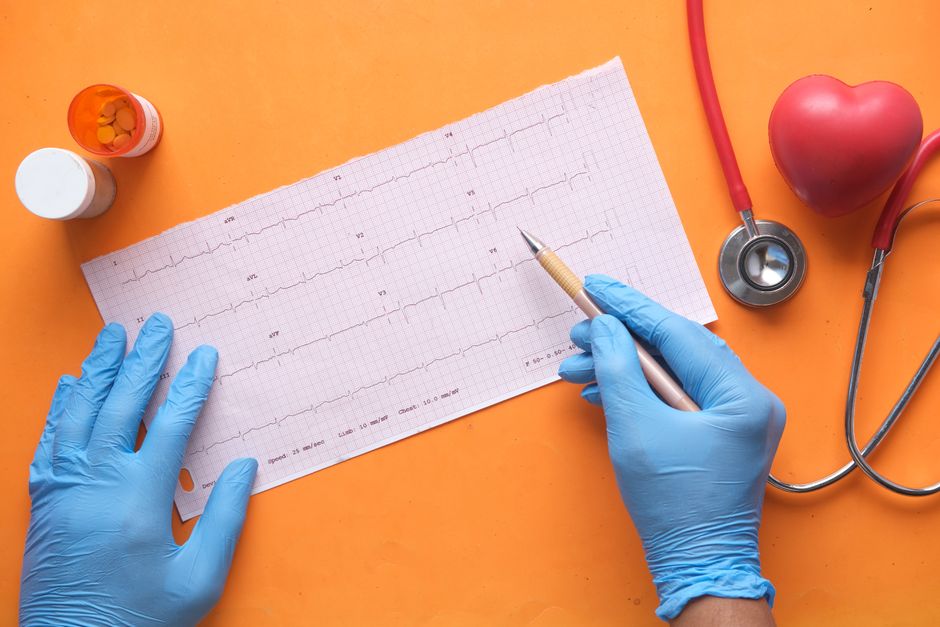
Chest pain sends more than 6 million Americans to emergency departments every year, and the first question clinicians try to answer is whether the heart is the source. Cardiac chest pain has a recognizable pattern, and certain symptoms fall outside it. The symptom least consistent with cardiac chest pain is a sharp, brief, pinpoint pain that lasts only a few seconds and is fully reproducible when you press on the chest wall. Cardiac pain is typically pressure-like, deep, lasting minutes rather than seconds, and it is not brought on or relieved by pressing on a specific spot.
Which Symptom Is Not Consistent With Cardiac Chest Pain?
A pain that a person can reproduce by pressing a finger on one exact spot — and that resolves the moment the pressure stops — does not fit the pattern of cardiac ischemia. Neither does a single sharp stab that lasts one or two seconds and then disappears completely.
Doctors call this reproducible chest wall tenderness. It points toward the muscles, ribs, or cartilage of the chest wall rather than the heart muscle itself. The reasoning is anatomical. Heart muscle lacks the kind of surface pain receptors that respond to local pressure, so pressing on the chest cannot provoke true angina.
Other features that argue against a cardiac cause:
- Pain lasting only seconds, especially a single sharp stab
- Pain that changes instantly with body position or a deep breath in a young, otherwise healthy person
- A clear, immediate link to a specific movement, like twisting or reaching
- Pain that is exactly reproduced by pressing one small area
One caution matters here. Chest wall tenderness does not fully rule out a heart problem. Some people having a heart attack also have tender chest muscles, and the two can coexist. A clinician weighs the whole picture — age, risk factors, ECG, and troponin blood tests — not one physical finding alone.
What Does Cardiac Chest Pain Actually Feel Like?
Cardiac chest pain is usually described as pressure, squeezing, heaviness, or tightness — not as a sharp sting. People often say it feels like a weight sitting on the chest or a band tightening around it.
The discomfort is typically deep and diffuse. A person often cannot point to one spot with a single finger. Instead, they use a whole hand or fist to show where it hurts. Clinicians sometimes call this the “Levine sign.”
Cardiac pain usually builds over minutes rather than seconds. It tends to come on with exertion, emotional stress, cold air, or a heavy meal, and it eases with rest. This predictable relationship to physical effort is one of the most telling features of angina.
The pain can also radiate. It may spread to the left arm, both arms, the jaw, the neck, the upper back, or the stomach area. Some people feel only the radiating discomfort and little or no chest pain at all.
What Is the Difference Between Angina and a Heart Attack?
Both involve reduced blood flow to the heart muscle, but they differ in duration and in whether the muscle is permanently damaged. Angina is temporary. A heart attack causes lasting injury.
In stable angina, a narrowed coronary artery cannot deliver enough oxygen when the heart works harder. The pain comes on with exertion and typically resolves within a few minutes of resting or taking prescribed nitroglycerin. The pattern stays predictable over time.
In a heart attack, a coronary artery becomes blocked, and part of the heart muscle begins to die. The pain usually lasts longer — often more than 20 minutes — and does not go away with rest. It may come on at rest or wake a person from sleep.
This distinction drives emergency decisions. Stable, predictable angina is a reason to see a doctor soon. New, severe, or prolonged chest pain is a reason to call 911 immediately. Do not drive yourself.





Which Symptoms Are Easy to Mistake for Something Else?
Heart problems do not always announce themselves with classic chest pain, and this is where people get into trouble. Women, older adults, and people with diabetes often have less typical symptoms.
Common presentations that get attributed to other causes include:
- Shortness of breath with activity that used to be easy
- Unusual fatigue, sometimes for days
- Nausea, indigestion, or a heavy feeling in the upper stomach
- Pain in the jaw, neck, or back with no clear muscle cause
- Lightheadedness or a cold sweat
These symptoms are frequently dismissed as heartburn, the flu, or stress. Heartburn and cardiac pain can feel similar because the nerves from the heart and the esophagus enter the spinal cord at overlapping levels. That overlap is why “indigestion” sometimes turns out to be a heart attack.
When Should You Call 911 for Chest Pain?
Call 911 for chest pressure or squeezing that lasts more than a few minutes, comes with shortness of breath, sweating, nausea, or fainting, or does not go away with rest. Time matters because heart muscle lost during a heart attack cannot be replaced.
Emergency treatment aims to restore blood flow as fast as possible. Clot-dissolving drugs and procedures to open the artery work best within the first hours after symptoms start. Delay costs muscle.
Do not wait to see if the pain passes. Do not take a “wait and see” approach with new or severe chest symptoms. If you are unsure whether it is your heart, that uncertainty itself is a reason to call.
Aspirin deserves a specific note. Chewing aspirin can help during a suspected heart attack, and emergency dispatchers often advise it. But it is not right for everyone — people with an aspirin allergy or active bleeding should not take it. Follow the dispatcher’s instructions rather than deciding on your own.
Why Do So Many People Misread Their Symptoms?
People misread cardiac symptoms for a simple reason: the classic “elephant on the chest” image does not match everyone’s experience. When symptoms are mild, vague, or come and go, the brain reaches for a more familiar explanation.
Denial plays a role too. Nobody wants to believe they are having a heart attack, so the mind looks for a less frightening cause. That instinct can be dangerous.
There is also a real gap in how heart disease shows up. Women are more likely than men to have symptoms beyond chest pain, including shortness of breath, fatigue, and nausea. Because these symptoms are easy to attribute to stress or a virus, women sometimes delay seeking care.
The takeaway is not to panic over every twinge. It is to know the pattern. Pressure that builds with effort and eases with rest is a heart signal. A brief, sharp, pinpoint pain you can press on usually is not — but when in doubt, get it checked.
How Do Doctors Tell Cardiac From Non-Cardiac Chest Pain?
Doctors combine the story, the exam, and tests. No single finding settles the question on its own, which is why the whole picture matters.
Key steps usually include:
- History: what the pain feels like, what brings it on, how long it lasts, and what relieves it
- Risk factors: age, smoking, diabetes, high blood pressure, high cholesterol, and family history
- ECG: a quick electrical reading of the heart that can show signs of injury or reduced blood flow
- Troponin blood test: measures a protein released when heart muscle is damaged
- Stress testing or imaging: used when the initial results are unclear
An ECG and troponin can be normal early in a heart attack, so a single normal result does not always end the evaluation. Clinicians sometimes repeat tests over several hours. This is a common source of confusion for patients who feel fine and want to go home.
Some clinicians use chest wall tenderness as one clue among many, but it is not used alone to send someone home. The combination of a low-risk history, normal ECG, and normal troponin carries far more weight than tenderness by itself.
Frequently Asked Questions
Which symptom is not consistent with cardiac chest pain?
A sharp, pinpoint pain that lasts only a few seconds and is fully reproduced by pressing on one spot on the chest wall is not consistent with cardiac chest pain. Cardiac pain is typically pressure-like, deep, and lasts minutes.
Can chest wall tenderness still be a heart attack?
Yes, it can. Chest wall tenderness does not rule out a heart attack, because the two can occur together. Only a full evaluation with an ECG and troponin blood test can reliably sort this out.
Does cardiac chest pain always feel like pressure?
No, but pressure, squeezing, or tightness is the most common description. Women, older adults, and people with diabetes may feel shortness of breath, fatigue, or nausea instead of classic chest pain.
How long does cardiac chest pain usually last?
Angina typically lasts a few minutes and eases with rest, while heart attack pain often lasts more than 20 minutes and does not go away with rest. Pain lasting only seconds is usually not cardiac.
