
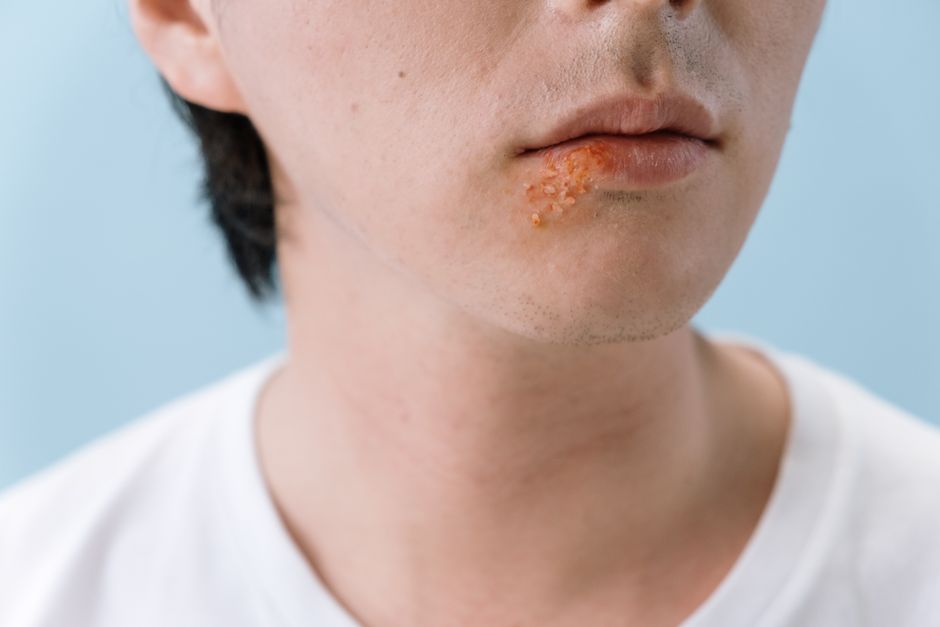
Facial paralysis on one side of the face has a short list of causes, and only one skin infection sits near the top of it: shingles of the facial nerve, known medically as Ramsay Hunt syndrome. It happens when the varicella-zoster virus — the same virus that caused chickenpox years earlier — reactivates inside the facial nerve and inflames it.
Ramsay Hunt syndrome is uncommon but not rare. It is the second most common cause of one-sided facial paralysis after Bell’s palsy, which is not an infection of the skin at all. The telltale sign is a painful rash near the ear or inside the ear canal, often appearing alongside the weakness. Some people get the paralysis first and the rash days later, which is one reason it gets missed early.
Other skin infections can affect the face, but they do not typically cause true facial nerve paralysis. Understanding the difference matters, because Ramsay Hunt is treated differently from Bell’s palsy and responds best when treatment starts quickly.
Which Skin Infection Would Cause Facial Paralysis?
Ramsay Hunt syndrome is the answer. It is caused by reactivation of the varicella-zoster virus, the herpesvirus responsible for chickenpox and shingles.
After chickenpox, the virus never fully leaves the body. It settles into nerve tissue and stays quiet, sometimes for decades. If it reactivates in a sensory nerve near the spine or ribs, you get the familiar band of shingles. If it reactivates in the facial nerve — cranial nerve VII — you get Ramsay Hunt syndrome.
The facial nerve controls the muscles of facial expression. It also carries taste sensation from the front of the tongue and supplies tear and saliva glands. That is why Ramsay Hunt can cause more than a drooping face. Common features include:
- One-sided facial weakness or paralysis
- A painful, blistering rash near or inside the ear canal
- Ear pain that can be severe
- Hearing loss or ringing in the ear
- Vertigo or a spinning sensation
- Altered taste
- Dry eye or reduced tearing on the affected side
The rash is the key clue. It is why this is described as a skin infection with a nerve complication. Without the rash, the picture can look identical to Bell’s palsy, and clinicians sometimes cannot tell them apart until the rash appears.
How Does a Skin Infection Cause Facial Paralysis?
The virus travels along the facial nerve and inflames it. The nerve swells inside a narrow bony canal, and that pressure disrupts the signals it sends to the face muscles.
The facial nerve passes through a tight tunnel in the skull called the facial canal. There is very little room for swelling. When the nerve becomes inflamed, the compression interferes with nerve signaling, which produces weakness or paralysis on that side of the face.
This is also why Ramsay Hunt tends to be more severe than Bell’s palsy. The inflammation is not just swelling — there is active viral infection in the nerve. That combination tends to produce more pain, more hearing symptoms, and a slower recovery.
It is worth separating two things that sound similar. The visible rash is the skin infection. The paralysis is the nerve injury caused by the same virus. The rash is not what paralyzes the face. The virus reactivating inside the nerve is.
How Is Ramsay Hunt Different From Bell’s Palsy?
Bell’s palsy causes one-sided facial weakness without a rash, and its exact cause is not fully understood. Ramsay Hunt causes the same weakness plus a rash and often additional symptoms like hearing changes or vertigo.
Both conditions look similar at first glance, and both affect the facial nerve. The difference matters because treatment and outlook differ.
| Feature | Ramsay Hunt Syndrome | Bell’s Palsy |
|---|---|---|
| Cause | Varicella-zoster virus reactivation | Not fully understood; often linked to viral inflammation |
| Rash | Yes, near or inside the ear | No |
| Ear pain | Common and often severe | Possible but usually mild |
| Hearing or balance symptoms | Common | Uncommon |
| Recovery | Often slower and less complete | Most people recover substantially |
One important point: the absence of a rash does not fully rule out Ramsay Hunt. A small number of people develop the paralysis before any rash appears, sometimes by several days. This is called zoster sine herpete when the rash never shows up at all. It is uncommon, but it exists.





What Other Skin Conditions Affect the Face but Not the Nerve?
Most skin infections on the face do not cause facial paralysis. Cellulitis, impetigo, and fungal infections can be uncomfortable and sometimes serious, but they affect the skin, not the facial nerve.
These conditions are worth knowing because people sometimes worry that a facial rash and facial weakness are connected when they are not:
- Cellulitis — a deep bacterial skin infection causing redness, swelling, and warmth. It does not typically paralyze the face.
- Impetigo — a superficial bacterial infection with crusty sores, most common in children. No nerve involvement.
- Fungal skin infections — such as ringworm of the face. These stay in the skin and do not reach the facial nerve.
- Herpes simplex — cold sores are caused by a different herpesvirus and do not cause facial paralysis.
The facial nerve runs deep, protected by bone. For a skin infection to reach it, the infection generally has to travel along the nerve itself, which is what varicella-zoster does. That is why Ramsay Hunt is unusual among skin infections.
There is one exception worth mentioning. Severe infections around the ear or mastoid bone can, in rare cases, affect nearby nerves. But this is a different mechanism from Ramsay Hunt and is much less common.
When Should You Get Medical Help?
Seek medical care the same day if you develop sudden facial weakness, especially with ear pain, a rash near the ear, hearing changes, or vertigo. Early treatment improves the chance of full recovery.
Facial paralysis has several possible causes, and some are emergencies. A stroke can cause facial drooping, though it usually comes with other signs like arm weakness, speech trouble, or sudden confusion. If any of those are present, call emergency services immediately.
For Ramsay Hunt specifically, timing matters. Antiviral treatment works best when started within about 72 hours of symptom onset, which is a widely used clinical benchmark rather than a hard cutoff. Some clinicians still treat beyond that window, particularly if symptoms are ongoing or severe.
Do not wait for a rash to appear before getting checked. If you have sudden one-sided facial weakness, that alone is reason to be seen promptly.
How Is Ramsay Hunt Treated?
Treatment usually combines an antiviral medication with a corticosteroid. The antiviral targets the virus, and the steroid aims to reduce nerve inflammation.
This combination is standard clinical practice. It is supported by the understanding that both viral activity and inflammation drive the nerve damage. The evidence for steroids specifically in Ramsay Hunt is not as strong as it is for Bell’s palsy, where large trials have shown benefit. In Ramsay Hunt, the approach is widely used but rests on somewhat less direct trial evidence.
Additional care may include:
- Eye protection, since the eyelid may not close fully and the eye can dry out
- Pain management for ear pain
- Physical therapy for facial muscles in some cases
- Treatment for hearing or balance symptoms if present
Recovery varies. Some people regain most facial function within weeks to months. Others have lasting weakness. Ramsay Hunt generally has a lower rate of full recovery than Bell’s palsy, which is one reason early treatment is emphasized.
The varicella-zoster vaccine reduces the risk of shingles and, by extension, the risk of Ramsay Hunt. It does not eliminate the risk entirely, but it lowers it.
Can Ramsay Hunt Be Prevented?
There is no way to prevent the virus from ever reactivating, but vaccination reduces the chance that it does. The shingles vaccine is recommended for adults in certain age groups and for some people with weakened immune systems.
Because the virus already lives in the body after chickenpox, prevention is not about avoiding exposure. It is about keeping the virus dormant. A healthy immune system helps with that, which is why shingles and Ramsay Hunt become more common with age and in people whose immunity is suppressed.
If you have had chickenpox, you carry the virus. That does not mean you will develop Ramsay Hunt — most people never do. It simply means the virus is present and can reactivate under the right conditions.
Frequently Asked Questions
Which skin infection causes facial paralysis?
Ramsay Hunt syndrome, caused by reactivation of the varicella-zoster virus, is the skin infection most associated with facial paralysis. It produces a painful rash near or inside the ear along with one-sided facial weakness.
Can shingles on the face cause permanent paralysis?
It can cause lasting facial weakness in some people, though many recover substantially over weeks to months. Recovery tends to be less complete than in Bell’s palsy, which is why early treatment matters.
Does Ramsay Hunt always cause a rash?
No. Most people develop a rash, but a small number have facial paralysis without one, a pattern sometimes called zoster sine herpete. This makes early diagnosis harder.
How fast do you need treatment for Ramsay Hunt?
Antiviral treatment is generally most effective when started within about 72 hours of symptom onset, a widely used clinical benchmark. Some clinicians still treat beyond that window if symptoms are ongoing.
