
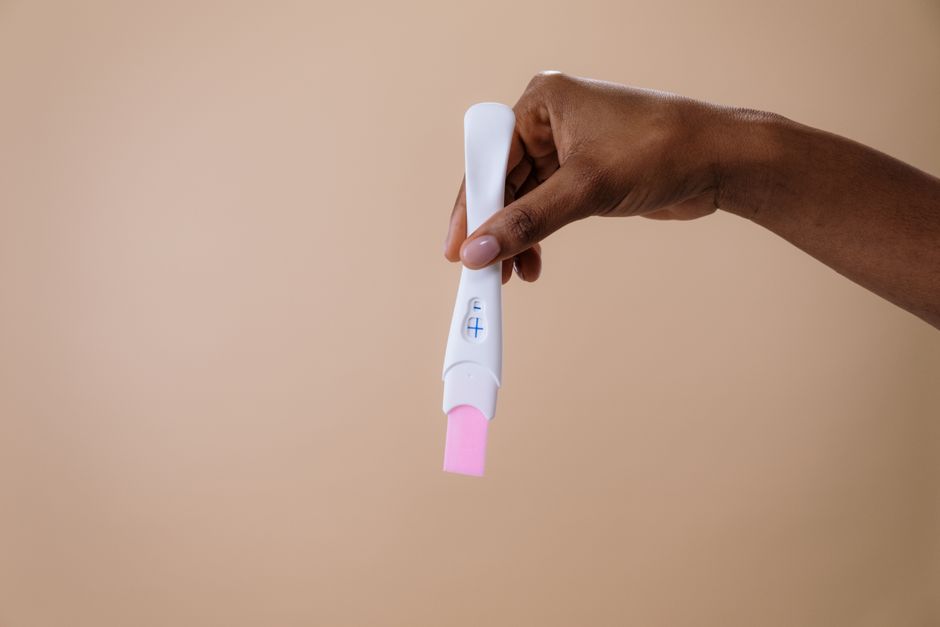
If you are trying to figure out whether you are pregnant, the accuracy of the test you choose matters more than almost anything else. The short answer is that a digital test is not inherently more accurate than a traditional line test; both use the same underlying technology to detect the pregnancy hormone hCG in your urine. The real difference in accuracy comes down to when you test, how you test, and which test is sensitive enough to catch the hormone early.
How Do Pregnancy Tests Actually Work?
All home pregnancy tests detect human chorionic gonadotropin, or hCG. This is a hormone your body only produces when a fertilized egg implants in the uterus. The placenta starts generating hCG shortly after implantation, and the levels rise quickly in the first weeks of pregnancy.
The test strip contains antibodies that bind to hCG molecules in your urine. If hCG is present, a chemical reaction produces a visible line or a digital reading. The technology is essentially the same across brands. The main difference between tests is the threshold at which they detect hCG.
Some tests claim to detect hCG at levels as low as 10 mIU/mL. Others only register at 25 mIU/mL or higher. That threshold is the single biggest factor in whether you get an accurate early result. A test with a lower threshold can detect pregnancy days before one with a higher threshold.
Which Pregnancy Test Is More Accurate: Digital or Line Tests?
When you compare digital and line tests at the same sensitivity level, accuracy is equal. Both will give the same result when used correctly at the same point in your cycle. The difference is in how you read the result.
Line tests require you to interpret a visual result. Two lines means pregnant. One line means not pregnant. This sounds simple, but evaporation lines, faint positives, and color variations cause confusion. A faint line is still a positive result, but many people misread it as negative or doubt what they see.
Digital tests remove that uncertainty by displaying the words “Pregnant” or “Not Pregnant” on a screen. They are not more sensitive. They are simply easier to read. If you struggle to interpret line tests, a digital test may be the better choice for you personally, even if it is not technically more accurate.
The most accurate choice is the test with the lowest detection threshold. Check the package for the sensitivity level. A test that detects 10 mIU/mL will give you a positive result earlier than one that requires 25 mIU/mL, regardless of whether it is digital or analog.
When Should You Test for the Most Accurate Result?
Timing matters more than brand. Testing too early is the most common reason for a false negative. If you test before implantation has occurred, hCG levels are too low to detect, and you will get a negative result even if you are pregnant.
Most home pregnancy tests are designed to be used on the first day of a missed period. By this point, hCG levels are typically high enough to be detected by most tests. Testing earlier than that increases the risk of a false negative.
Some tests marketed as “early detection” can be used up to six days before your missed period. These tests have a lower sensitivity threshold. Even with these tests, testing early means you risk getting a negative result one day and a positive result the next. The hormone levels are simply too low to catch every time.
The most reliable approach is to wait until after your missed period. If you cannot wait, use an early detection test and test again a few days later if the first result is negative. A negative result on an early test does not mean you are not pregnant. It means the test could not detect the hormone at that moment.




How to Avoid False Results
User error causes more inaccurate results than the test itself. The most common mistakes are testing too early, using too much or too little urine, and reading the result after the recommended time window.
Read the instructions on the specific test you bought. Different brands have different waiting times and different methods. Some require holding the test in a urine stream. Others require dipping it in a collected sample. Follow the timing exactly. Reading a test too late can produce an evaporation line that looks like a positive result.
For the most accurate reading, use your first morning urine. It is the most concentrated, meaning hCG levels are at their highest. If you test during the day, try to hold your urine for at least four hours beforehand and avoid drinking large amounts of fluids, which can dilute the sample.
Certain medications can interfere with pregnancy test results. Fertility treatments that contain hCG, such as some ovulation induction injections, can cause a false positive. Most other medications, including birth control pills and antibiotics, do not affect the results.
Blood Tests vs. Urine Tests
Blood tests performed at a doctor’s office are more sensitive than any home urine test. They can detect hCG at much lower levels, sometimes as low as 5 mIU/mL. They can also quantify the exact amount of hCG in your blood, which helps a doctor track how a pregnancy is progressing.
There are two types of blood tests. A qualitative blood test simply confirms whether hCG is present. A quantitative blood test measures the exact level. The quantitative test is the most accurate method available for confirming pregnancy.
Blood tests are not necessary for most people. Home urine tests are highly accurate when used correctly after a missed period. The main reason a doctor would order a blood test is if there is concern about early pregnancy complications, or if a home test is negative but pregnancy symptoms persist.
What Do Faint Lines Mean?
A faint line on a pregnancy test is still a positive result. The test works like a switch. If hCG is present at the detection threshold, the test registers it. The intensity of the line does not correlate with the level of hCG in your body in a meaningful way.
There is one exception. An evaporation line can appear on a test that has dried after sitting for too long. This line is colorless or grayish, unlike the pink or blue tint of a true positive. Read the test within the time window specified in the instructions to avoid confusion.
If you get a faint positive, test again in 48 hours. In a healthy early pregnancy, hCG levels roughly double every two to three days. A line that becomes darker on a subsequent test is a good sign. A line that stays faint or disappears may indicate a chemical pregnancy, which is a very early miscarriage.
Are Some Brands More Accurate Than Others?
Independent testing has not shown one major brand to be dramatically more accurate than another. All FDA-approved home pregnancy tests meet the same basic standards for accuracy. When used correctly after a missed period, most brands are about 99% accurate.
What differs is sensitivity. Some brands advertise earlier detection because their tests can pick up lower levels of hCG. These tests are more likely to give you an accurate positive before your missed period. After a missed period, the sensitivity difference matters less.
Price does not equal accuracy. A generic store brand test is just as reliable as an expensive digital test when used at the same time and with the same sensitivity. The expensive test may offer convenience or easier reading, but it does not offer better detection.
The best test is the one you can use correctly. If a digital test helps you avoid misreading a line, it is worth the extra cost for you. If you are comfortable reading a line test, a cheaper option will work just as well.
How Soon Can You Test After a Missed Period?
You can test on the first day of your missed period. This is the standard recommendation across all major test manufacturers. By this point, hCG levels are usually high enough to be detected by any test on the market.
If you have irregular periods, it is harder to know when your period is actually late. In this case, wait at least 21 days after unprotected sex before testing. This gives your body enough time to implant and produce detectable levels of hCG if you are pregnant.
Testing later in the day after a missed period is generally fine, but first morning urine is still the best choice. If you get a negative result but your period does not arrive within a week, test again. A negative result is only accurate for the moment you took the test.
Frequently Asked Questions
Can a digital pregnancy test give a false positive?
False positives are rare but possible. They can occur if you have recently taken fertility medications containing hCG, or if you have a rare medical condition that produces hCG.
Why did I get a negative test but no period?
You may have tested too early, or you may have an irregular cycle. If your period does not arrive within a week of a negative test, test again or see a doctor.
Is first morning urine really necessary for a pregnancy test?
First morning urine has the highest concentration of hCG, making it the most reliable sample. If you test later in the day, hold your urine for several hours and limit fluids first.
Can a pregnancy test be too sensitive?
No test is too sensitive for confirming pregnancy, but highly sensitive tests can detect very early pregnancies that may not continue. This is why a positive on an early test should be confirmed with a follow-up test.
