
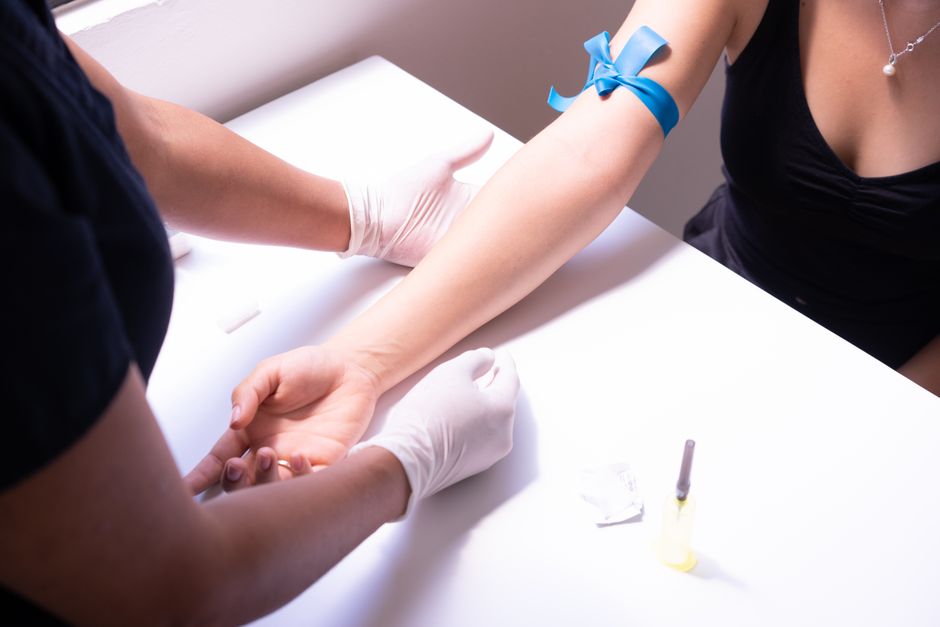
If you think you have allergies, you can get tested in several places: a primary care doctor’s office, an allergist’s office, some urgent care clinics, retail pharmacies, and direct-to-consumer home test kits. The right choice depends on what you’re testing for, how severe your symptoms are, and whether you need a doctor to interpret the results. For most people with ongoing or unclear symptoms, an allergist is the most reliable starting point.
Allergy testing is not one single test. It’s a group of methods that look for different things. Some require a doctor to read your skin. Others measure antibodies in your blood. A few are sold online with little oversight. Knowing how they differ helps you avoid paying for answers that don’t mean much.
Where To Get An Allergy Test All Your Options
There are five main places people get allergy testing in the United States. Each has real advantages and real limits.
- Primary care doctor. Often the first stop. They can order blood tests, treat mild symptoms, and refer you to a specialist. Not all primary care offices do skin testing.
- Allergist or immunologist. A doctor with specialized training in allergic disease. They can perform skin prick tests, intradermal tests, patch tests, and blood tests, and they interpret results alongside your history.
- Ear, nose, and throat (ENT) specialists. Some ENT offices offer allergy testing and treatment, particularly for nasal and sinus symptoms.
- Retail pharmacies and urgent care clinics. A growing number offer basic blood-based allergy panels. Convenient, but follow-up interpretation is often limited.
- Direct-to-consumer home test kits. You order online, collect a finger-prick blood sample or saliva, mail it in, and get results by app or email. Quality and usefulness vary widely.
One clarification that matters: a positive test does not equal an allergy. Both skin and blood tests can be positive for substances you tolerate perfectly well. This is why testing without a doctor’s interpretation often leads people to avoid foods or environments they never needed to avoid.
What Is The Difference Between A Skin Test And A Blood Test?
Skin testing and blood testing look for the same basic signal — IgE antibodies — but they measure it in different ways.
A skin prick test places a tiny amount of allergen extract on your forearm or back, then lightly scratches or pricks the skin. Results appear in about 15 to 20 minutes. A raised, red, itchy bump (called a wheal) suggests sensitivity. It’s fast, and it’s usually the least expensive option.
An intradermal test injects a small amount of allergen just under the skin. It’s more sensitive than a prick test and is often used when a prick test is negative but suspicion remains — commonly for insect venom or certain drug allergies.
A patch test is different. It detects delayed reactions, not immediate ones. Patches stay on your back for about 48 hours, and readings happen at set intervals afterward. It’s the standard method for contact dermatitis — reactions to metals, fragrances, preservatives, and similar substances.
A blood test (often called a specific IgE test) measures antibody levels in a sample of your blood. It requires no needles in the skin and no risk of triggering a reaction. It takes longer to get results and generally costs more. It’s the preferred route when skin testing isn’t safe or practical — for example, with certain skin conditions or when a person takes medications that interfere with skin test readings.
Neither method tells you how severe a reaction will be. They show sensitivity, not the intensity of your future symptoms.
Are Home Allergy Test Kits Reliable?
Some are, and some are not. The category is uneven, and the marketing often outruns the evidence.
Home kits typically fall into two groups. One group measures specific IgE from a finger-prick blood sample and is processed by a lab. These can produce results similar to a doctor-ordered blood test, though the sample quality and the panel of allergens vary. The other group uses hair or saliva samples and claims to identify “sensitivities” or “intolerances.” There is no accepted medical test for food intolerance of this kind. No clinical evidence currently confirms that hair or saliva testing can diagnose allergy or intolerance.
Even with a legitimate blood-based kit, the result arrives without context. A positive result for peanuts, for example, does not by itself mean you are allergic to peanuts. Roughly speaking, many positive food allergy tests occur in people who have no clinical reaction when they eat that food. Doctors use test results together with your history — what happened when you actually encountered the substance — to make a diagnosis.
There is also a real risk in acting on a home result alone. Eliminating foods or avoiding environments based on an unconfirmed test can remove important nutrients or create unnecessary anxiety, especially in children. If a home kit flags something, the sensible next step is to bring the result to a doctor rather than change your diet on your own.





When Should You See An Allergist Instead?
An allergist is the right choice when symptoms are persistent, when the cause isn’t obvious, or when a reaction was serious.
Consider a referral if you have:
- Food reactions, especially any that involved swelling, breathing trouble, or a drop in blood pressure
- Asthma that flares with seasons, pets, or exercise
- Chronic nasal congestion, sneezing, or itchy, watery eyes that don’t respond to basic treatment
- Eczema or a persistent skin rash that might be contact dermatitis
- Reactions to insect stings
- Symptoms that seem tied to a medication
- A child with suspected allergies, where testing decisions and interpretation carry extra weight
An allergist can also perform a food challenge — a supervised test where you eat increasing amounts of a food under medical observation. This is the most definitive way to confirm or rule out a food allergy, and it can only be done safely in a clinical setting equipped to handle a reaction.
For drug allergies, an allergist may use a graded challenge or desensitization protocol. These are not do-it-yourself tests. They require monitoring and emergency readiness.
What Does An Allergy Test Actually Measure?
Most standard allergy tests measure IgE, an antibody your immune system makes. When your body treats a harmless substance — pollen, pet dander, a food protein — as a threat, it can produce IgE that recognizes that substance. That IgE attaches to immune cells, and when you encounter the substance again, those cells release chemicals like histamine. That release is what produces itching, swelling, sneezing, and the rest.
Testing detects the presence of that IgE. It does not measure how your body will respond next time. Two people with identical test results can have very different reactions — one sneezes, another has no symptoms at all.
This is the single most misunderstood point about allergy testing. The test shows sensitization. The diagnosis of allergy requires symptoms too. A doctor combines the two.
Some conditions are not IgE-mediated at all. Celiac disease, for instance, is an immune reaction to gluten but involves different antibodies, and it’s diagnosed with specific blood tests and sometimes a biopsy — not with standard allergy panels. Food intolerances, such as lactose intolerance, involve digestion rather than the immune system and are not detected by allergy tests.
How Much Do Allergy Tests Cost?
Cost depends heavily on where you go and what’s tested.
Skin prick tests done in a doctor’s office are generally the least expensive type, and many insurance plans cover them when medically necessary. Blood tests tend to cost more, and the price rises with the number of allergens tested. Home kits usually run from modest to high out-of-pocket prices, and insurance rarely covers them.
Because prices and coverage vary by plan and region, the practical move is to call your insurance company before testing and ask two questions: is allergy testing covered, and does it require a referral or prior authorization? A single phone call often prevents a surprise bill.
One caution about “panels.” Broad panels that test for dozens of foods at once are widely sold but often produce confusing results. Medical organizations have generally advised against indiscriminate panel testing, because a scatter of positive results in someone without symptoms leads to unnecessary food avoidance. Targeted testing based on your actual history is more useful.
What Should You Do Before Getting Tested?
Preparation affects accuracy, especially for skin tests.
Tell your doctor about every medication you take. Antihistamines can blunt or block skin test reactions, so you may be asked to stop them for a period before testing. Do not stop any medication on your own — ask your doctor which ones matter and for how long. Some other drugs, including certain antidepressants and acid reflux medications, can also interfere. Your doctor will tell you what applies to you.
Bring a written history. Note what symptoms you had, when they started, how long after exposure they appeared, and how long they lasted. That timeline is often more useful to a doctor than the test itself.
If you’ve had a severe reaction — trouble breathing, throat swelling, fainting — seek emergency care first. Testing comes later, once you’re stable and can be evaluated safely.
Frequently Asked Questions
Can I get an allergy test at a pharmacy?
Some retail pharmacies and urgent care clinics offer basic blood-based allergy panels. These can be convenient, but follow-up interpretation is often limited, so a doctor’s review is still important.
Are home allergy tests accurate?
Blood-based home kits processed by a lab can produce results similar to a doctor-ordered blood test, though quality varies. Hair and saliva “intolerance” tests have no accepted medical basis and no clinical evidence supports them.
Do I need a referral to see an allergist?
It depends on your insurance plan. Some plans require a referral from your primary care doctor, while others allow you to book directly, so check with your insurer first.
Does a positive allergy test mean I’m actually allergic?
No. A positive test shows sensitization, not allergy, and many people test positive to substances they tolerate without symptoms. A diagnosis requires test results plus a matching history of symptoms.
