
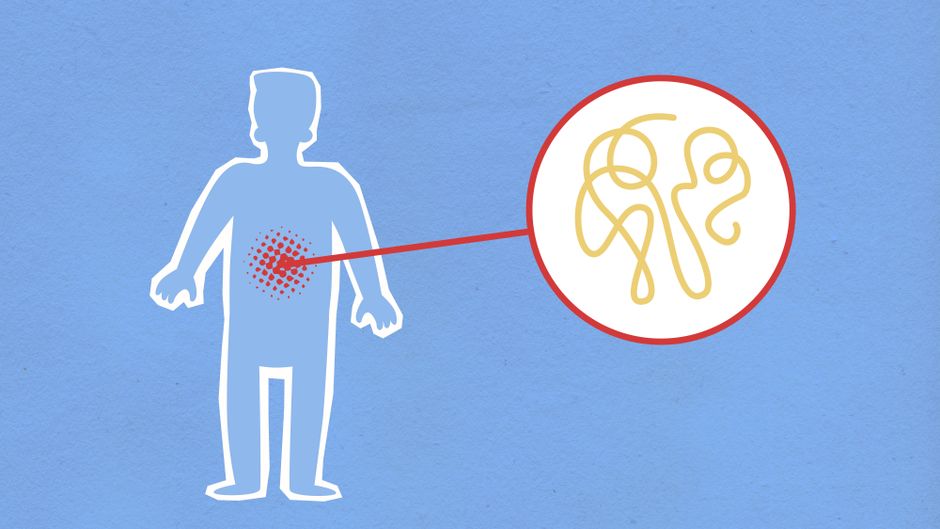
Peristalsis happens throughout most of your digestive tract, from the esophagus all the way to the rectum. It is the wave-like muscle contraction that moves food, liquid, and waste forward through your digestive system. Without peristalsis, nothing you eat would travel from your mouth to your stomach or beyond.
What Exactly Is Peristalsis and How Does It Work?
Peristalsis is a series of coordinated muscle contractions and relaxations. Think of it like squeezing a tube of toothpaste from the bottom. The muscles behind the food tighten, while the muscles in front relax. This pushes the contents forward one segment at a time.
Your digestive tract has two layers of smooth muscle. One layer runs in circles around the tube. The other runs lengthwise. These layers work together to create the squeezing motion. The process is automatic. You do not control it consciously. Your enteric nervous system, sometimes called the “second brain,” manages these contractions on its own.
The speed and strength of peristalsis vary depending on where you are in the digestive tract. The esophagus moves food quickly to the stomach. The small intestine moves it more slowly to allow nutrient absorption. The large intestine moves waste the slowest of all.
Where Does Peristalsis Occur in the Digestive Tract?
Peristalsis begins in the esophagus. When you swallow, the upper esophageal sphincter opens. Food enters the esophagus, and a wave of contraction pushes it downward. This esophageal peristalsis takes about 5 to 9 seconds to move food from your throat to your stomach. Gravity helps, but peristalsis works even if you are standing on your head.
Once food reaches the stomach, peristalsis continues but changes form. The stomach has three layers of muscle instead of two. This allows it to churn and mix food with stomach acid. The contractions here are stronger and more irregular. They break food down into a liquid mixture called chyme.
Peristalsis then moves chyme into the small intestine. This is where most nutrient absorption happens. The small intestine uses a slower, segmented pattern of contractions. This keeps food in contact with the intestinal walls longer so your body can extract nutrients. The contractions also push the remaining material toward the large intestine.
In the large intestine, peristalsis is much slower. Mass movements, which are strong contractions, happen only a few times per day. These push waste toward the rectum. The final act of peristalsis occurs in the rectum, triggering the urge to have a bowel movement.
What Happens When Peristalsis Stops or Goes Wrong?
When peristalsis slows down or stops, food and waste do not move forward properly. This can cause a range of digestive problems. The most common is constipation, which affects about 16 percent of US adults according to the National Institute of Diabetes and Digestive and Kidney Diseases.
A condition called gastroparesis occurs when the stomach cannot empty properly. The stomach muscles contract too weakly or not at all. This causes nausea, vomiting, and feeling full after only a few bites. Diabetes is a common cause, as high blood sugar can damage the nerves that control stomach muscles.
Intestinal pseudo-obstruction is a rare but serious condition where the intestines look normal but do not contract properly. It mimics a physical blockage without any actual obstruction. Symptoms include abdominal pain, bloating, and vomiting. The condition requires medical management and sometimes surgery.
Achalasia is a disorder of the esophagus where the lower esophageal sphincter does not relax. Food gets stuck at the bottom of the esophagus. Peristalsis in the esophagus itself is also weak or absent. This makes swallowing difficult and painful.
| Condition | Where Peristalsis Fails | Key Symptom |
|---|---|---|
| Achalasia | Esophagus | Difficulty swallowing, food stuck in chest |
| Gastroparesis | Stomach | Nausea, early fullness, vomiting |
| Chronic constipation | Large intestine | Infrequent bowel movements, straining |
| Intestinal pseudo-obstruction | Small or large intestine | Bloating, pain, vomiting without blockage |


What Speeds Up or Slows Down Peristalsis Naturally?
Several everyday factors affect how fast peristalsis moves. Fiber is one of the most studied. Soluble fiber, found in oats, apples, and beans, slows digestion slightly. Insoluble fiber, found in wheat bran and vegetables, speeds up transit time by adding bulk. Research published in the journal Gut found that high-fiber diets reduced constipation by increasing stool frequency in 77 percent of participants.
Hydration matters more than most people realize. When you are dehydrated, the colon pulls extra water from waste material. This makes stool harder and more difficult to move. The result is slower peristalsis and constipation. Aim for enough water that your urine is light yellow.
Exercise stimulates peristalsis. Physical activity increases blood flow to the intestines and triggers muscle contractions. A 2019 study in Scandinavian Journal of Gastroenterology found that 30 minutes of walking daily improved constipation symptoms in 89 percent of participants. Even gentle movement after meals helps.
Caffeine and spicy foods can speed up peristalsis in some people. Coffee, in particular, stimulates contractions in the colon. This is why many people feel the urge to have a bowel movement shortly after drinking it. The effect varies from person to person.
Stress slows peristalsis down. The fight-or-flight response diverts blood flow away from the digestive system. Chronic stress can lead to slow transit and constipation. Relaxation techniques like deep breathing before meals may help maintain normal peristalsis.
What Should You Avoid If You Have Peristalsis Problems?
Processed foods low in fiber are a common culprit. White bread, cheese, and red meat have little to no fiber. They slow down transit time and make stool harder. The American Gastroenterological Association recommends replacing these with whole grains, fruits, and vegetables.
Opioid pain medications are one of the strongest suppressors of peristalsis. They bind to receptors in the gut and stop contractions. Opioid-induced constipation affects 40 to 60 percent of people taking these medications according to the FDA. If you take opioids and have constipation, talk to your doctor about stool softeners or prescription treatments that target the gut specifically.
Anticholinergic medications, which include some antihistamines, antidepressants, and bladder control drugs, also slow peristalsis. These drugs block a neurotransmitter that helps gut muscles contract. If you notice constipation after starting a new medication, check with your prescriber. Do not stop taking prescribed medication without medical advice.
Laxative overuse can backfire. Stimulant laxatives force the intestines to contract. Using them too often can make the muscles dependent on them. Over time, the natural peristalsis reflex weakens. The result is worse constipation than before. The American College of Gastroenterology advises using stimulant laxatives only occasionally and under guidance.
One viral health myth claims that drinking lemon water or apple cider vinegar before meals dramatically speeds up peristalsis. There is no clinical evidence that either has a meaningful effect on gut motility in healthy people. Some people report benefits, but this is likely due to the warm water itself, not the lemon or vinegar. Warm liquids can stimulate mild peristalsis, but cold drinks do not have the same effect.
Can You Train Your Gut to Have Better Peristalsis?
You cannot consciously control peristalsis, but you can create conditions that support it. Regular meal timing is one of the most effective strategies. Eating at roughly the same times each day trains your gut to expect food. The enteric nervous system prepares for digestion, and peristalsis becomes more predictable.
The gastrocolic reflex is a natural response that triggers peristalsis in the colon after eating. It is strongest in the morning. Using this reflex can help establish regular bowel habits. Eating breakfast and allowing 20 to 30 minutes afterward to sit on the toilet can train your body to have a bowel movement at the same time each day.
Probiotics may help some people, but the evidence is mixed. A 2020 meta-analysis in Nutrients found that certain probiotic strains, particularly Bifidobacterium lactis and Lactobacillus casei, modestly improved stool frequency in people with constipation. The effect was small, about one extra bowel movement per week. Probiotics are not a cure-all, but they may help as part of a broader approach.
Abdominal massage is another technique with some support. Gentle clockwise massage around the navel can stimulate peristalsis in the colon. A small study in Gastroenterology Nursing found that daily self-massage improved constipation symptoms in 72 percent of participants after two weeks. It is safe and costs nothing to try.
Bowel retraining is a structured approach used for chronic constipation. It involves sitting on the toilet at the same time each day, using the gastrocolic reflex, and practicing relaxation techniques. It takes several weeks to see results, but it can restore normal peristalsis patterns in some people.
Common Misconceptions About Peristalsis
One widespread belief is that peristalsis stops completely during sleep. This is not true. Peristalsis slows down but does not stop. The migrating motor complex, a pattern of contractions that sweeps through the stomach and small intestine, actually becomes more active during fasting periods, including overnight. This “housekeeping” wave clears out leftover food and bacteria.
Another myth is that drinking ice water stops peristalsis. Cold liquids can temporarily slow gastric emptying, but they do not stop peristalsis. The body quickly warms the liquid, and normal contractions resume. There is no evidence that cold drinks cause long-term digestive problems.
Some people believe that peristalsis only happens in one direction. In fact, a reverse peristalsis, called antiperistalsis, can occur. This happens during vomiting, where the stomach contracts in the opposite direction to expel contents. It also occurs normally in the colon to mix waste and allow more water absorption.
The idea that you can feel peristalsis happening is also misleading. Most peristaltic contractions happen below your conscious awareness. What you feel as a “gurgle” or “rumble” is usually gas moving through the intestines, not the muscle contractions themselves. Strong peristalsis, like during a mass movement in the colon, can be felt as a cramp or urge to use the bathroom.
Frequently Asked Questions
Does peristalsis occur in the mouth?
No, peristalsis does not occur in the mouth. Swallowing in the mouth is a voluntary action controlled by skeletal muscles, not the smooth muscle contractions of peristalsis.
Can peristalsis be felt or heard?
Most peristalsis happens without you noticing it. The sounds you hear are usually gas and liquid moving through the intestines, not the muscle contractions themselves.
How long does peristalsis take from mouth to anus?
Total transit time varies widely between people. On average it takes 24 to 72 hours for food to travel through the entire digestive tract.
What medications slow down peristalsis?
Opioid pain relievers, anticholinergic drugs, and some antidepressants are common medications that slow peristalsis. Always check with your doctor before stopping any prescribed medication.
