
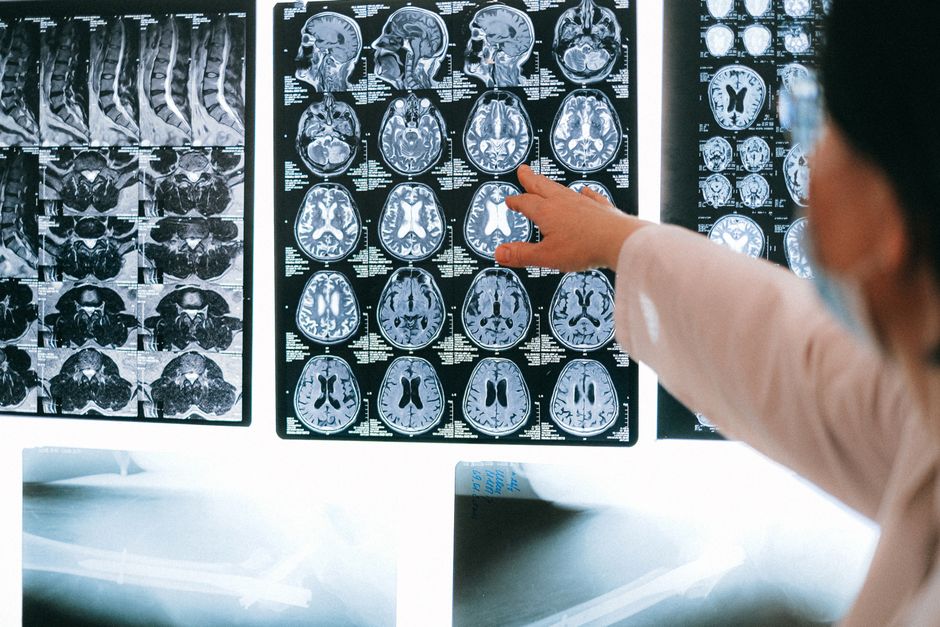
Conscience is not a single brain region or a moral organ you are born with. It is an emergent product of several systems working together: a fast emotional alarm, a slower capacity to imagine how others feel, and the prefrontal machinery that lets you hold your own behavior up against a standard and decide what to do next. The neuroscience of conscience sits at the meeting point of emotion, memory, self-control, and social learning. Damage or immaturity in any one of those parts can change how a person’s conscience behaves without erasing it entirely.
Where Does Conscience Come From The Neuroscience?
Conscience emerges from the interaction of three broad networks: the limbic system that generates emotional signals, the prefrontal cortex that weighs and regulates them, and the social brain that models other people’s minds. No single spot in the brain “contains” conscience.
The emotional core is the amygdala and nearby limbic structures. When you do something that violates your own standards, or even imagine doing it, the amygdala can trigger a visceral sense of wrongness — a gut feeling of guilt or unease. This is the alarm. It is fast, automatic, and largely below conscious control.
The prefrontal cortex, especially the ventromedial and dorsolateral regions, does the slower work. The ventromedial prefrontal cortex links emotional signals to decisions, helping you feel that an action matters. The dorsolateral prefrontal cortex supports holding a rule in mind and overriding an impulse. This is where the alarm gets interpreted, judged, and acted on.
The social layer involves regions like the temporoparietal junction and parts of the medial prefrontal cortex. These help you represent what another person is thinking and feeling. Conscience is not only about avoiding your own guilt — it is also about anticipating how your actions land on someone else.
A useful way to picture it: the amygdala supplies the feeling, the prefrontal cortex supplies the judgment, and the social brain supplies the perspective. Conscience is what happens when all three talk to each other.
Is Conscience Built Into the Brain at Birth?
No. The raw ingredients are present from birth, but conscience itself develops over years. A newborn has no conscience in any meaningful sense. What a newborn has is the capacity for distress, attachment, and eventually social referencing — the ability to read a caregiver’s face for cues about what is safe or wrong.
Between roughly ages two and seven, children move from simple rule-following to genuine internal standards. They begin to feel guilt rather than only fear of punishment. This shift tracks with the slow maturation of the prefrontal cortex, which continues developing well into the mid-twenties.
One non-obvious point: the prefrontal cortex is one of the last brain regions to fully mature, and the ventromedial portion — central to linking emotion with moral judgment — matures relatively late. This is part of why adolescents can understand a moral rule perfectly and still fail to apply it under emotional pressure. The knowledge is there. The regulatory machinery is still under construction.
This does not mean teenagers lack conscience. It means the system that converts moral knowledge into consistent behavior is still coming online.
What Happens When the Brain’s Conscience Systems Are Damaged?
Damage to specific regions can change conscience in ways that reveal how it is assembled. The most studied case is the ventromedial prefrontal cortex.
People with damage to this area can often state moral rules correctly and reason about moral dilemmas in the abstract. But they may fail to act on those rules in real life, and they may show blunted emotional responses to their own harmful actions. The knowledge survives. The feeling that gives the knowledge weight does not.
This pattern is sometimes described in the neurological literature as “acquired sociopathy.” It is important to be precise: this is not the same as psychopathy or antisocial personality disorder, which involve different developmental and neural features. Acquired changes from injury are a distinct phenomenon.
Amygdala damage produces a different picture. People with amygdala damage often show reduced fear and reduced recognition of fear in others. Since the amygdala helps generate the emotional alarm that underlies guilt, its disruption can flatten the emotional sting of wrongdoing.
The takeaway is that conscience is not stored in one place. It is distributed, and different kinds of damage produce different kinds of moral change.





How Does the Brain Learn Right From Wrong?
Conscience is learned through a combination of reinforcement, imitation, and emotional conditioning. The brain does not come preloaded with moral content. It comes preloaded with the machinery to acquire it.
When a child is praised, comforted, or gently corrected after a behavior, the brain associates that behavior with emotional outcomes. Over time, the emotional response becomes internal. The child no longer needs the parent’s reaction — the brain generates its own signal.
Imitation plays a large role. Children learn what matters by watching what adults react to emotionally. A parent who shows distress when someone is hurt is teaching the child’s brain which events carry moral weight.
This is why early social environments matter so much. The brain is not moral by default. It is moral by learning, and the learning depends on the emotional signals available in the environment.
Some research suggests that certain aspects of moral sensitivity — such as empathy and guilt-proneness — show some heritability. But heritability is not destiny. It describes how much of the variation between people is associated with genetic differences, not how fixed any individual is.
Does the Brain Have a Moral Center?
There is no single moral center. This is one of the most common misconceptions about the neuroscience of conscience.
Older ideas about a “moral module” in the brain have not held up. Modern work points to overlapping networks that are also used for non-moral tasks. The same prefrontal regions that help you resist a moral temptation also help you resist eating a second cookie. The same empathy circuits that let you feel someone’s pain also let you predict what they will do next.
Conscience borrows general-purpose machinery. It is not a separate organ bolted onto the brain. It is a use case — a way of applying emotion, self-control, and social understanding to questions of right and wrong.
This matters because it explains why conscience can be impaired by conditions that have nothing to do with morality directly — sleep deprivation, stress, certain psychiatric conditions, and brain injury can all degrade the systems conscience relies on.
Can Conscience Be Changed or Strengthened?
Yes, within limits. Because conscience depends on learning and on networks that remain plastic throughout life, it can shift. But the honest position is that the evidence for deliberate “conscience training” is limited and uneven.
- Practices that strengthen empathy and perspective-taking, such as structured reflection on others’ experiences, show some evidence of changing behavior in the short term. Long-term effects are less clear.
- Mindfulness-based approaches have been studied for their effects on emotional regulation and prosocial behavior. Results vary, and effect sizes in many studies are modest.
- Therapy for conditions that impair moral behavior — such as certain personality disorders — can help, but outcomes differ widely between individuals.
What is well established is that the brain systems underlying conscience respond to experience. What is not well established is whether specific exercises reliably produce lasting moral change in healthy adults. Anyone claiming a simple method to “train your conscience” is going beyond the evidence.
What Does This Mean for Understanding Ourselves?
The neuroscience of conscience points to something both humbling and clarifying. Our sense of right and wrong is not handed down from a separate moral faculty. It is built from the same stuff as fear, memory, and self-control.
That does not make conscience less real. It makes it more interesting. It means conscience is shaped by biology and experience together, and it means the capacity for moral feeling depends on brain systems that can be supported or undermined by how we live.
It also means that when someone’s conscience seems absent or broken, the answer is rarely simple. It may reflect development, injury, learning history, or a combination. The neuroscience does not excuse harmful behavior. It does help explain why moral behavior is not equally easy for everyone.
Frequently Asked Questions
What part of the brain is responsible for conscience?
No single part is responsible. Conscience depends on the amygdala for emotional alarm, the prefrontal cortex for judgment and self-control, and social brain regions for understanding others’ perspectives.
Is conscience innate or learned?
The capacity for conscience is innate, but its content is learned. Children develop genuine moral standards over years through emotional learning, imitation, and the slow maturation of the prefrontal cortex.
Can brain damage remove someone’s conscience?
Damage to the ventromedial prefrontal cortex can leave moral knowledge intact while stripping away the emotional weight that makes it guide behavior. This is different from developmental psychopathy, which involves different neural features.
Can you strengthen your conscience?
The brain systems behind conscience respond to experience, so some change is possible. However, the evidence that specific exercises reliably produce lasting moral change in healthy adults is limited.
