
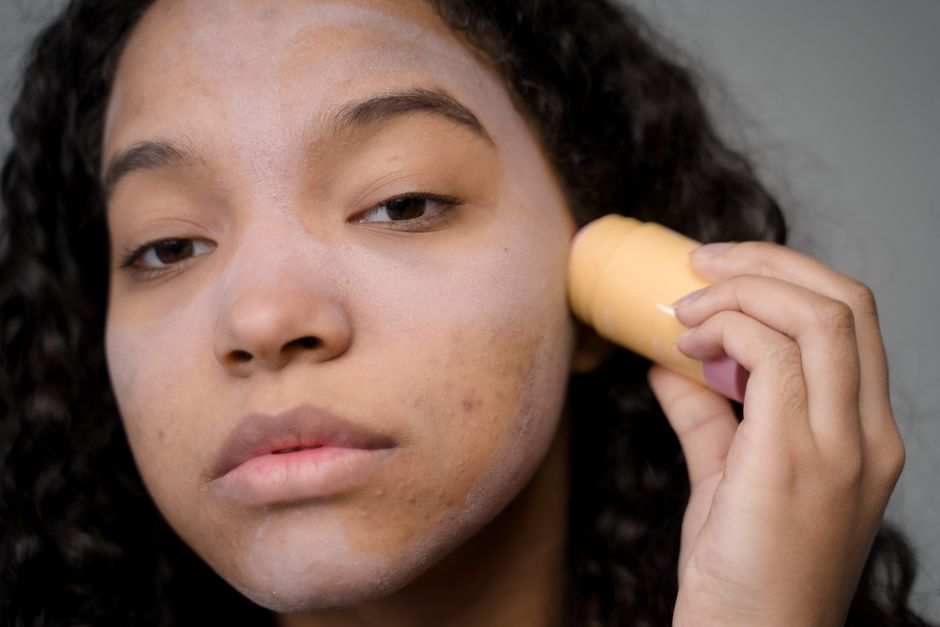
Acne on the cheeks is not a random event. It happens when a hair follicle gets blocked by sebum and dead skin cells, and that blockage becomes inflamed. Where it shows up on your face has more to do with anatomy, hormones, and what touches your skin than with any single “cause” — and it is not a sign that your liver or kidneys are failing.
Where Does Cheek Acne Come From Key Triggers?
Cheek acne comes from the same basic process as acne anywhere else on the body: a pore becomes clogged, bacteria that normally live on the skin multiply inside it, and the immune system responds with redness, swelling, and pus. The cheeks are simply one of the places this process shows up most often.
Acne is a disorder of the pilosebaceous unit — the hair follicle and its attached oil gland. Four things happen together:
- Sebum production rises, usually under hormonal influence
- Dead skin cells inside the follicle do not shed normally and clump together
- Cutibacterium acnes bacteria multiply in the blocked follicle
- The immune system sends inflammatory cells to the area
That four-part sequence is well established in dermatology. What varies from person to person is which of those steps is dominant, and that is what determines whether your acne is mostly blackheads, mostly red bumps, or deep painful cysts.
Cheek skin is thinner than forehead skin and has a dense network of follicles. It also gets a lot of contact — phones, hands, pillowcases, helmet straps, and makeup brushes. That contact does not create acne from nothing, but it can push existing clogged follicles into inflammation.
Is Cheek Acne a Hormonal Problem?
Often, yes — especially in adults. Hormonal acne tends to appear along the jawline and lower cheeks, and it flares in patterns that track with the menstrual cycle, pregnancy, perimenopause, or stopping birth control pills.
Androgens, including testosterone and its more potent form DHT, drive sebum production. Higher androgen activity means more oil, which means more chances for a follicle to clog. This is why hormonal acne tends to be inflammatory and deep rather than just blackheads and whiteheads.
Polycystic ovary syndrome (PCOS) is a common cause of persistent hormonal acne in women, along with irregular periods and excess hair growth. If cheek and jawline acne appears alongside those other signs, that combination is worth discussing with a clinician.
One clarification worth making: hormonal acne is not limited to teenagers. Adult acne is common, and in women it often persists well into the 30s, 40s, and beyond. The hormonal drivers shift over time but do not necessarily disappear.
Can Your Phone, Pillow, or Hands Cause Cheek Acne?
Contact with objects does not create acne, but it can make existing acne worse. This is called acne mechanica when friction or pressure is the main driver.
Common sources on the cheeks include:
- Cell phones held against the same cheek for long calls
- Pillowcases that are not washed often
- Hands resting on the face throughout the day
- Helmet chin straps and face masks
- Dirty makeup brushes and sponges
Friction and occlusion trap sweat, oil, and bacteria against the skin. The result is not a new disease — it is an environment where existing clogged pores are more likely to become inflamed.
Changing your pillowcase regularly helps. So does cleaning your phone screen. Neither will clear acne on its own, but both remove a contributing factor that is entirely within your control.



Does Diet Affect Cheek Acne?
The evidence on diet and acne is real but modest. It is not the dramatic cause-and-effect that social media often claims.
Some studies suggest that high-glycemic diets — those heavy in refined sugars and quickly digested carbohydrates — are associated with more acne. The proposed mechanism involves spikes in insulin, which can raise androgen activity and sebum production. The association is consistent across several studies, but the effect size in most trials is small.
Dairy has also been studied, particularly skim milk. Some research indicates an association between skim milk intake and acne in teenagers. The evidence is not strong enough to say dairy causes acne in everyone, and cutting out dairy is not a guaranteed fix.
What the evidence does not support: chocolate as a direct cause of acne, greasy food causing oily skin, or any single food being the sole trigger. If you notice your skin flares with a specific food, that observation is worth tracking — but it is individual, not universal.
What Else Looks Like Cheek Acne but Isn’t?
Several skin conditions produce bumps on the cheeks that are not acne. Getting the diagnosis right matters, because the treatments are different.
Rosacea causes redness, flushing, and small bumps on the central face, including the cheeks. It does not usually produce blackheads or whiteheads, which is one way to tell it apart from acne. Rosacea is more common in adults with fair skin.
Keratosis pilaris causes small rough bumps, often on the upper arms and sometimes on the cheeks. The bumps are keratin plugs in hair follicles, not inflamed acne lesions. They tend to feel rough rather than tender.
Folliculitis is inflammation of hair follicles, often from bacteria, fungus, or irritation. It can look like small red bumps similar to acne. It is common after shaving or in areas of friction.
Perioral dermatitis produces small red bumps and sometimes scaling around the mouth and nose, and can extend to the cheeks. It is often linked to heavy use of topical steroids or certain skincare products.
If your “acne” does not respond to standard acne treatments, or if it looks unusual, that is a signal to get a proper evaluation rather than continuing to treat it as acne.
What Actually Helps Cheek Acne?
Cheek acne responds to the same treatments as acne elsewhere, but the cheek area can be more sensitive to irritation from strong products.
Established options include:
- Topical retinoids — prescription forms like tretinoin and adapalene are among the most effective for unclogging pores
- Benzoyl peroxide — reduces C. acnes bacteria and helps with inflammation
- Salicylic acid — helps exfoliate inside the follicle and is available over the counter
- Oral antibiotics — used short-term for moderate to severe inflammatory acne, always alongside a topical to prevent resistance
- Hormonal treatments — combined oral contraceptives and spironolactone are options for hormonal acne in women
- Isotretinoin — reserved for severe or treatment-resistant acne, with close medical monitoring
Consistency matters more than intensity. Most acne treatments take several weeks to show visible improvement, and some cause a temporary worsening before they help. That timeline is well documented and worth knowing before you give up on a treatment too early.
Gentle cleansing twice a day, a non-comedogenic moisturizer, and sunscreen are the basics. Harsh scrubbing, picking, and layering many active ingredients at once tend to make cheek acne worse, not better.
When Should You See a Doctor About Cheek Acne?
See a clinician if your acne is causing deep painful nodules or cysts, if it is leaving scars, if it is affecting your mental health, or if over-the-counter treatments have not helped after a reasonable trial.
Acne that scars is worth treating aggressively and early. Scarring is largely permanent once it forms, and the window to prevent it is during active breakouts. This is one area where waiting to see if it clears on its own can cost you.
Also worth a visit: sudden severe acne in an adult who never had it before, acne with signs of a hormonal disorder like irregular periods or rapid hair growth, and any rash that does not look like typical acne.
Frequently Asked Questions
Why do I only get acne on my cheeks?
Cheek acne often reflects a mix of hormonal activity, friction from phones or pillowcases, and the natural distribution of oil glands. It is not a sign that a specific organ is unhealthy.
Does cheek acne mean something is wrong with my liver?
No. The idea that specific face zones map to specific organs is a traditional face-mapping concept, not a medically established one. Cheek acne is a skin follicle issue, not a liver signal.
What foods should I avoid for cheek acne?
No single food causes acne. Some studies suggest high-glycemic diets and skim milk are associated with more acne, but the effect is modest and varies by person.
How long does cheek acne take to clear?
Most treatments take several weeks to show improvement, and full clearing often takes a few months. If nothing changes after a reasonable trial, that is when to see a clinician.
