

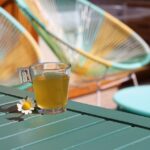
Nettle tea has a long history as a folk remedy for fertility, and the timing question comes up constantly. Here is the honest answer: no clinical guideline establishes a specific day or phase of the menstrual cycle for drinking nettle tea to improve fertility. The idea that it should be timed to a particular phase comes from traditional herbal practice and from the plant’s nutritional content, not from controlled human trials. If you drink it, the most common traditional approach is a daily cup during the follicular phase — from the end of menstruation up to ovulation — then pausing until your next period. That is a tradition, not a proven protocol.
What Does Nettle Tea Actually Contain?
Stinging nettle (Urtica dioica) is a genuinely nutritious plant. The leaves are a source of iron, calcium, magnesium, potassium, and vitamins A, C, and K. They also contain plant compounds called flavonoids and lignans.
That nutrient profile is the main reason nettle shows up in fertility discussions. Iron and folate matter for blood health and early fetal development. Magnesium and calcium are involved in hundreds of body processes. So the logic goes: a nutrient-dense tea must support reproductive health.
The problem with that logic is that drinking a tea is not the same as eating the plant. A cup of steeped nettle leaves delivers a small fraction of the minerals found in a serving of cooked nettle greens. How much actually transfers into the water depends on steeping time, water temperature, and whether the leaves were dried or fresh. No standard measurement exists for a typical home-brewed cup.
There is also a real safety consideration. Nettle leaves contain vitamin K, which plays a role in blood clotting. Anyone taking warfarin or another blood-thinning medication should talk to their doctor before drinking nettle tea regularly, because vitamin K intake can affect how these drugs work.
When To Drink Nettle Tea For Fertility Cycle Timing?
Traditional herbalists most often recommend the follicular phase — the days after your period ends and before ovulation. The reasoning is that this is when the body is building the uterine lining and preparing an egg for release, so nutrient support is thought to be most useful then.
Some traditions suggest pausing nettle during the luteal phase, after ovulation, and some suggest avoiding it entirely during menstruation because of its vitamin K content and a belief that it may affect bleeding. Others recommend drinking it throughout the month without any break.
These recommendations contradict each other. That alone tells you the timing question has no settled answer. When traditional sources disagree this much, it usually means no one has run the studies needed to find out.
If you want to follow the most common traditional pattern, it looks like this:
- Menstruation: Many traditions pause nettle tea during bleeding days.
- Follicular phase: Daily cup from the end of your period until ovulation.
- Ovulation: Some stop here; others continue.
- Luteal phase: Often paused in traditional practice, though not universally.
None of these steps has been tested in a clinical trial for fertility outcomes. They are customs passed down, not findings from research.
Is There Any Evidence Nettle Tea Helps Fertility?
No. There are no published human trials showing that nettle tea improves fertility, shortens time to conception, or affects ovulation. Anyone who tells you otherwise is going beyond what the evidence supports.
What does exist is nutritional research on nettle as a food, and laboratory studies on nettle extracts. Lab studies are not the same as human outcomes. A compound that behaves a certain way in a petri dish or in rats often does nothing measurable in people at the doses found in tea.
This matters because fertility is a high-stakes topic. People spend years and significant money trying to conceive. A tea that costs a few dollars and feels harmless can quietly become a substitute for evaluation and treatment that actually addresses a medical problem.
If you have been trying to conceive for a year, or six months if you are over 35, that is the point to see a doctor. Nettle tea is not a substitute for that conversation.


What Does the Evidence Actually Support for Fertility?
The factors with real research behind them are less exciting than a tea, but they hold up. Age is the single strongest predictor of natural fertility, and it is not modifiable. Everything else on this list is.
Body weight matters. Both significantly low and significantly high body weight can disrupt ovulation. Reaching and staying in a healthy range often restores regular cycles in people whose irregular cycles are weight-related.
Smoking reduces fertility in both partners and is one of the clearest findings in reproductive research. So does heavy alcohol use. These are not subtle effects.
Certain nutrient deficiencies — vitamin D, iron, and folate among them — are associated with fertility problems, and correcting a documented deficiency is reasonable. This is different from taking a nutrient you are not short on. More is not better, and some vitamins are harmful in excess, particularly vitamin A during early pregnancy.
Medical conditions like thyroid disorders, polycystic ovary syndrome, and blocked fallopian tubes cause infertility in many people. These need diagnosis and treatment, not herbal support.
Does Nettle Tea Have Side Effects or Risks?
For most healthy adults, a cup of nettle tea is unlikely to cause problems. That said, “unlikely” is not “no risk,” and there are specific situations worth knowing about.
Nettle is a diuretic, meaning it increases urine output. If you take a diuretic medication, lithium, or blood pressure medication, this can interact. Nettle may also lower blood sugar, which matters if you take diabetes medication.
Because of its vitamin K content, nettle can interfere with warfarin and similar anticoagulants. This is not a theoretical concern — vitamin K intake directly affects how these drugs work, and consistency matters more than avoidance.
Pregnant women should be cautious. Nettle tea is sometimes recommended in late pregnancy in traditional midwifery, but the evidence for safety and benefit is limited, and no clinical guidelines establish a dose or a safe window. Some sources advise against nettle during pregnancy because of its potential effects on the uterus. Given that uncertainty, the conservative choice is to avoid it or discuss it with your obstetric provider first.
Anyone with kidney disease should also check with a doctor before regular use, since diuretic effects can matter.
How Should You Think About Herbal Teas and Fertility?
Herbal teas sit in an odd space. They are sold as food, not medicine, so they do not need to prove they work. They can still have real physiological effects. That combination — no proof required, real effects possible — is why they deserve the same caution as any supplement.
A useful way to think about it: if a tea helps you relax and feel like you are doing something positive, that has value. Stress reduction is a reasonable goal. But do not confuse feeling good about a habit with evidence that the habit changes your fertility.
If you want to try nettle tea while also pursuing real evaluation and care, that is a personal choice. Just tell your doctor what you are taking. Herbs interact with medications, and your care team needs the full picture.
One more thing worth saying plainly: the timing question assumes nettle tea does something for fertility in the first place. That assumption has not been established. Getting the timing “right” for a practice with no proven effect is not a meaningful goal.
Frequently Asked Questions
When should I drink nettle tea for fertility?
Traditional herbal practice most often suggests drinking it daily during the follicular phase, from the end of your period until ovulation. No clinical guideline or human trial establishes this timing as effective.
Does nettle tea help you get pregnant?
No human studies show that nettle tea improves fertility or helps with conception. Its reputation comes from its nutrient content and traditional use, not from clinical evidence.
Can I drink nettle tea while trying to conceive?
Many people do, and for most healthy adults a daily cup is unlikely to cause harm. If you take blood thinners, diabetes medication, or blood pressure medication, check with your doctor first because of possible interactions.
Is nettle tea safe during pregnancy?
The evidence is limited, and no clinical guidelines establish a safe dose or timing during pregnancy. Because of uncertainty about its effects on the uterus, the conservative choice is to avoid it or ask your obstetric provider first.
