
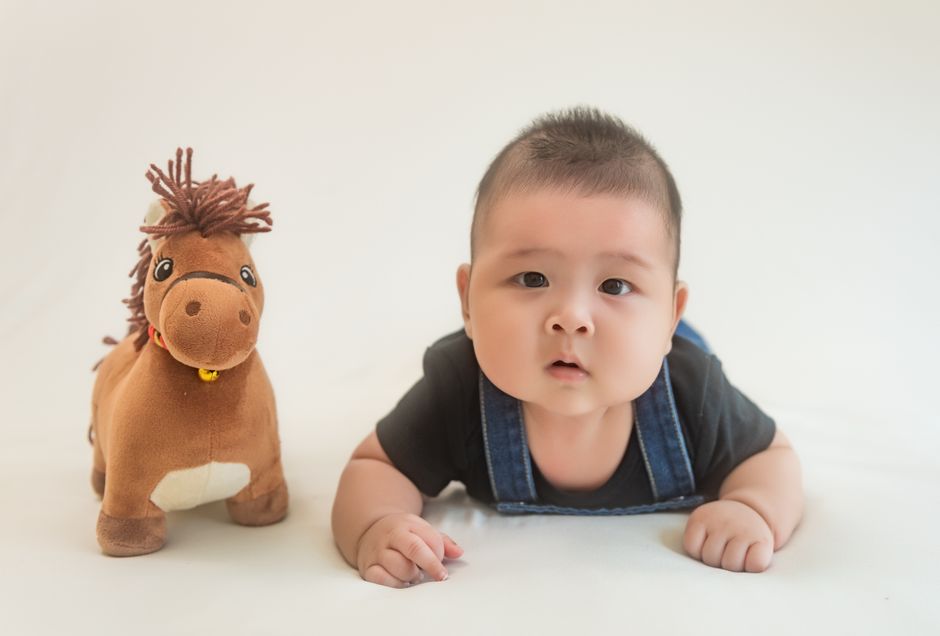
Most babies start crawling between 7 and 10 months of age. Some begin as early as 6 months, while others skip crawling entirely and move straight to pulling up and walking around their first birthday. The range of what is considered normal is wide, and a baby who never crawls is not automatically behind.
When Do You Learn To Crawl? Understanding the Typical Range
Crawling is a major milestone, but it is not a hard deadline. Pediatricians look for a range, not a single date on the calendar. The typical window for hands-and-knees crawling is 7 to 10 months. Some babies figure it out at 6 months. Others take until 11 or 12 months.
Before they crawl, babies usually show earlier skills. Rolling over typically happens around 4 to 6 months. Sitting without support often follows between 5 and 7 months. These earlier milestones build the strength and coordination that crawling requires.
What Counts as Crawling?
Not all crawling looks the same. The classic hands-and-knees crawl is the most common, but many babies use other methods to get around. Some do an army crawl, dragging their belly on the floor while pulling with their arms. Others do a bottom scoot, moving across the room while seated. Some roll from place to place.
All of these count as mobility. The key point is that the baby is moving independently from one spot to another. The exact style matters less than the fact that the baby is exploring the environment and building strength.
Some babies never crawl on hands and knees at all. They may scoot, shuffle, or simply pull themselves up to stand and cruise along furniture. Research suggests that skipping the classic crawl is generally not a problem, as long as the baby is meeting other motor milestones and using both sides of the body evenly.
What Skills Does a Baby Need Before Crawling?
Crawling does not happen in isolation. It requires several underlying skills to come together at the right time.
- Head control and neck strength — the baby must hold the head up while moving.
- Arm and shoulder strength — the arms support a large share of the body weight during crawling.
- Core and trunk stability — the midsection must stay steady while the limbs move.
- Leg strength — the legs push the body forward.
- Coordination — the brain must organize opposite arm and leg movements, like the right arm with the left leg.
These skills develop gradually during the first year. Tummy time is the main way babies build the upper body strength needed for crawling. Babies who spend regular time on their stomachs during waking hours tend to develop these muscles earlier.





Signs Your Baby May Be Ready to Crawl
Parents often notice a few behaviors in the weeks before actual crawling begins. These are early signals that the baby is building toward independent movement.
One common sign is rocking back and forth on the hands and knees. The baby gets into the crawling position and rocks, but does not yet move forward. This rocking motion builds the arm and leg strength needed to push off.
Another sign is the plank position. The baby pushes up onto hands and toes with a straight body, like a plank. This shows strong arm and core muscles. Some babies do this before they figure out how to coordinate the crawling motion.
You may also see the baby lunge forward and then fall onto the belly. This often happens when the baby wants to move but has not yet mastered the coordination. It is a normal part of the learning process.
What If My Baby Is Not Crawling Yet?
If your baby is under 9 months and not crawling, there is usually no reason to worry. The skill is still within the normal range. If your baby is 10 months or older and shows no interest in moving, it is worth a conversation with your pediatrician.
More important than the exact month is whether your baby is making progress in other areas. A baby who is rolling, sitting, reaching for toys, and showing curiosity about the environment is developing normally even if crawling is delayed.
Talk to your doctor if any of these apply:
- Your baby is not showing any interest in moving by 9 to 10 months.
- Your baby favors one side of the body consistently during movement attempts.
- Your baby has low muscle tone and feels floppy when held.
- Your baby has lost a skill they previously had, such as rolling or sitting.
These signs do not mean something is wrong. They simply mean a professional evaluation is worth doing. Early intervention services exist precisely for this kind of situation, and they work best when started early.
How to Encourage Crawling Safely
You cannot force a baby to crawl, but you can create conditions that make it more likely. The most effective method is giving the baby plenty of supervised floor time.
Tummy time is the foundation. Start with a few minutes several times a day from birth. By the time the baby is 4 to 6 months old, they should be spending longer stretches on the floor. Place toys just out of reach to encourage movement toward them.
Make sure the floor surface is safe. A firm mat or a clean carpet works well. Avoid placing babies on soft bedding or pillows, which can be a suffocation hazard and makes movement harder.
Dress the baby in clothing that allows free movement. Footed pajamas with slippery soles can make it harder to grip the floor. Bare feet or non-slip socks give the baby better traction.
Is Skipping Crawling a Problem?
Some parents worry when their baby skips crawling entirely. The concern is understandable, but the evidence does not support major alarm.
Some babies go straight from sitting to pulling up to standing and then walking. This pattern is well documented and generally considered a normal variation. The baby still develops the same muscle strength, just through different movements.
However, if a baby skips crawling and also shows delays in other areas, that is worth attention. For example, a baby who does not crawl, does not pull to stand, and shows little interest in movement may need an evaluation. The issue is not the skipped crawl itself. The issue is overall motor development.
There is no strong evidence that skipping crawling causes learning problems later in life. This idea circulates widely online, but research has not confirmed a direct link between the specific crawling style and later academic or cognitive outcomes.
When to Expect Walking After Crawling
Once a baby starts crawling, walking usually follows within a few months. Most babies take their first independent steps between 9 and 12 months. Some walk as early as 8 months. Others wait until 15 months or later.
Crawling and walking use different muscle groups and coordination patterns. A baby who crawls well has built strong arms, shoulders, and core muscles. These same muscles support standing and balancing. But walking also requires balance skills that crawling does not directly train.
After crawling begins, you will often see the baby pull up to stand on furniture. This usually happens around 9 to 10 months. Then comes cruising, where the baby walks while holding onto furniture. Independent walking typically follows a few weeks to a few months after cruising starts.
When to Talk to a Doctor About Motor Development
Pediatricians track motor milestones at every well-child visit. You do not need to wait for a problem to mention your concerns.
It is reasonable to raise the topic at any checkup if you have questions. The AAP recommends discussing motor development with your pediatrician if you notice any loss of skills, significant asymmetry between the left and right sides, or a lack of any progress over several months.
Keep in mind that developmental timelines are guides, not rules. A baby who is slightly outside the typical window is often completely healthy. The goal of tracking milestones is to identify babies who may benefit from early support, not to label normal variations as problems.
Frequently Asked Questions
What is the average age babies start crawling?
Most babies start crawling between 7 and 10 months of age. Some start as early as 6 months, and others wait until 11 or 12 months.
Is it normal for a baby to skip crawling?
Yes, some babies skip crawling and go straight to pulling up and walking. This is a normal variation in development and is not a cause for concern on its own.
How can I help my baby learn to crawl?
Give your baby plenty of supervised floor time and regular tummy time. Place toys just out of reach to encourage movement toward them.
When should I worry about my baby not crawling?
Talk to your pediatrician if your baby shows no interest in moving by 9 to 10 months or if you notice your baby favoring one side of the body. Loss of previously mastered skills also warrants a checkup.
