
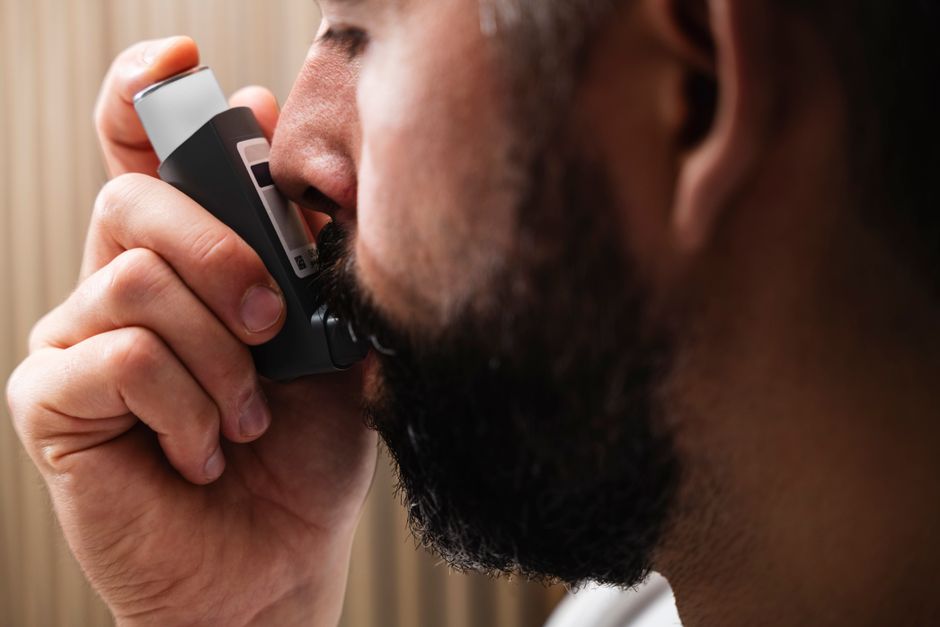
Wheezing is a whistling sound that happens when air moves through narrowed airways in your lungs. If you notice it when you breathe in and out, it usually means your airways are partially blocked or constricted, and it is worth taking seriously. Wheezing on both the inhale and exhale often points to conditions like asthma, allergies, or a respiratory infection, but it can also signal something more urgent. You should not ignore it, especially if it is new, getting worse, or accompanied by shortness of breath.
What Does Wheezing Actually Sound Like?
Wheezing is a high-pitched, musical whistling sound. It is most obvious when you breathe out, but some people hear it when they breathe in as well. The sound happens because air is squeezing through tubes that are narrower than normal.
Think of blowing air through a straw. If the straw is wide, you hear almost nothing. If you pinch the straw, the air makes a whistle. Your airways work the same way. The more narrow the passage, the higher the pitch of the wheeze.
Wheezing that occurs only on the exhale is more common and often less alarming. Wheezing on both inhale and exhale can suggest more significant narrowing or obstruction higher up in the airway. A doctor can tell a lot from where the wheeze is loudest and whether it happens on one side or both.
Why Do You Wheeze When Breathing In And Out?
Your airways are tubes that carry air from your throat into your lungs. They have muscles around them and a lining that can swell. Several things can make those tubes narrow:
- Muscle spasms that squeeze the airway closed
- Swelling of the airway lining
- Excess mucus clogging the passage
- A foreign object or growth partially blocking the tube
When any of these happen, airflow becomes turbulent. That turbulence creates the whistling sound you hear. The location of the narrowing matters. Narrowing deep in the lungs tends to cause wheezing on the exhale. Narrowing in the larger airways, like the trachea or main bronchi, can cause wheezing on both inhale and exhale.
This is why your doctor will ask you to describe exactly when you hear the wheeze. It is not just a detail. It helps narrow down what is happening inside your chest.
What Conditions Cause Wheezing?
Asthma is the most common cause of wheezing in adults. During an asthma flare-up, the muscles around the airways tighten, the lining swells, and mucus builds up. This combination narrows the airways and produces that classic whistling sound.
Other common causes include:
- Respiratory infections like bronchitis or pneumonia
- Allergic reactions to pollen, dust, or pet dander
- Chronic obstructive pulmonary disease (COPD), often linked to smoking
- Acid reflux irritating the airways
- Heart failure, which can cause fluid to build up in the lungs
Less common but serious causes include a blood clot in the lung, a tumor pressing on an airway, or a severe allergic reaction called anaphylaxis. If wheezing comes on suddenly after eating a new food, taking a medication, or being stung by an insect, seek emergency care immediately.
One important point: not all wheezing is asthma. Many people assume wheeze equals asthma, but that is not always true. Vocal cord dysfunction, for example, can cause a sound very similar to wheezing, but it comes from the vocal cords closing abnormally rather than the lungs. This is why a proper medical evaluation matters.





When Should You Seek Immediate Medical Care?
Some wheezing can wait for a regular doctor’s appointment. Some cannot. Go to an emergency room or call emergency services if wheezing comes with any of the following:
- Difficulty breathing or feeling like you cannot get enough air
- Blue or gray lips, fingers, or skin
- Confusion or drowsiness
- Rapid breathing that does not slow down
- Chest pain or pressure
- Wheezing that starts suddenly after an allergic trigger
These signs indicate your body is struggling to get oxygen. Do not wait to see if it passes. It is always better to be evaluated and told it is not an emergency than to delay care for a condition that is worsening.
Even without these emergency signs, you should see a doctor if wheezing lasts more than a few days, keeps coming back, or interferes with sleep or daily activities. Wheezing that is new in an adult who has never had it before deserves a thorough evaluation.
How Is Wheezing Diagnosed?
Your doctor will start by listening to your lungs with a stethoscope. They will ask when the wheezing started, what makes it worse, and whether you have other symptoms like cough, fever, or chest tightness.
Depending on what they find, they may order tests. A chest X-ray can show infections, fluid, or masses. Spirometry is a breathing test that measures how much and how fast you can exhale. This test is the standard way to diagnose asthma and COPD. Some doctors also use a test called a methacholine challenge, which involves inhaling a substance that narrows airways. If your airways narrow in response, it suggests asthma.
Blood tests can check for signs of infection or allergic inflammation. An allergy test may help identify triggers. If your doctor suspects reflux or heart problems, they may order additional tests specific to those conditions.
Diagnosis is a process. It is not always clear on the first visit. Be patient and thorough with your history. The more detail you give, the easier it is for your doctor to find the cause.
What Treatments Are Available?
Treatment depends entirely on the cause. There is no single treatment for wheezing because wheezing is a symptom, not a disease.
For asthma, the mainstay of treatment is inhaled medication. Rescue inhalers contain bronchodilators that relax the muscles around the airways quickly. Controller inhalers contain corticosteroids that reduce inflammation over time. Many people with asthma need both. Using a rescue inhaler more than twice a week is a sign that your asthma is not well controlled and your treatment plan needs review.
For infections like bronchitis, treatment may be rest, fluids, and time. Antibiotics only help if the infection is bacterial, which is not common for bronchitis. Viral infections do not respond to antibiotics.
For allergies, antihistamines and avoiding triggers can help. For COPD, treatment often involves bronchodilators, pulmonary rehabilitation, and smoking cessation if you smoke. Quitting smoking is the single most effective step for COPD.
For acid reflux, dietary changes and medications that reduce stomach acid may ease wheezing caused by reflux irritating the airways.
No clinical guidelines support home remedies as a substitute for medical treatment. Steam inhalation or a humidifier may temporarily soothe irritated airways, but they do not treat the underlying cause. If you are wheezing, see a doctor to determine what is causing it before relying on home measures.
Can You Prevent Wheezing?
Prevention depends on the cause. If you have asthma, the best prevention is taking your controller medication as prescribed, even when you feel fine. Many people stop their asthma medication when symptoms disappear, which sets them up for a flare-up later.
If allergies trigger your wheezing, reducing exposure to allergens helps. This might mean using air filters, washing bedding in hot water, or keeping windows closed during high pollen seasons. If you know your triggers, you can plan around them.
If you smoke, quitting is the most impactful prevention step. Smoking damages the airways and makes every respiratory condition worse. It is never too late to benefit from quitting, regardless of how long you have smoked.
Getting vaccinated against flu and pneumonia can also reduce your risk of respiratory infections that trigger wheezing. These vaccines do not prevent all infections, but they reduce the severity and complication rate.
What to Expect During Recovery
Recovery time depends on the cause. A mild viral infection may cause wheezing for a week or two. An asthma flare-up might improve within days of proper treatment. COPD is a chronic condition that does not go away, but symptoms can be managed.
If your doctor prescribes medication, take it exactly as directed. Do not stop early because you feel better. If you are using an inhaler, make sure you are using the right technique. Poor inhaler technique is one of the most common reasons asthma medications seem ineffective. Ask your doctor or pharmacist to watch you use it and correct your form.
Follow up with your doctor as recommended, even if you feel fine. Some conditions need ongoing monitoring. If your symptoms return after treatment, do not assume it is the same issue. It could be a different problem that needs its own evaluation.
Frequently Asked Questions
Can wheezing go away on its own?
Sometimes, especially if it is caused by a mild viral infection. But recurring or persistent wheezing should always be evaluated by a doctor because it usually indicates an underlying condition that needs treatment.
Is wheezing more serious when breathing in or out?
Wheezing on the exhale is more common and often less concerning. Wheezing on the inhale, or on both inhale and exhale, can suggest more significant airway narrowing and should be evaluated promptly.
Can anxiety cause wheezing?
Anxiety can cause rapid breathing and a feeling of chest tightness, but it does not directly cause true wheezing. If you hear a whistling sound, there is likely an airway issue that needs medical evaluation, not just stress relief.
What should I do if my inhaler is not helping?
If your rescue inhaler is not relieving symptoms within minutes, or if you need it more often than every four hours, seek medical care. This is a sign your airway narrowing is severe and you need additional treatment.
