
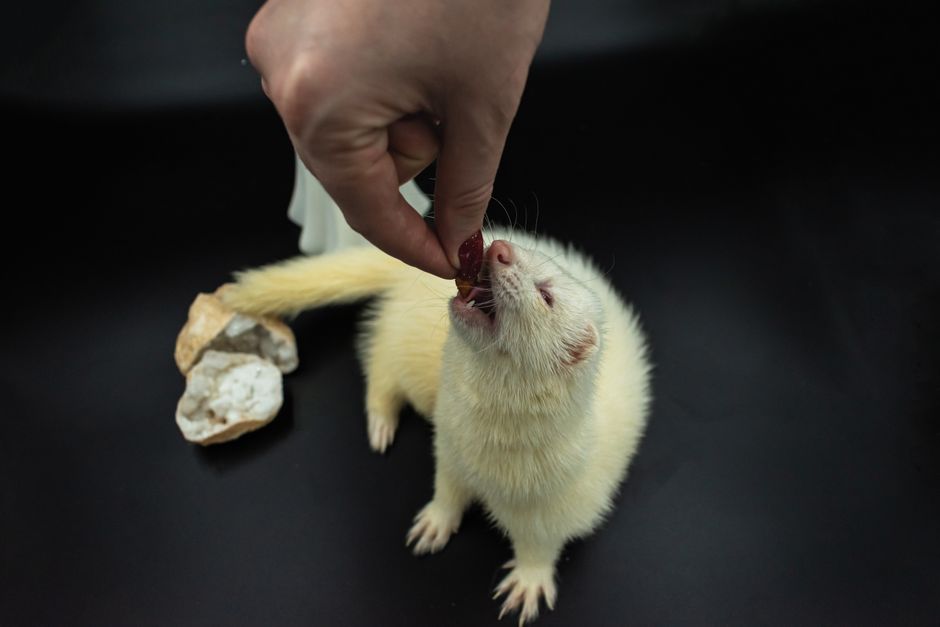
Ferrets are obligate carnivores, which means their bodies are built to digest meat, not plant matter. Feeding them the wrong foods can lead to serious digestive issues, blood sugar crashes, and even life-threatening blockages. The most dangerous items include fruits, vegetables, grains, dairy, and sugary treats, as well as any processed human snack food. To keep your ferret healthy, you must stick to a high-protein, high-fat, low-carbohydrate diet that mimics their natural prey.
Why Can’t Ferrets Eat Plant-Based Foods?
A ferret’s digestive tract is short and simple. It is designed to process animal protein and fat quickly. They lack the enzymes needed to break down complex carbohydrates and plant fibers. This means vegetables, fruits, and grains pass through undigested or ferment in the gut, causing bloating, diarrhea, and discomfort.
Their metabolism also works differently. Ferrets need to eat frequently because their bodies cannot store glucose for long. When they eat carbohydrates, their blood sugar spikes and then crashes. Over time, a high-carb diet can lead to insulinoma, a common pancreatic tumor in ferrets. This is why sugar is especially dangerous for them.
What Fruits and Vegetables Are Toxic to Ferrets?
While no single fruit or vegetable is considered instantly lethal, they are all harmful if fed regularly. The primary issue is the sugar and fiber content. Grapes and raisins are a particular concern because they are known to cause kidney failure in some animals, including ferrets. It is safest to avoid them entirely.
Other common kitchen scraps to avoid include bananas, apples, berries, carrots, corn, peas, and leafy greens. Even if your ferret seems to like them, they offer no nutritional value. In fact, they fill the stomach with empty calories, leaving less room for the meat-based food they actually need. If a ferret eats a large amount of a fibrous vegetable, it can cause a physical blockage in the intestine, which requires emergency surgery.
Are Grains and Carbohydrates Bad for Ferrets?
Grains like wheat, corn, rice, and oats are common fillers in low-quality pet foods. They are not toxic, but they are biologically inappropriate. A ferret cannot extract energy from these ingredients efficiently. Instead, the undigested carbohydrates feed harmful bacteria in the gut, which can lead to diarrhea and inflammatory bowel disease.
Many commercial cat foods and some ferret foods contain a high percentage of plant ingredients. You should check the ingredient list carefully. The first three ingredients should be named meats, like chicken, turkey, or lamb. If you see corn, soy, or wheat listed early, that food is not suitable for a ferret.




Why Is Sugar and Dairy Dangerous for Ferrets?
Ferrets have no biological need for sugar. Their natural prey—small rodents and birds—contains very little carbohydrate. Feeding sugary treats like raisins, yogurt drops, or honey can trigger a rapid insulin release. This can cause hypoglycemia, which manifests as weakness, lethargy, and even seizures.
Dairy is another common mistake. Many ferrets are lactose intolerant. While a small lick of ice cream may not cause immediate harm, regular consumption leads to diarrhea and digestive upset. Ferrets cannot properly digest the lactose in cow’s milk. Water is the only drink a ferret should ever have.
Can Ferrets Eat Human Snack Foods?
No. Processed human foods are packed with salt, sugar, and preservatives that a ferret’s body cannot handle. Chips, crackers, bread, chocolate, and candy are all off-limits. Chocolate is particularly dangerous because it contains theobromine, a compound that is toxic to many small animals. Even a small piece can cause vomiting, tremors, and heart problems.
Salty snacks like pretzels or popcorn can cause sodium ion poisoning in small animals. Symptoms include excessive thirst, urination, and in severe cases, neurological damage. The safest rule is simple: if it is not a high-quality meat-based ferret food or a raw meat treat, do not feed it.
What Are the Symptoms of a Ferret Eating the Wrong Food?
The symptoms depend on what the ferret consumed. If they eat something with high sugar, you may see a sudden energy crash within a few hours. The ferret may appear weak, wobbly, or sleepy. If they eat a large amount of fibrous material, they may vomit, strain to defecate, or stop eating entirely.
Diarrhea is one of the most common signs of dietary indiscretion. It can range from soft stool to watery, foul-smelling diarrhea. This can lead to rapid dehydration in a small animal. If your ferret shows any of these signs after eating a prohibited food, contact a veterinarian immediately. Do not wait to see if it passes.
What Should You Feed a Ferret Instead?
A healthy ferret diet is simple. It should consist of high-quality commercial ferret food or whole prey. If you use commercial kibble, look for one with at least 34% protein and 20% fat. The carbohydrate content should be as low as possible, ideally below 10%.
Some owners choose to feed raw meat diets. This can include whole mice, chicks, or muscle meat. If you go this route, you must be careful about nutritional balance. Raw diets require proper bone and organ content to be complete. You should consult a veterinarian with ferret experience before starting a raw diet.
Treats should be meat-based. Freeze-dried chicken hearts, liver, or small pieces of cooked egg make excellent rewards. These provide the animal protein a ferret craves without the harmful sugars or fibers found in commercial treats marketed for small pets.
What Foods Are Bad For Ferrets Items To Avoid Checklist
Here is a quick reference list of items that should never be given to a ferret:
- Fruits: grapes, raisins, bananas, apples, berries
- Vegetables: carrots, corn, peas, broccoli, leafy greens
- Grains: bread, rice, oats, wheat, pasta
- Dairy: milk, cheese, yogurt, ice cream
- Sugary treats: chocolate, candy, honey, syrup
- Processed snacks: chips, pretzels, crackers, popcorn
- Anything containing xylitol or artificial sweeteners
If you are ever unsure whether a food is safe, err on the side of caution. The cost of a veterinary emergency is far higher than the cost of throwing away a questionable treat.
Frequently Asked Questions
Can ferrets eat peanut butter?
No. Peanut butter is high in sugar and fat and can stick to the roof of a ferret’s mouth, creating a choking hazard. It offers no nutritional benefit and can cause digestive upset.
Is it okay to give a ferret a small piece of fruit?
No. Even a small piece of fruit delivers a concentrated sugar load that a ferret’s pancreas is not designed to handle. Regular exposure can increase the risk of insulinoma.
What should I do if my ferret ate something toxic?
Contact your veterinarian immediately. Do not induce vomiting unless a vet instructs you to, as some foods can cause more damage coming back up.
Can ferrets eat cat food?
Some high-quality cat foods are acceptable in an emergency, but they are not ideal long-term. Ferret-specific food has a higher protein and fat content that better matches their metabolic needs.
