
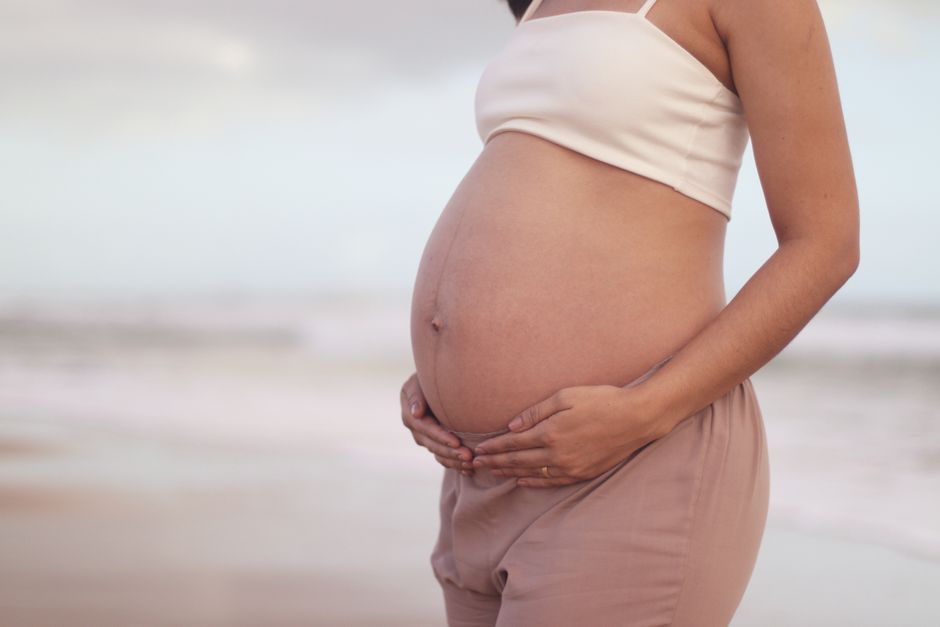
Your pregnancy belly doesn’t disappear the moment your baby is born. For most women, the uterus shrinks back to its pre-pregnancy size within six to eight weeks, but the external belly can take several months to flatten out. The skin, muscles, and connective tissue stretched over nine months need time to recover, and for many women, the belly never returns to exactly how it looked before pregnancy.
What Happens to Your Belly Immediately After Birth
Right after delivery, you will still look pregnant. This surprises many new mothers. Your uterus weighs about 2.5 pounds immediately after birth, compared to roughly 2 ounces before pregnancy. That organ alone takes up significant space in your abdomen.
Within the first week, you will notice a dramatic change. The uterus begins contracting back toward its normal size right away. Breastfeeding triggers the release of oxytocin, which causes uterine contractions and speeds up this process. Many women feel these contractions as afterpains, especially during nursing sessions.
The remaining belly at this stage is a mix of uterine size, retained fluid, stretched skin, and loosened abdominal muscles. None of this resolves overnight.
How Long Until Your Uterus Returns to Normal Size
The timeline for uterine involution is well established. By the end of the first week after birth, the uterus has typically dropped back into the pelvis. At two weeks, it is usually no longer palpable through the abdominal wall. By six weeks, the uterus has generally returned to its pre-pregnancy size and weight.
This is the internal timeline. The external appearance of your belly follows a different, slower course. Even after the uterus shrinks, you may still have a visible belly because the abdominal wall itself remains stretched.
Diastasis recti is a key factor here. This condition occurs when the two large bands of muscle that run down the center of your abdomen separate during pregnancy. Research suggests that a significant number of women still have some degree of separation at six months postpartum. The separation often closes on its own, but it can take a year or longer, and for some women it never fully closes without intervention.
Why Some Women’s Bellies Go Away Faster Than Others
Several factors influence how quickly your belly changes. Genetics play a major role in skin elasticity. Some women’s skin snaps back quickly; others are left with loose skin that may not tighten fully regardless of exercise.
Weight gain during pregnancy matters. Women who gain within the recommended range for their pre-pregnancy BMI tend to lose pregnancy weight faster than those who gain above the range. The extra fat stored during pregnancy, particularly around the abdomen, takes time to mobilize.
Your age and the number of pregnancies you have had also matter. Skin and connective tissue lose elasticity with age. Each subsequent pregnancy can stretch the abdominal wall further, making recovery slower.
Muscle tone before pregnancy is another factor. Women with strong core muscles before conception often regain abdominal definition more quickly, though even they can struggle with diastasis recti and loose skin.


How Long Does the Belly Actually Take to Go Away
There is no single answer that fits every woman. For some, the belly noticeably flattens within six to eight weeks. For others, it takes six months to a year. For many, a small belly or loose skin remains permanently.
A 2023 study published in the journal PLOS One tracked postpartum women and found that most experienced significant abdominal changes in the first three months, with slower improvements continuing up to 12 months. The study noted that the majority of women’s bellies did not return to pre-pregnancy measurements even at one year.
The honest answer is that the pregnancy belly typically goes away substantially by three to six months, but the final result depends on factors you cannot fully control. Expect gradual improvement rather than a sudden return to your old body.
Can Exercise Speed Up the Process?
Exercise helps, but it has limits. Strengthening your core muscles can improve posture and muscle tone, which may make your belly appear flatter. However, exercise cannot repair separated abdominal muscles on its own, and it cannot remove loose skin.
Walking and gentle postpartum exercise can begin as soon as your doctor clears you, usually at your six-week checkup. Pelvic floor exercises and deep core activation can start earlier in many cases, but you should confirm with your healthcare provider first.
If you have diastasis recti, traditional crunches and sit-ups can actually make the separation worse. These exercises increase intra-abdominal pressure and push the abdominal contents forward. Instead, focus on exercises that engage the transverse abdominis, the deepest layer of abdominal muscle that wraps around your torso like a corset.
A physical therapist who specializes in postpartum recovery can assess your abdominal separation and design a safe exercise program. Many women find this professional guidance worth the investment.
Does Breastfeeding Help Your Belly Go Away?
Breastfeeding burns extra calories — roughly 300 to 500 per day — which can contribute to gradual weight loss. It also stimulates uterine contractions, helping your uterus return to its pre-pregnancy size faster.
However, breastfeeding is not a guaranteed weight-loss method. Some women hold onto fat stores while nursing, possibly as a biological mechanism to ensure adequate energy for milk production. The evidence on breastfeeding and postpartum weight loss is mixed, with some studies showing a modest effect and others showing none.
Hormones also play a role. Prolactin, the hormone responsible for milk production, can increase appetite and promote fat storage. Some women find they lose weight steadily while nursing; others find their weight stays stubbornly the same until they wean.
The takeaway is simple: breastfeeding is beneficial for many reasons, but do not count on it to flatten your belly.
What About Loose Skin and Stretch Marks?
Loose skin is often the most frustrating part of the postpartum belly. The skin stretched over nine months cannot always return to its original tightness. This is particularly true if you had a large baby, gained significant weight, or had multiple pregnancies.
Stretch marks, which occur when the dermis tears under rapid stretching, often fade from red or purple to a silvery white over time. They rarely disappear completely. Moisturizers and creams can improve skin hydration but have not been shown to prevent or eliminate stretch marks in clinical trials.
Time is the main treatment for loose skin. Give your body at least 12 months before judging the final result. If loose skin remains significant after that point, some women choose surgical options like a tummy tuck. This is a personal decision to discuss with a qualified surgeon, not a medical necessity.
When to See a Doctor About Your Postpartum Belly
Some postpartum belly symptoms warrant medical attention. If you experience severe abdominal pain, fever, heavy bleeding, or a sudden increase in belly size, contact your doctor immediately. These can be signs of infection or other complications.
Diastasis recti that persists beyond six months may benefit from physical therapy. A therapist can assess the severity of the separation and guide you through appropriate exercises. In some cases, surgical repair is considered, but this is typically reserved for women with significant functional problems, not cosmetic concerns.
Pelvic floor issues often accompany abdominal weakness. Urinary incontinence, pelvic pressure, or a feeling of heaviness in the vagina should be discussed with your healthcare provider. These symptoms are common but not normal to live with, and treatment is available.
What You Should Not Do After Birth
Do not rush back into intense exercise. Your abdominal muscles and connective tissue need time to heal. Jumping into high-impact workouts too soon can worsen diastasis recti and lead to pelvic floor problems.
Do not wear waist trainers or belly wraps expecting them to permanently change your shape. These devices can temporarily compress your abdomen and may provide back support, but they do not strengthen muscles or remove fat. No clinical evidence supports the claim that they permanently flatten the belly.
Do not compare your postpartum body to anyone else’s. Every pregnancy is different. Comparing your six-week belly to someone else’s six-month belly is a recipe for frustration. Your body grew a human. Give it time.
Frequently Asked Questions
How many months does it take for the pregnancy belly to go away?
Most women see significant flattening by three to six months postpartum. Full recovery, including loose skin and muscle tone, can take up to a year or longer.
Why do I still look pregnant at 3 months postpartum?
Your uterus has likely returned to normal size by this point, but stretched abdominal muscles, loose skin, and retained fat can still create a visible belly. Diastasis recti may also still be present.
Does the belly go away faster with a C-section?
No. A C-section involves cutting through the abdominal wall, which adds healing time. The uterus shrinks on the same timeline, but the incision and surrounding tissue may slow your return to normal activity and exercise.
Can you get your pre-pregnancy belly back?
Many women come close, but the belly rarely returns to exactly how it looked before pregnancy. Skin elasticity, muscle separation, and weight gain all affect the final result, and some changes may be permanent.
