
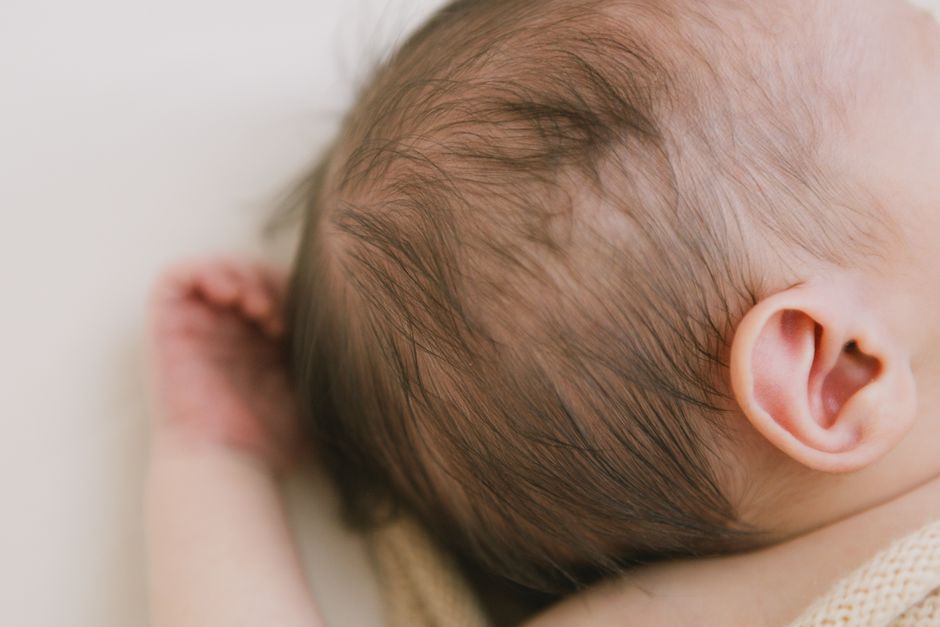
Most newborns are born with a full head of hair, and many parents are surprised when that hair starts to thin or disappear in the first few months. This is normal. Babies commonly shed their newborn hair between birth and about 6 months of age, and the process usually happens gradually rather than all at once. New hair typically begins growing in around the same time, though the timing varies from baby to baby.
When Does Baby’s Hair Fall Out?
Newborn hair loss usually begins within the first few weeks to months after birth. For most babies, noticeable thinning happens between 1 and 4 months of age. By around 6 months, many babies have shed most or all of their birth hair and are growing a new set.
The timing is not identical for every baby. Some lose hair in the first few weeks. Others keep their newborn hair for several months before it thins. Both patterns fall within the normal range.
It helps to understand why this happens. Hair grows in cycles. Each follicle goes through a growing phase, a resting phase, and a shedding phase. Before birth, a baby’s hair follicles are synchronized. Many of them enter the resting phase at the same time. When those follicles reach the shedding phase weeks later, the hair falls out together. That is why the loss can look sudden rather than gradual.
After this first shed, hair follicles start cycling independently. From that point on, hair loss and regrowth happen in a more scattered, ongoing way rather than in one big wave.
Why Do Newborns Lose Their Hair?
Two main factors drive hair loss in the first months of life: hormones and friction.
During pregnancy, a mother’s hormones cross the placenta and affect the baby. These hormones keep many of the baby’s hair follicles in the growing phase longer than they would otherwise stay. After birth, hormone levels drop. The follicles shift into the resting phase and then the shedding phase. This is the same basic mechanism behind the heavy postpartum hair shedding many mothers notice a few months after giving birth.
Friction is the second factor. Babies spend a lot of time on their backs, and their heads rub against mattresses, car seats, and other surfaces. This rubbing can wear away hair, especially in one spot. This type of loss is sometimes called friction alopecia. It is not a sign of a health problem.
Beyond these two common causes, there are other reasons a baby might lose hair. These are less common but worth knowing about:
- Ringworm of the scalp (tinea capitis). A fungal infection that can cause patches of hair loss with scaling or broken hairs.
- Alopecia areata. An autoimmune condition that causes smooth, round bald patches.
- Nutritional deficiencies. Rare in babies in developed countries but possible in some cases.
- Thyroid disorders. Uncommon but can affect hair growth.
These conditions usually come with other signs. A doctor can tell the difference between normal newborn shedding and something that needs attention.
What Does Normal Newborn Hair Loss Look Like?
Normal newborn hair loss is gradual and spread out. You might notice more hair on the crib sheet, in the baby’s hat, or on a hairbrush. The scalp itself looks normal — no redness, no scaling, no sores.
The pattern can vary. Some babies lose hair evenly across the head. Others lose it mostly in the back, where the head rests against surfaces. Some babies lose hair in a band around the back of the head, which can look like a ring.
Here is what is generally considered normal:
- Thinning that starts in the first few months
- Hair that comes out gradually over weeks
- A scalp that looks healthy — no rash, crusting, or broken skin
- New hair starting to grow in as the old hair sheds
What is not typical: patchy bald spots with smooth, shiny skin, scaly or inflamed areas, or hair loss that continues well past 6 months without any regrowth. Those situations call for a doctor’s evaluation.




When Should New Hair Grow Back?
New hair usually starts growing in as the newborn hair sheds. For many babies, this happens between 3 and 6 months of age. By the time a baby is around 6 to 12 months old, most have a new head of hair.
The new hair may look different from the hair the baby was born with. It might be a different color, texture, or thickness. This is common and not a cause for concern. Hair color and texture can continue to change throughout the first few years of life.
Some babies take longer to show visible regrowth. If a baby has very little hair at 12 months, that is still often within the range of normal. Genetics play a big role in how much hair a baby has and how fast it grows.
If there is no hair growth at all by 12 months, or if hair loss is accompanied by other symptoms, a pediatrician can check for underlying causes.
How Can You Tell Normal Shedding From Something Else?
Most newborn hair loss is normal and needs no treatment. The challenge is knowing when to check with a doctor.
Normal shedding has a few consistent features. It happens gradually. The scalp looks healthy. The baby is otherwise well — eating, sleeping, and growing as expected. Hair loss that fits this pattern is almost always just the normal transition from baby hair to new hair.
Signs that warrant a doctor’s visit include:
- Patches of complete baldness with smooth, shiny skin
- Scaly, red, or crusty areas on the scalp
- Broken hairs or black dots on the scalp
- Hair loss that continues past 6 months with no regrowth
- Loss of eyebrows or eyelashes along with scalp hair
- Other symptoms like poor feeding, lethargy, or failure to thrive
These signs can point to conditions like fungal infection, alopecia areata, or other health issues. A pediatrician can examine the scalp and decide whether any testing or treatment is needed.
Does Cradle Cap Cause Hair Loss?
Cradle cap, also called infantile seborrheic dermatitis, is a common condition that causes scaly, crusty patches on a baby’s scalp. It usually appears in the first few weeks to months of life.
Cradle cap itself does not usually cause hair loss. The scales sit on the surface of the scalp, and hair grows through them. However, if the scales are thick and matted, they can trap hair and make it look like the hair is falling out. When the scales are gently removed, the hair is usually still there.
In some cases, scratching or rubbing the irritated scalp can lead to some hair breakage. But this is not the same as the normal newborn shedding described above.
Cradle cap is not harmful and often clears up on its own within a few months. Some pediatricians suggest gentle washing with a mild baby shampoo and soft brushing to loosen the scales. If the scalp looks very red, oozes, or spreads beyond the scalp, a doctor should take a look.
What About Hair Loss in Older Babies?
Hair loss can happen beyond the newborn stage too. Babies between 6 and 12 months may lose hair for different reasons.
Friction is still a factor. A baby who sleeps in one position or spends a lot of time in a car seat can develop a bald spot from rubbing. This usually resolves as the baby becomes more mobile and changes positions more often.
Nutritional issues can play a role in older babies. Iron deficiency, zinc deficiency, and other nutritional problems can affect hair growth. These are uncommon in babies who are growing well and eating a varied diet, but they can happen.
Medical conditions like thyroid problems or autoimmune conditions can also cause hair loss in older babies. These are rare but should be considered if hair loss is significant or accompanied by other symptoms.
If you are concerned about hair loss in a baby older than 6 months, talk to your pediatrician. They can assess growth, diet, and other factors to rule out any underlying issues.
What Can Parents Do?
For normal newborn hair loss, there is no treatment needed. The hair will grow back on its own. A few simple practices can help keep the scalp healthy:
- Wash the scalp gently with a mild baby shampoo. You do not need to wash it every day unless there is a reason to.
- Use a soft brush or comb. Be gentle — do not pull or tug at the hair.
- Avoid tight hats or headbands that rub against the scalp.
- Give the baby plenty of supervised tummy time. This takes pressure off the back of the head and helps prevent flat spots and friction-related hair loss.
- Keep the scalp moisturized if it looks dry. A small amount of baby-safe oil or lotion can help, but check with your pediatrician first.
Do not use adult hair products, medicated shampoos, or home remedies on a baby’s scalp without talking to a doctor first. Some products can irritate a baby’s sensitive skin.
Remember that hair growth varies widely. Some babies are born with thick hair and keep it. Others are nearly bald until well past their first birthday. Both are normal. Genetics, not anything the parent does, is the biggest factor in how much hair a baby has and when it grows in.
Frequently Asked Questions
When does baby hair fall out?
Baby hair loss typically begins within the first few weeks to months after birth, with most noticeable shedding happening between 1 and 4 months of age. By around 6 months, many babies have shed most of their newborn hair.
Is it normal for a newborn to lose hair?
Yes, it is normal and expected. The drop in pregnancy hormones after birth causes many hair follicles to shift into a resting phase, leading to shedding in the first few months.
When should I worry about my baby’s hair loss?
You should check with a doctor if you see smooth bald patches, scaly or red areas on the scalp, broken hairs, or hair loss that continues past 6 months with no regrowth. Normal shedding is gradual and the scalp looks healthy.
How long does it take for baby hair to grow back?
New hair usually starts growing in between 3 and 6 months of age, and most babies have a new head of hair by 6 to 12 months. The timeline varies based on genetics and individual factors.
