
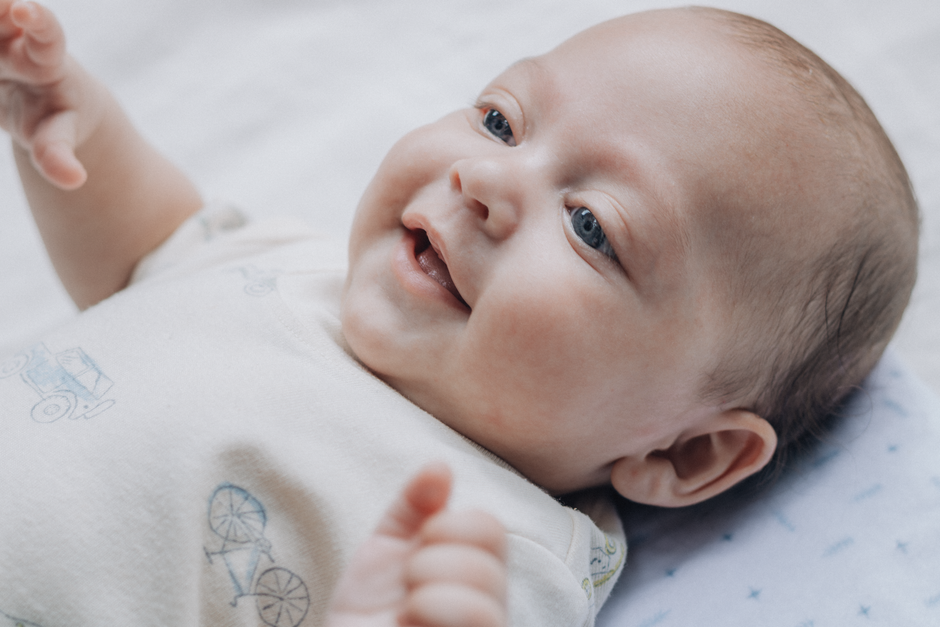
A newborn’s first laugh is a moment parents wait for with a camera ready. Most babies produce their first true laugh between 3 and 4 months of age. This is a general timeline, not a strict deadline. Some babies laugh closer to 2 months, while others wait until 5 months. Both are within the normal range.
What Counts as a Real Laugh?
Before 2 months, babies make sounds that can seem like laughter. These are often reflexive noises or sounds made during sleep. They can sound like a chuckle or a short burst of air. These are not true social laughs.
A real laugh is a response to something. It happens when a baby is awake and engaged. It is triggered by a sight, a sound, or a sensation that the baby finds funny or surprising.
True laughter requires social awareness. The baby must connect an action to a feeling of joy or surprise. This is a developmental milestone that involves the brain, the vocal cords, and the muscles of the face and chest.
Parents often report the first laugh happening during a game of peek-a-boo. Others hear it when they make a funny face or blow a raspberry on the baby’s tummy. The specific trigger matters less than the fact that the baby is responding to the interaction.
When Does a Newborn Laugh? The Typical Timeline
Most babies laugh for the first time between 3 and 4 months. This is when the social smile is already well established. The laugh typically follows the smile by several weeks.
Here is a general breakdown of vocal development in the first months:
- 1 to 2 months: Babies make cooing sounds and vowel-like noises. They may smile in response to faces.
- 2 to 3 months: Babies begin to make more varied sounds. They may squeal with pleasure. The first laugh may appear near the end of this period.
- 3 to 4 months: Most babies laugh out loud for the first time. The laugh is usually short and often happens during play.
- 4 to 6 months: Laughing becomes more frequent. Babies laugh at specific actions, sounds, and games. They may laugh at their own reflection or at a parent’s exaggerated expression.
Premature babies often reach this milestone later than their due-date peers. Doctors typically adjust developmental expectations based on the baby’s corrected age, not their birth date. If a baby was born 6 weeks early, parents might expect the first laugh closer to 4.5 or 5 months after birth.
What Makes a Baby Laugh?
Babies laugh at things that are unexpected but not frightening. The element of surprise is key. A face that suddenly disappears and reappears is a classic trigger. A loud but gentle noise, like a clap or a kiss sound, can also work.
Physical play is a common trigger. Gentle bouncing, tickling, or blowing on the baby’s belly often produces laughter. The laughter is a sign that the baby is enjoying the interaction and feels safe.
Social cues matter. Babies are more likely to laugh when their parents are laughing. A parent’s smile, eye contact, and animated voice signal that the situation is playful. This is why babies often laugh more with familiar people than with strangers.
Repetition is important. Babies often laugh at the same game multiple times. The predictability of the game builds anticipation. The surprise comes when the expected event happens. This is a normal part of how humor develops in infancy.





Do Babies Laugh in Their Sleep?
Yes. Newborns and young infants frequently make sounds that resemble laughter while sleeping. This is not the same as a social laugh.
During active sleep, which is similar to REM sleep in adults, babies move their faces and make noises. Their facial muscles twitch. Their vocal cords may produce short sounds. These can sound like chuckles or giggles.
These sleep sounds are reflexive. They are not responses to dreams or external stimuli. Research has not established that newborns dream in the way older children and adults do. The sounds are a normal part of neurological development.
Parents do not need to wake a baby who is laughing in their sleep. It is harmless and common. It often fades as the baby gets older and sleep patterns mature.
What If My Baby Is Not Laughing Yet?
If a baby has not laughed by 4 months, it is not automatically a cause for concern. Some perfectly healthy babies laugh later than others. The range of normal development is wide.
Parents should watch for other signs of social development. By 4 months, most babies smile in response to faces. They make eye contact. They coo and make other vocal sounds. They show interest in toys and people.
If a baby is smiling, making eye contact, and vocalizing but not laughing, this is often just a matter of time. Continue the playful interactions. The laugh will come when the baby is ready.
Parents should talk to their pediatrician if they notice other concerns. These include a lack of smiling, poor eye contact, no response to sounds, or a general lack of vocalization. The concern is not the absence of laughter alone. It is the absence of multiple social milestones together.
Hearing problems can delay laughter. A baby who cannot hear well will not respond to vocal play. If a baby does not startle at loud sounds or turn toward voices by 4 months, this should be discussed with a doctor.
How to Encourage Laughter
Laughter cannot be forced, but it can be invited. The best approach is simple and involves face-to-face interaction.
Try these activities with a baby who is awake and alert:
- Peek-a-boo: Cover your face with your hands, then reveal it with a big smile and a cheerful sound.
- Funny faces: Make exaggerated expressions like a wide-open mouth, a puffed-out cheek, or a crossed look.
- Animal sounds: Make mooing, quacking, or barking sounds with animated facial expressions.
- Gentle physical play: Lightly bounce the baby on your lap or blow a soft raspberry on their tummy or arm.
- Singing: Sing simple songs with exaggerated rhythms and facial expressions.
Watch the baby’s cues. If the baby turns away, closes their eyes, or fusses, stop the activity. Overstimulation is common in young infants. Short bursts of play are better than long sessions.
Laughter is a social behavior. It develops best in the context of a warm, responsive relationship. The baby laughs because they feel connected and safe. This connection matters more than any specific technique.
What the Research Says About Early Laughter
Research on infant laughter is limited compared to research on infant crying. However, studies have provided some useful information.
Some research suggests that babies begin to show laugh-like vocalizations as early as 2 to 3 months. These early sounds are often triggered by physical stimulation, like tickling or bouncing. Social triggers become more common as the baby gets older.
Studies indicate that the quality of laughter changes over time. Early laughs are often short and simple. Older infants produce longer, more varied laughter. The laughter becomes more connected to specific events and expectations.
There is no evidence that early laughter predicts intelligence, personality, or emotional health. A baby who laughs early is not necessarily smarter or happier than a baby who laughs later. It is simply one milestone among many.
Frequently Asked Questions
When do most babies start laughing?
Most babies produce their first true laugh between 3 and 4 months of age. Some laugh as early as 2 months, and others wait until 5 months.
Can a newborn laugh at 1 month?
A 1-month-old may make sounds that resemble laughter, but these are usually reflexive noises, not social laughter. True social laughter requires more developed brain and social awareness.
What if my 5-month-old does not laugh?
If your baby smiles, makes eye contact, and vocalizes but does not laugh, this may still be normal. Talk to your pediatrician if the baby also lacks these other social milestones.
Do babies laugh in their sleep?
Many babies make laugh-like sounds during active sleep. These are reflexive muscle movements and vocalizations, not responses to dreams or external events.
