
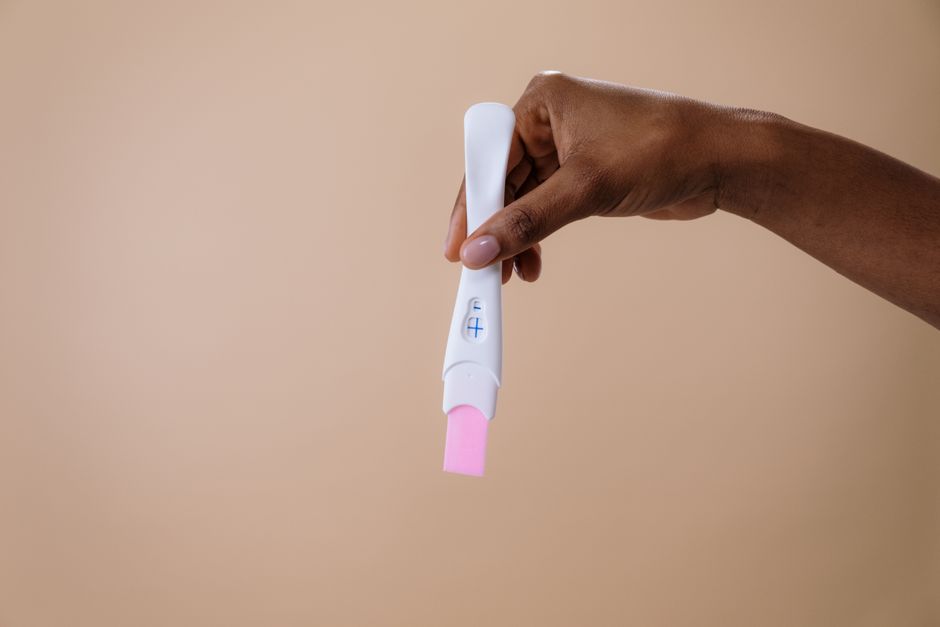
After an IVF embryo transfer, the wait to find out if it worked can feel endless. The short answer: most clinics advise waiting about 9 to 14 days after the transfer before taking a pregnancy test. Testing too early can give you a false result, either a false negative or a false positive, and the timing depends on which day your embryo was transferred.
This article explains why that wait exists, what your body is actually doing during those days, and how the type of test you use changes everything.
When Can You Take a Pregnancy Test After IVF?
Most fertility clinics recommend testing between 9 and 14 days after the embryo transfer. The exact day depends on the embryo’s stage at transfer.
A Day 5 embryo (a blastocyst) has already been growing in the lab for about five days. A Day 3 embryo is transferred earlier in its development. Because a blastocyst is further along, it typically implants sooner, so the wait before testing is often a little shorter.
Your clinic will give you a specific test date. That date is not arbitrary. It is calculated around when the embryo would likely implant and when the pregnancy hormone, human chorionic gonadotropin (hCG), would reach a level a test can detect.
The reason for the wait comes down to biology. After transfer, the embryo has to hatch from its outer shell, attach to the uterine lining, and begin producing hCG. That process takes time, and hCG has to build up before it shows on a test.
Why Does Testing Too Early Give Wrong Results?
Testing before your clinic’s recommended date can produce a result that does not reflect what is actually happening. This cuts both ways.
A false negative happens when you test before enough hCG has built up. The embryo may be implanting normally, but the hormone level is still too low for the test to pick up. You see a negative, assume the cycle failed, and stop medications you were told to continue. That is the real danger of early testing.
A false positive is the other problem, and it surprises many people. It is usually caused by the hCG trigger shot given before egg retrieval to help eggs mature. That injection contains hCG, and it can linger in your system for up to about 10 to 14 days. If you test during that window, the test may detect leftover trigger-shot hCG rather than hCG from a pregnancy.
This is why some clinics tell patients to wait until the trigger shot has fully cleared before trusting any home test. The timing of the trigger shot, not just the transfer, matters.
Home Pregnancy Test vs. Blood Test After IVF
A blood test is more sensitive than a home urine test and can detect hCG earlier. This is why most clinics use a blood test to confirm the outcome of an IVF cycle.
Home urine tests measure hCG too, but they generally need a higher level of the hormone to turn positive. A blood test can pick up lower levels, which is one reason it can give a clearer answer sooner.
There is another difference. A blood test measures the exact amount of hCG, not just whether it is present. Clinicians often repeat the blood test a couple of days later to see whether the level is rising as expected. A single number tells less than the trend over time.
Some people take a home test before their scheduled blood test out of impatience. If you do, understand the limits. A negative home test taken too early does not mean the cycle failed, and a positive one taken while trigger-shot hCG is still present does not confirm pregnancy.





Does the Type of Embryo Transfer Change the Timing?
Yes. The day your embryo was transferred shifts the window for testing.
A Day 5 transfer (blastocyst) usually means testing around 9 to 11 days later. A Day 3 transfer typically means testing around 11 to 14 days later. The logic is simple: a Day 5 embryo is further along and tends to implant sooner, so hCG can appear earlier.
Frozen embryo transfers follow similar timing rules. What matters most is the developmental stage of the embryo at the moment of transfer, not whether it was fresh or frozen.
Because clinics vary in their protocols, the safest approach is to follow the specific date your clinic gives you. Two clinics may recommend slightly different windows for the same embryo stage, and both can be reasonable.
What Happens in Your Body During the Two-Week Wait?
The “two-week wait” is the stretch between transfer and your test date. A lot is happening that you cannot feel.
After transfer, the embryo floats in the uterus for a period before it attaches. Once it attaches to the lining, it starts releasing hCG. This hormone signals the body to keep producing progesterone, which maintains the uterine lining so the pregnancy can continue.
Early on, hCG levels are very low. They rise quickly once implantation happens, roughly doubling every couple of days in a healthy early pregnancy. But “quickly” is relative. In the first days after implantation, the level may still be below what a test can detect.
This is the core reason for the wait. The test is not waiting on your body to decide anything. It is waiting on hCG to accumulate to a detectable level.
Can You Feel Pregnancy Symptoms Before the Test Date?
Many people notice symptoms during the wait, but these are unreliable as a sign of success. The reason: the progesterone support used in IVF, and the hormone changes from the cycle itself, can cause symptoms that look just like early pregnancy.
Sore breasts, cramping, bloating, and fatigue are common after IVF. They can happen whether or not the embryo implanted. Progesterone alone can cause all of them.
Light spotting can also occur around implantation, but it can also come from the transfer procedure or from progesterone irritation of the cervix. No symptom during the wait can confirm or rule out pregnancy. Only a test can.
This is one of the harder parts of IVF to accept. Your body is sending signals, but those signals are not specific enough to read.
Can You Test Earlier Than Your Clinic Recommends?
You can, but the result is harder to interpret and may cause unnecessary distress. Most clinicians advise against it for good reason.
If you test early and get a negative, you will not know whether the cycle failed or whether you simply tested before hCG rose. If you test early and get a positive, you will not know whether it reflects a pregnancy or leftover trigger-shot hCG.
There is a practical risk too. Acting on an early negative by stopping progesterone support could harm a pregnancy that was progressing. Never stop your medications based on a home test taken before your clinic’s recommended date.
If you feel you cannot wait, tell your clinic. Some will adjust the plan or explain exactly why their date was chosen. That conversation is more useful than an early test.
What Should You Do If You Get a Positive Result?
A positive home test is encouraging but not the final word. Your clinic will still want to confirm with a blood test and likely repeat it to check that hCG is rising appropriately.
Keep taking any medications your clinic prescribed until they tell you otherwise. Early pregnancy support is often continued well past the first positive test.
Your clinic will also schedule an ultrasound later to confirm the pregnancy is developing in the uterus. A positive hormone test shows that hCG is present, but an ultrasound shows where and how the pregnancy is progressing.
Frequently Asked Questions
How soon after IVF transfer can I take a pregnancy test?
Most clinics recommend waiting about 9 to 14 days after the embryo transfer. The exact day depends on whether a Day 3 or Day 5 embryo was transferred.
Why do I have to wait so long to test after IVF?
The wait allows hCG from the embryo to build to a level a test can detect. Testing too early can give a false negative or pick up leftover hCG from the trigger shot.
Can the trigger shot cause a false positive pregnancy test?
Yes. The hCG trigger shot can stay in your system for up to about 10 to 14 days and may cause a positive test even without a pregnancy.
Is a blood test more accurate than a home test after IVF?
A blood test is more sensitive and can detect lower levels of hCG, which is why most clinics use it to confirm an IVF outcome.
