
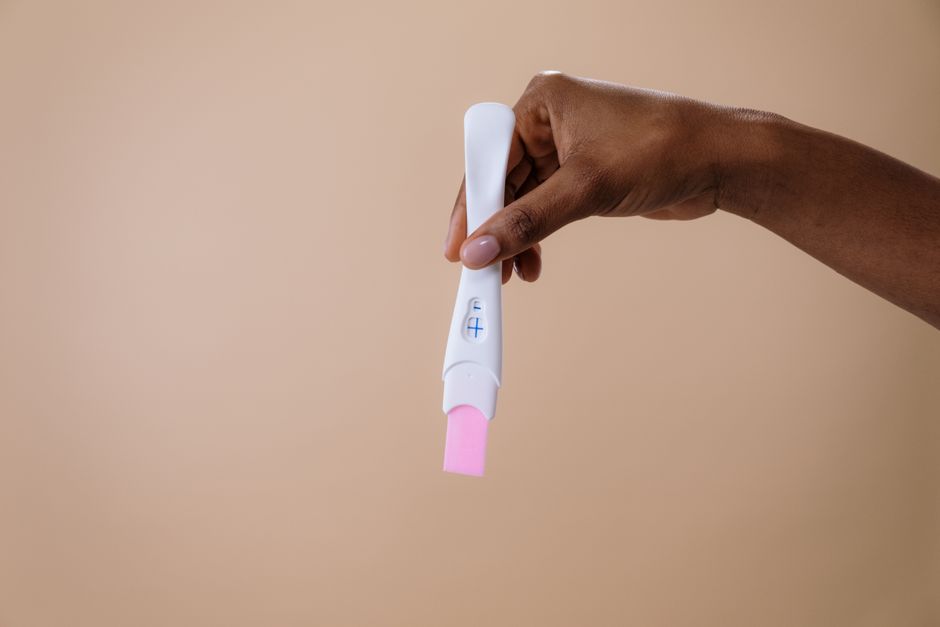
Yes, you can take a pregnancy test in the middle of the day. The test itself works at any hour. What changes is how concentrated your urine is, and that can affect how easy it is to detect the pregnancy hormone hCG early on.
Most home pregnancy tests are designed to detect human chorionic gonadotropin (hCG) in urine. First-morning urine is usually the most concentrated after hours without drinking, which is why test instructions often suggest it. But that recommendation is about sensitivity, not about whether a daytime test is valid. A positive result at noon is a positive result. A negative result at noon is less reliable if you are testing very early.
How Do Home Pregnancy Tests Actually Work?
Home pregnancy tests use antibodies that bind to hCG, a hormone the developing placenta produces after an embryo implants in the uterine lining. The test strip changes color or shows a line when hCG is present above the test’s detection threshold.
Different brands have different sensitivity. Many can detect hCG at concentrations around 20 to 25 mIU/mL, and some advertise lower thresholds. That number matters because hCG levels rise over time after implantation. Very early in pregnancy, the concentration in your urine may be below what the test can detect, especially if your urine is diluted.
Implantation typically happens about 6 to 12 days after ovulation, and hCG becomes detectable in urine shortly after. This is why timing relative to your missed period matters far more than the time of day.
One detail worth knowing: hCG roughly doubles every 48 to 72 hours in early pregnancy. That means waiting two days can make a meaningful difference in whether a test turns positive, particularly in the first week after a missed period.
Why Is First-Morning Urine Often Recommended?
First-morning urine is more concentrated because you have not had anything to drink for several hours. Higher concentration means a higher hCG level per drop of urine, which makes an early pregnancy easier to detect.
This is a sensitivity issue, not a validity issue. The test is not “stronger” in the morning. The sample is simply less diluted. If your hCG level is already well above the test’s detection threshold, any time of day will produce a clear positive.
The recommendation matters most when:
- You are testing before or right around your expected period
- You have been drinking a lot of water
- You are using a test with a higher detection threshold
- You had a faint result earlier and want to confirm
If you are several days or a week past your missed period, dilution is far less likely to matter. At that point hCG levels are usually high enough that a midday test will detect them.
Can You Take a Pregnancy Test Mid Day and Still Get an Accurate Result?
Yes. A midday test can be accurate, but its reliability depends on how far along you are and how much fluid you have consumed.
If you are testing after a missed period, a midday result is generally trustworthy. If you are testing before your missed period or on the exact day it was due, a negative result at midday is less conclusive than a negative first-morning result would be.
The key distinction is between a positive and a negative:
- A positive result at any time of day is meaningful. False positives are uncommon, though they can occur with certain medications, recent pregnancy loss, or specific medical conditions.
- A negative result at midday is less reliable if you are testing early. It may mean you are not pregnant, or it may mean your urine was too diluted to show detectable hCG.
If you get a negative result midday and still suspect you are pregnant, the standard approach is to retest in a few days, ideally with first-morning urine.




What Can Affect a Midday Test Result?
Several factors influence how much hCG shows up in a daytime urine sample.
Fluid intake is the biggest one. Drinking a lot of water before testing dilutes your urine and can push hCG below the test’s detection threshold. If you have had several glasses of water or coffee in the hours before testing, your sample is more dilute.
How far along you are matters more than anything else. The further past implantation you are, the higher your hCG level, and the less dilution affects the result.
Test sensitivity varies by brand. A test that detects hCG at a lower concentration is more likely to pick up an early pregnancy in diluted urine.
How long you hold your urine also plays a role. A shorter time since your last bathroom visit means a more concentrated sample, even at midday.
Other factors, such as certain fertility medications containing hCG, can interfere with results. If you have been receiving hCG injections as part of fertility treatment, tell your doctor before interpreting a home test.
When Should You Test to Get the Most Reliable Answer?
The most reliable time to test is the first day of a missed period, or a few days after. By then, hCG levels are usually high enough to be detected regardless of the time of day or your fluid intake.
Testing earlier than that increases the chance of a false negative, even with first-morning urine. Some tests are marketed as “early detection” and can pick up pregnancy a few days before a missed period, but their accuracy in that window is lower.
If you want the best odds of an accurate result:
- Test on or after the first day of your missed period
- Use first-morning urine if you are testing early
- Wait at least a few hours after drinking fluids if testing midday
- Follow the instructions on your specific test exactly
- Retest in two to three days if you get a negative result but still have symptoms
If your periods are irregular, counting from a missed period is harder. In that case, testing about three weeks after you last had unprotected sex is a more reliable guide, since implantation and hCG rise follow a fairly consistent timeline once it occurs.
Does a Faint Line at Midday Mean Anything Different?
A faint line is still a line. On most tests, any visible line in the result window indicates hCG was detected. Faintness usually reflects a lower concentration of hCG, which is common early in pregnancy.
A faint line at midday could look fainter than it would in the morning because of dilution. It does not necessarily mean the pregnancy is less viable. What matters more is whether the line gets darker over the next few days as hCG rises.
If a line is extremely faint or appears only after the recommended reading window has passed, it may be an evaporation line rather than a true positive. Evaporation lines can appear on a test left sitting too long, which is why timing your reading according to the instructions matters.
If you are unsure whether a faint result is real, wait two to three days and test again. A true pregnancy will typically produce a darker line as hCG increases.
When Should You See a Doctor Instead of Relying on a Home Test?
A home test is a screening tool, not a diagnosis. A healthcare provider can confirm pregnancy with a blood test that measures hCG directly, which is more sensitive than urine testing.
See a doctor if:
- You get repeated negative results but have pregnancy symptoms
- You get a positive result and want confirmation or prenatal care
- You have symptoms like severe pain, heavy bleeding, or dizziness
- You are being treated for infertility or taking hCG-containing medications
Severe abdominal pain or heavy bleeding with a positive test warrants prompt medical attention, as these can signal an ectopic pregnancy or other complications.
For most people, a home test taken at the right time gives a reliable answer. The time of day is a minor factor compared to how far along you are and how much fluid you have consumed.
Frequently Asked Questions
Can you take a pregnancy test mid day and get a positive result?
Yes. A positive result at any time of day is meaningful because it means hCG was detected. Midday urine is more diluted, but a positive is still a positive.
Is a midday pregnancy test less accurate than a morning one?
A midday test is slightly less sensitive for early detection because your urine is more diluted. If you are already past your missed period, the difference is usually small.
How long should I hold my urine before a midday pregnancy test?
Holding your urine for about three to four hours without drinking fluids can make a midday sample more concentrated. This is a practical step, not a formal clinical guideline.
What should I do if I get a negative result at midday?
Wait two to three days and test again, ideally with first-morning urine. If you still get negative results but have symptoms, see a healthcare provider for a blood test.
