
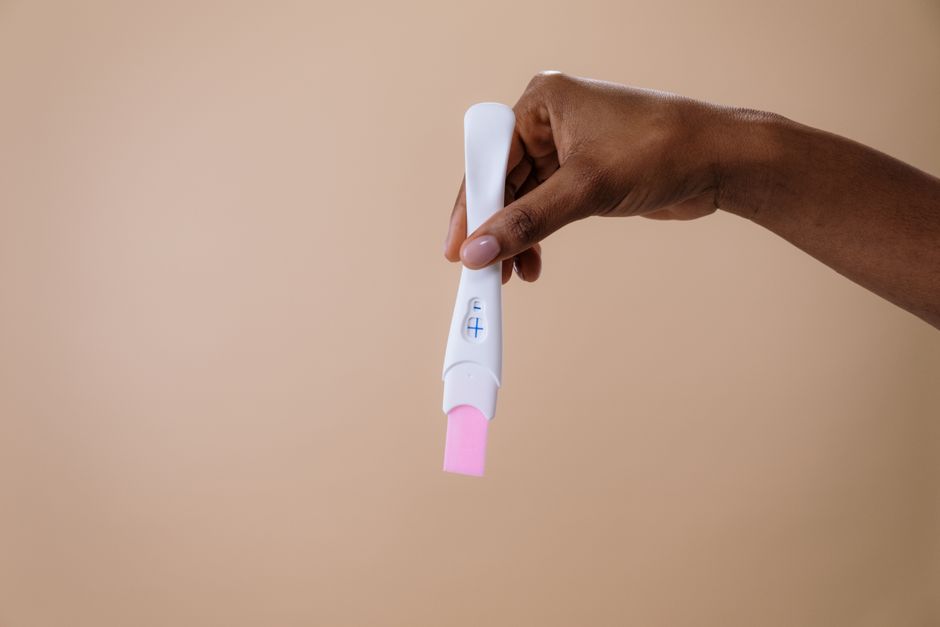
A pregnancy test can turn positive as early as 10 days after ovulation, but most people get a clear result around the time their period is due. The hormone that tests detect, human chorionic gonadotropin (hCG), only appears after a fertilized egg implants in the uterus. That implantation usually happens 6 to 12 days after ovulation. Testing too early is the most common reason for a false negative.
When Can You Take a Pregnancy Test?
The short answer: the first day of a missed period is the most reliable time for most home tests. That is roughly 14 days after ovulation in a typical 28-day cycle.
Here is why timing matters. After ovulation, if an egg is fertilized, it travels through the fallopian tube and implants in the uterine lining. Only then does the body start making hCG. The hormone then doubles roughly every 48 hours in early pregnancy. A home test needs enough hCG in urine to register a positive line.
Some tests are marketed as “early detection” and claim accuracy a few days before a missed period. These tests are more sensitive and can detect lower hCG levels. But the earlier you test, the higher the chance of a false negative. If you test 5 days before your missed period, the accuracy is lower than if you wait.
A blood test at a doctor’s office can detect pregnancy earlier than a urine test. Blood tests can pick up hCG about 6 to 8 days after ovulation. But these are not routine unless there is a medical reason.
How Does a Pregnancy Test Actually Work?
Home pregnancy tests work by detecting hCG in your urine. The test strip contains antibodies that bind to hCG if it is present. When the hormone binds, it triggers a visible line or a digital “pregnant” result.
There are two main types of home tests:
- Strip and cassette tests: You look for a line or a plus sign. A faint line still counts as positive.
- Digital tests: These show words like “Pregnant” or “Not Pregnant.” They use the same hCG detection method but read the result electronically.
Blood tests measure the exact amount of hCG in your blood. They can detect lower levels than urine tests and are used in medical settings to confirm or track a pregnancy.
One detail people often miss: hCG levels vary widely between individuals and even between pregnancies. A test that is negative on one day can be positive two days later if hCG is rising.
What Is the Best Time of Day to Test?
First thing in the morning is best if you are testing early. Your urine is most concentrated after you wake up, which means hCG levels are easier to detect.
If your period is already late, the time of day matters less. hCG levels are high enough by then that even diluted urine can show a positive result.
Drinking a lot of water before testing can dilute your urine and lead to a false negative, especially in early pregnancy. If you are testing before your missed period, avoid drinking large amounts of fluid for a couple of hours beforehand.




How Accurate Are Home Pregnancy Tests?
When used correctly on the day of a missed period, home pregnancy tests are about 99% accurate. That figure comes from test manufacturers and is widely cited in clinical guidance.
Accuracy drops when you test too early. The further you are from your missed period, the more likely you are to get a false negative.
False positives are rare but possible. They can happen if:
- You are taking certain fertility medications that contain hCG
- You had a recent miscarriage or termination
- You are taking certain medications, such as some anti-anxiety drugs or diuretics
- There is a rare medical condition like a molar pregnancy or certain tumors
If you get a positive result and are unsure, a follow-up test or a blood test at your doctor’s office can confirm it.
What If You Test Negative but Still Think You Are Pregnant?
Wait 2 to 3 days and test again. hCG doubles roughly every 48 hours in early pregnancy. A negative result today can become positive in a few days if you tested too early.
If you still get negative results and your period is late, talk to a healthcare provider. There are several reasons a period can be late besides pregnancy, including stress, illness, changes in weight, and hormonal conditions like polycystic ovary syndrome (PCOS).
Some people have irregular cycles and do not know when they ovulated. In that case, counting days from a missed period is not reliable. A doctor can do a blood test to check for pregnancy directly.
Can You Test Too Early and Get a False Negative?
Yes. Testing too early is the most common reason for a false negative. If the fertilized egg has not implanted yet, your body is not making hCG. No test can detect a hormone that is not there.
Implantation timing varies. It can happen as early as 6 days after ovulation or as late as 12 days. If you test on day 8 and implantation happened on day 10, your test will be negative even though you are pregnant.
This is why waiting until your period is due gives the most reliable result. By that point, implantation has almost always occurred if pregnancy is going to happen.
When Should You See a Doctor About Pregnancy Testing?
See a doctor if you have a positive home test and want to confirm the pregnancy, or if you have symptoms like bleeding or pain. A healthcare provider can do a blood test and, depending on how far along you are, an ultrasound.
Also see a doctor if you have repeated negative tests but your period is significantly late, or if you have irregular cycles and cannot estimate when you ovulated. They can help figure out what is going on.
If you are taking fertility medications or have a history of miscarriage, your doctor may want to monitor hCG levels over time. This is not something a home test can do.
Frequently Asked Questions
How early can a pregnancy test detect pregnancy?
A home urine test can detect pregnancy as early as 10 days after ovulation, but results are more reliable on the day of a missed period. Blood tests can detect hCG about 6 to 8 days after ovulation.
Can I get a positive pregnancy test before my missed period?
Yes, if you use a sensitive early-detection test and enough hCG has built up in your urine. However, testing before your missed period increases the chance of a false negative.
Why did I get a negative test but later found out I was pregnant?
You likely tested too early, before hCG reached a detectable level. Waiting 2 to 3 days and testing again usually gives a clearer result.
Are digital pregnancy tests more accurate than line tests?
No, both types detect hCG with similar accuracy. Digital tests are easier to read because they show words instead of lines.
