
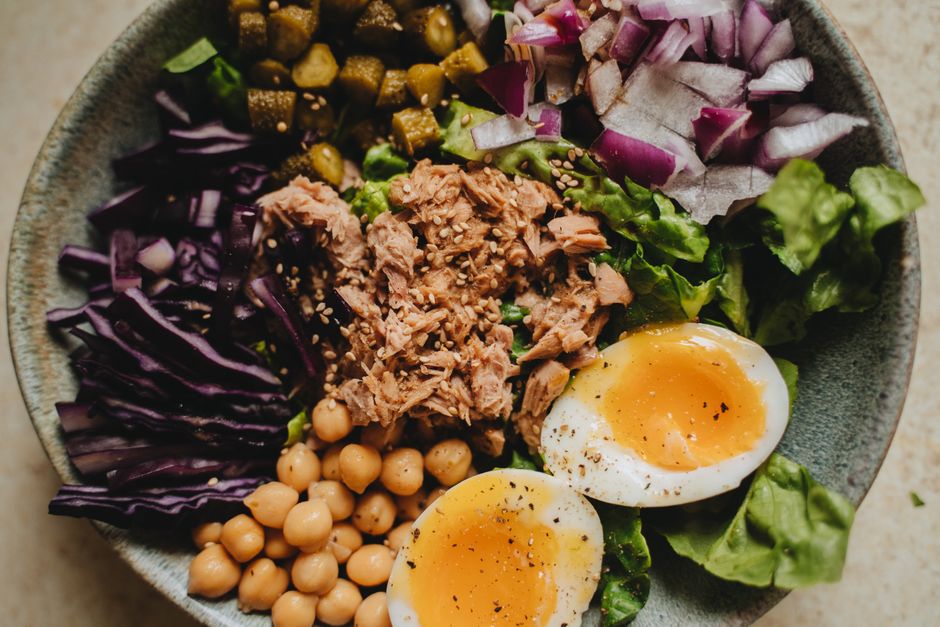
Yes, tuna is safe to eat during pregnancy, but only within strict limits. The concern is mercury, a heavy metal that can harm a developing baby’s nervous system. Canned light tuna is generally considered the safer choice, while albacore (white) tuna and fresh tuna steaks contain higher mercury levels and require stricter limits. The key is knowing which types of tuna have less mercury and how much of each you can safely eat per week.
Why Is Mercury in Tuna a Concern During Pregnancy?
Mercury enters the ocean from natural sources and industrial pollution. Small fish absorb it, and larger fish accumulate more mercury by eating smaller fish over many years. Tuna are large predatory fish, so they tend to hold more mercury than many other seafood options.
When a pregnant woman eats fish with high mercury, the mercury can cross the placenta and enter the baby’s bloodstream. High levels of mercury exposure in the womb have been linked to problems with brain development, including delays in learning, language, and motor skills.
The risk depends on the dose. A single serving of tuna is unlikely to cause harm. The concern is regular, repeated exposure over the course of a pregnancy. That is why health authorities set weekly limits rather than telling women to avoid tuna completely.
Which Types of Tuna Have the Most Mercury?
Not all tuna is the same. Mercury levels vary significantly by species. This matters because some types are far more common on store shelves than others.
Canned light tuna typically comes from skipjack tuna, a smaller species. It has the lowest mercury levels among common tuna products. This is the type most health experts consider safest during pregnancy.
Albacore tuna, often labeled as “white tuna,” comes from a larger species. It contains roughly three times more mercury than canned light tuna on average. The FDA specifically warns pregnant women to limit albacore consumption.
Yellowfin tuna is sold as fresh steaks and in some sushi. Its mercury levels fall between light and albacore tuna. Bigeye tuna, commonly used in high-end sushi, has the highest mercury levels and is the type health authorities advise avoiding entirely during pregnancy.
Fresh tuna steaks are a separate category. They can come from yellowfin, bigeye, or other species, so mercury content varies. Unless you know the exact species, it is safer to treat fresh tuna steaks like albacore and apply the stricter limit.
What Are the Official Limits for Tuna During Pregnancy?
The FDA and the EPA jointly set seafood guidance for pregnant women. Their current advice allows 8 to 12 ounces of low-mercury fish per week. That is roughly two to three servings.
For canned light tuna, the FDA allows up to 12 ounces per week. That is about two to three standard 5-ounce cans. This falls within the general low-mercury fish guidance.
For albacore (white) tuna, the limit is stricter. The FDA recommends no more than 6 ounces per week. That is about one standard can. This applies to fresh and frozen albacore as well.
For bigeye tuna, the advice is to avoid it entirely during pregnancy. This species is rarely sold in cans, but it appears in sushi and some restaurant dishes. If you are unsure what species a tuna steak comes from, it is safest to limit it to 6 ounces per week or skip it.





How Does Tuna Compare to Other Fish?
Tuna sits in the middle of the seafood mercury spectrum. It is not the highest-mercury fish, but it is not among the lowest either.
| Fish | Mercury Level | Pregnancy Limit |
|---|---|---|
| Bigeye tuna | Highest | Avoid |
| Albacore tuna | High | 6 oz per week |
| Yellowfin tuna | Medium-high | Treat like albacore |
| Canned light tuna | Low-medium | 12 oz per week |
| Salmon, sardines, shrimp | Low | 8-12 oz per week |
| Swordfish, shark, king mackerel | Highest | Avoid |
Salmon, sardines, shrimp, pollock, and tilapia are all lower in mercury than any type of tuna. If you want to maximize the nutritional benefits of seafood while minimizing mercury exposure, these are better daily choices. Tuna can still fit into a healthy pregnancy diet, but it should not be the only fish you eat.
Does Cooking or Freezing Tuna Remove Mercury?
No. Mercury is bound to the protein in fish muscle. It cannot be cooked out, frozen out, or rinsed away. Grilling, baking, or searing a tuna steak does not reduce its mercury content.
This is a common misconception. Some people assume that because mercury is a metal, heat might break it down or cause it to drain away. It does not. The only way to reduce mercury exposure is to choose lower-mercury fish or eat less of the higher-mercury ones.
This also applies to sushi. Freezing does not reduce mercury. Sushi-grade tuna that has been frozen for parasite safety still contains the same amount of mercury as fresh tuna. The preparation method has no effect on mercury levels.
What About Tuna in Sushi During Pregnancy?
Pregnancy adds two separate concerns with sushi: mercury and food safety. The mercury concern depends on the tuna species used. The food safety concern is about raw fish and potential bacterial or parasitic infections.
Cooked sushi rolls that contain canned light tuna are generally fine within the weekly limits. Raw tuna sushi is a different matter. Some health authorities advise pregnant women to avoid raw fish entirely because of the infection risk, even though the actual risk is low in the United States.
If you choose to eat raw tuna sushi during pregnancy, you face two decisions. The first is the mercury level, which depends on the species. The second is the raw fish risk, which is a separate issue from mercury. Many obstetricians recommend avoiding raw fish during pregnancy simply because the potential harm, however rare, is serious.
If you do eat raw tuna sushi, assume it is a high-mercury species unless you know otherwise. Most sushi restaurants use bigeye or yellowfin tuna, both of which carry higher mercury levels. That means one sushi roll could put you at or near your weekly limit.
Is Tuna Safe During Pregnancy Mercury Types Limits — What Does This Mean for Your Weekly Meals?
The practical takeaway is straightforward. Canned light tuna is safe at up to 12 ounces per week. Albacore and fresh tuna steaks should be limited to 6 ounces per week. Bigeye tuna should be avoided.
These limits assume you are not eating other high-mercury fish in the same week. If you eat swordfish one week, do not also eat your full allowance of albacore. The limits are designed to keep total weekly mercury exposure low, not to permit unlimited variety of high-mercury fish.
It is also worth noting that these limits apply to the entire pregnancy, not just the first trimester. The baby’s brain develops throughout pregnancy, and mercury exposure at any stage can potentially interfere with that development. Follow the same limits for all three trimesters.
If you have already eaten more tuna than the limit in a single week, do not panic. The limits are designed for ongoing exposure. A single week of slightly higher intake is unlikely to cause harm. Simply return to the recommended limits for the following weeks.
What Are the Benefits of Eating Tuna During Pregnancy?
Tuna is not just a source of mercury. It is also a source of important nutrients. Tuna provides high-quality protein, omega-3 fatty acids, vitamin D, and several B vitamins.
Omega-3 fatty acids, particularly DHA, are important for fetal brain and eye development. Some research suggests that adequate omega-3 intake during pregnancy may support better cognitive outcomes in children. However, the evidence for supplementing with omega-3s is stronger than the evidence for getting them specifically from tuna.
The FDA’s guidance does not tell pregnant women to avoid tuna. It tells them to choose lower-mercury options and limit higher-mercury ones. This reflects a balance between the nutritional benefits of fish and the potential risks of mercury. Fish is a valuable part of a pregnancy diet, and tuna can be part of that — within the limits.
If you are concerned about mercury but want the omega-3 benefits, salmon and sardines are excellent lower-mercury alternatives. They provide comparable omega-3 content with significantly less mercury risk.
Frequently Asked Questions
Can I eat canned light tuna every day during pregnancy?
No, the FDA recommends no more than 12 ounces of canned light tuna per week, which is about two to three standard cans. Eating it daily would exceed that limit.
Is albacore tuna safe during pregnancy?
Albacore (white) tuna is safe in limited amounts — no more than 6 ounces per week. It contains about three times more mercury than canned light tuna.
Can I eat tuna sushi while pregnant?
Raw tuna sushi carries both mercury and food safety concerns during pregnancy. If you choose to eat it, assume it is a high-mercury species and limit intake accordingly, but many health authorities recommend avoiding raw fish entirely during pregnancy.
Does cooking tuna reduce its mercury content?
No. Mercury is bound to the fish’s protein and cannot be removed by cooking, freezing, or any other preparation method.
