
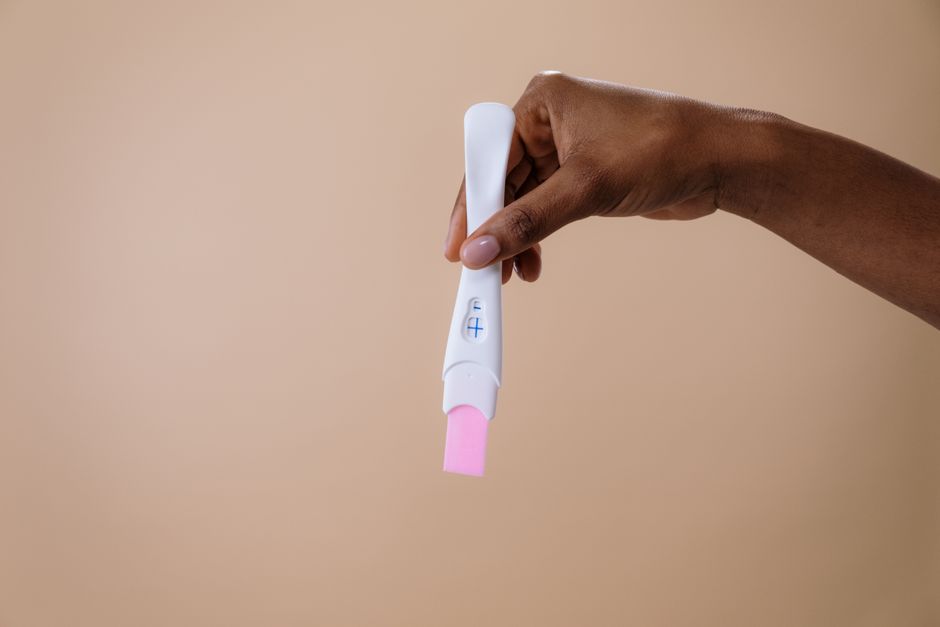
For many people, the first sign of pregnancy is a missed period. In someone with a regular menstrual cycle, a period that is a week or more late is the most common early clue that prompts a pregnancy test. Before that missed period, though, some people notice breast tenderness, fatigue, or mild cramping — changes that can easily be mistaken for ordinary premenstrual symptoms.
What’s the First Sign of Pregnancy Most People Notice?
A missed period is the earliest sign most people can reliably act on. It is also the one sign that is specific enough to mean something. Most other early symptoms overlap with the normal premenstrual week, which is why they are easy to misread.
This timing is not random. It comes down to basic reproductive biology. After ovulation, the egg travels into the fallopian tube. If it is fertilized and implants in the uterine lining, the body begins producing human chorionic gonadotropin (hCG). This hormone signals the ovaries to keep producing progesterone, which prevents the uterine lining from shedding. No shedding means no period.
Because a missed period depends on this hormonal shift, it is the sign clinicians treat as the most meaningful early indicator. Home pregnancy tests detect hCG in urine, and most are designed to be accurate once a period is late. Testing too early — before the missed period — raises the chance of a false negative, because hCG may not have risen high enough yet to be detected.
What Are the Earliest Possible Signs Before a Missed Period?
Some people do notice changes before their period is due, but these signs are not reliable on their own. They are caused by rising progesterone and early hCG, the same hormones that drive ordinary premenstrual symptoms. That overlap is the core problem: the body does not send a unique signal in the first week or two.
Signs that some people report in early pregnancy include:
- Breast tenderness or heaviness — often more pronounced than typical premenstrual soreness
- Fatigue — unusual tiredness that does not match activity level
- Mild cramping — similar to period cramps, sometimes called implantation cramping
- Light spotting — a small amount of pink or brown discharge
- Nausea — usually starts later, often around weeks 4 to 6
- Frequent urination — more common as pregnancy progresses
Here is the honest part: none of these signs, on their own, confirm pregnancy. Each one has other common causes. Breast tenderness happens before many periods. Fatigue has countless sources. Spotting can occur for reasons unrelated to pregnancy. A pregnancy test is the only way to know.
Is Implantation Bleeding a Real Sign of Pregnancy?
Implantation bleeding is real, but it is often over-interpreted. When a fertilized egg attaches to the uterine lining, it can cause a small amount of bleeding. This typically happens around 6 to 12 days after ovulation, which is often close to when a period would be expected.
The trouble is that implantation bleeding and an early period can look almost identical. Both can involve light flow, cramping, and a pink or brown color. Many people who think they are having implantation bleeding are simply having an early or light period. There is no reliable way to tell the difference by appearance alone.
What separates them is what happens next. If the bleeding was implantation, a pregnancy test taken a few days later will usually turn positive. If it was a period, the test will be negative and the bleeding will follow a normal pattern. Relying on the look of the bleeding itself is not dependable.



How Soon Can a Pregnancy Test Confirm It?
A pregnancy test is the only reliable way to confirm pregnancy, and timing matters. Testing too early is the most common reason for a false negative.
Home urine tests measure hCG. After implantation, hCG levels roughly double every two to three days in early pregnancy. This is why a test that reads negative one day can read positive a few days later. Most home tests are most accurate when taken on or after the first day of a missed period.
If you test early and get a negative result but still suspect pregnancy, waiting a few days and testing again is reasonable. A blood test, done at a clinic, can detect hCG earlier than a urine test because it measures lower levels of the hormone. No home test can detect pregnancy before implantation has occurred, because there is no hCG to detect yet.
Why Early Pregnancy Signs Are So Easy to Misread
Early pregnancy and the premenstrual week share the same hormonal drivers, so their symptoms overlap heavily. Progesterone rises in the second half of every cycle, whether or not pregnancy occurs. That single fact explains most of the confusion.
This is a point worth sitting with: the body does not have a separate “pregnancy signal” that switches on early. The difference is what happens to progesterone after the expected period date. In pregnancy, it stays high. If there is no pregnancy, it falls, and the period begins. The symptoms in the days before that decision point can be nearly identical.
That is why symptom-spotting is unreliable and why clinicians lean on two things instead: a missed period and a positive test. Everything else is a clue at best, not a confirmation.
When Should You See a Healthcare Provider?
See a provider if you have a positive test, or if you have symptoms that concern you regardless of test results. A positive home test is usually confirmed with a follow-up test or an office visit.
Contact a provider promptly if you have:
- Heavy bleeding, especially with cramping or passing tissue
- Severe or one-sided pelvic pain
- Dizziness, fainting, or shoulder pain
- A positive test with worsening pain or bleeding
These symptoms can have several causes, and some require urgent care. This is not a situation to sort out on your own. If you are unsure whether something is urgent, call a provider or an urgent care line and describe what you are experiencing.
If you are trying to conceive or think you might be pregnant, avoid alcohol and check with a provider before taking any medication, including over-the-counter drugs. Some medications are not recommended in early pregnancy, and a provider can tell you what is appropriate for your situation.
Does a Negative Test Mean You Are Not Pregnant?
A negative test usually means you are not pregnant, but timing can change that answer. A test taken too early — before hCG has risen enough — can read negative even in early pregnancy.
If your period is late and a test is negative, the general guidance is to wait a few days and test again. If your period remains late and repeated tests are negative, a provider can help sort out what is going on. A late period has many causes beyond pregnancy, including stress, significant weight change, hormonal conditions, and intense exercise. A negative test does not automatically explain a missed period, so persistent changes in your cycle are worth discussing with a clinician.
Frequently Asked Questions
What is the very first sign of pregnancy?
A missed period is the first sign most people can reliably act on. Other early symptoms like breast tenderness and fatigue can appear sooner but overlap with normal premenstrual changes.
Can you feel pregnancy symptoms before a missed period?
Some people notice breast tenderness, fatigue, or mild cramping before their period is due. These symptoms are not reliable on their own because they have many other common causes.
How soon after implantation can a pregnancy test be positive?
A home urine test is usually most accurate on or after the first day of a missed period. A blood test at a clinic can detect hCG earlier than a urine test.
Is implantation bleeding the same as a period?
No, but they can look nearly identical, which makes them hard to tell apart by appearance. A pregnancy test taken a few days later is the reliable way to know which one it was.
