
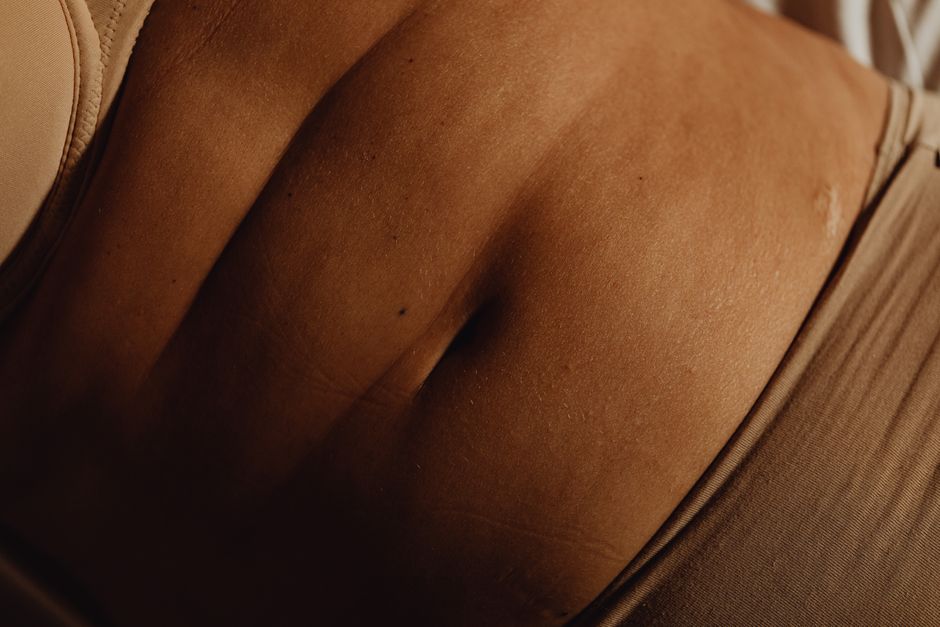
An apron belly is a fold of skin and fat that hangs down from the lower abdomen, often draping over the waistband or pubic area. It is not a medical diagnosis. It is a physical change in how tissue sits on the body, and it can happen to anyone at any weight. The term gets used loosely online, so it helps to separate what an apron belly actually is from what people assume it means.
Some people call it a pannus, a panniculus, or a “belly flap.” Those words describe the same general thing: a hanging apron of tissue below the navel. The amount can range from a small soft fold to a large overhang that reaches the thighs.
What Causes an Apron Belly?
An apron belly forms when skin and fat in the lower belly lose the support that once held them flat. Several things can drive that change, and they often overlap.
Weight gain is the most direct cause. Fat stored in the abdomen pushes the skin outward and stretches it. If the weight comes off later, the stretched skin may not snap back. Skin has elastic fibers, but they can only stretch so far before they lose some ability to recoil.
Pregnancy is a common trigger. The abdomen expands for months, and the skin and underlying tissue stretch to accommodate it. After delivery, the uterus shrinks back, but the skin and fat layer may not return to their previous shape. This is one reason the term “mommy tummy” appears alongside apron belly.
Rapid weight loss, whether from dieting or weight loss surgery, can leave a hanging fold. When fat is lost quickly, the skin that covered it has less time and less tissue to fill it out. Age matters too. Skin loses collagen and elastin over time, which are the proteins that give it firmness and stretch.
Genetics play a role that people often underestimate. Where your body stores fat and how your skin behaves after stretching are influenced by inherited traits. Two people can follow the same routine and end up with different results.
Is an Apron Belly Just Fat?
No. An apron belly is usually a mix of fat and skin, and the balance between the two changes what can be done about it.
Fat sits in a layer under the skin called subcutaneous fat. This is the soft, pinchable fat on the belly. It is different from visceral fat, which wraps around the internal organs deeper inside the abdomen. An apron belly is mostly subcutaneous fat and skin, though a person can have both types.
That distinction matters. Subcutaneous fat responds to overall fat loss, but the skin does not shrink on the same timeline. Someone can lose fat and still have a hanging fold because the skin itself has stretched and thinned.
There is also a condition called diastasis recti, where the two halves of the abdominal muscle separate. It happens most often after pregnancy. It can make the belly look more pronounced, but it is a muscle issue, not a fat issue. A doctor or physical therapist can check for it.
Does an Apron Belly Affect Your Health?
By itself, a hanging fold of skin and fat is not a disease. The health concerns linked to it come from two places: the fat it contains and the skin fold itself.
Carrying extra body fat, especially around the abdomen, is associated with higher risk of conditions like type 2 diabetes and heart disease. That link is well established. But the risk comes from the fat and overall metabolic health, not from the shape of the fold. A person at a healthy weight with an apron belly from pregnancy or weight loss may have no related metabolic risk at all.
The fold can create practical problems. Skin that rubs against skin traps moisture and heat. This can lead to irritation, rashes, and in some cases fungal or bacterial infections. That is a real concern, especially in warm weather or for people with larger folds.
For very large folds, some people develop skin breakdown or chronic irritation under the overhang. Keeping the area clean and dry helps. If you notice persistent redness, a bad smell, or open skin, that is worth showing to a doctor.



Can You Get Rid of an Apron Belly?
How much you can change an apron belly depends on how much of it is fat versus stretched skin.
If the fold is mostly fat, losing overall body fat can reduce it. There is no way to target fat loss to one spot. Exercises like crunches strengthen muscles underneath, but they do not burn fat from the belly directly. Spot reduction is a myth that has been tested and not supported.
If the fold is mostly stretched skin, exercise and diet will not tighten it. Skin that has lost elasticity does not firm up from workouts. This is the part people find frustrating, and it is worth being honest about.
For significant skin removal, surgery is the only option that directly addresses it. A procedure called a panniculectomy removes the hanging skin and fat. A tummy tuck, or abdominoplasty, does that plus tightens the abdominal muscles. These are major operations with real recovery time and risks, including infection, fluid buildup, and scarring. They are not cosmetic quick fixes.
Some people use creams or wraps marketed to tighten the belly. No evidence confirms these change stretched skin. Be skeptical of claims that a product can rebuild elasticity.
What Helps Manage an Apron Belly Day to Day?
Beyond weight and surgery, most of what helps is about comfort and skin care.
- Keep the fold clean and dry. Wash gently and pat dry, including under the overhang.
- Use a barrier cream or powder if skin tends to stay moist. Ask a doctor or pharmacist which is right for you.
- Wear supportive underwear or compression garments if they make movement more comfortable.
- Check the skin regularly for redness, rashes, or breaks in the skin.
- See a doctor for persistent irritation, odor, or open areas that do not heal.
Support garments do not shrink the fold. They manage how it feels and reduce rubbing. That is a comfort tool, not a treatment.
When Should You Talk to a Doctor?
Talk to a doctor if the skin under the fold is often irritated, if you see signs of infection like spreading redness or pus, or if the fold makes it hard to stay active or keep the area clean.
It is also worth a conversation if the apron belly appeared quickly without weight change, or if it comes with pain or a change in bowel habits. Those can point to other issues that need checking.
For anyone considering surgery, a doctor can explain what the procedure involves, what recovery looks like, and whether you are a candidate. That decision depends on your health, your goals, and realistic expectations about results.
Is an Apron Belly the Same as a “Pooch” or “Belly Fat”?
Not exactly. These words get used interchangeably, but they describe different things.
A “pooch” usually refers to a small, rounded lower belly that sits below the navel. It can be fat, bloating, or the shape of the uterus and lower abdomen. An apron belly is larger and hangs down, draping over the waistband.
“Belly fat” is a broader term that can mean subcutaneous fat, visceral fat, or both. An apron belly is a specific physical shape, mostly subcutaneous fat and skin. The words overlap in casual use, but they are not the same.
Frequently Asked Questions
What is an apron belly?
An apron belly is a fold of skin and fat that hangs down from the lower abdomen and drapes over the waistband or pubic area. It is a physical change in how tissue sits on the body, not a medical diagnosis.
Can exercise get rid of an apron belly?
Exercise can reduce body fat, which may shrink the fatty part of the fold, but it cannot tighten stretched skin. No exercise targets belly fat specifically, and spot reduction is not supported by evidence.
Is an apron belly dangerous?
By itself it is not a disease, but the fat it contains can be linked to metabolic risks, and the fold can cause skin irritation or infections. The shape of the fold is not the risk; the fat and skin condition are.
Does an apron belly go away after pregnancy?
It can improve over time as the uterus shrinks and the body changes, but stretched skin may not fully return to its previous shape. How much it changes varies widely from person to person.
