
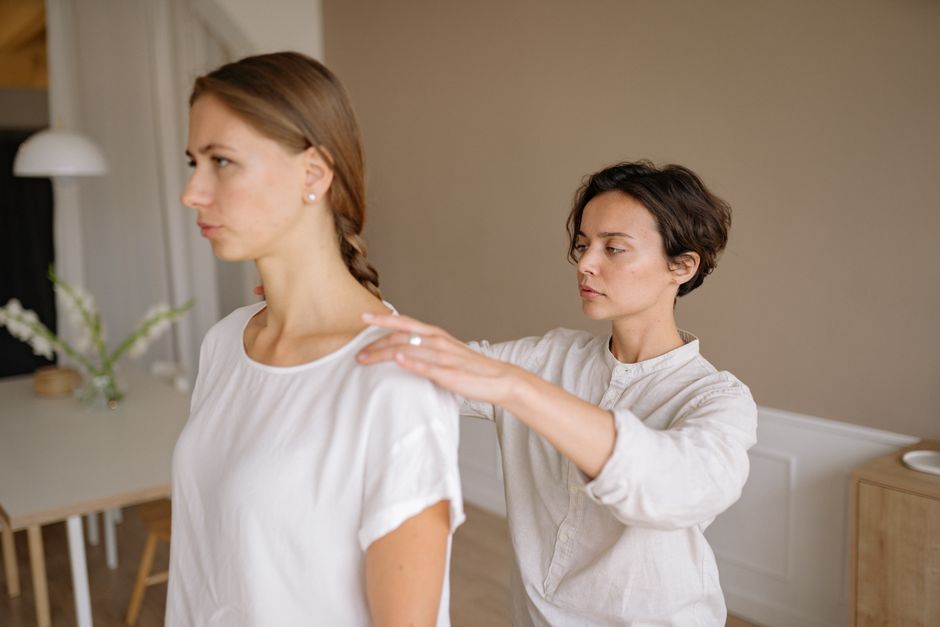
A tight neck is usually a muscle problem, not a sign of something serious. The muscles at the back and sides of your neck tighten in response to posture, stress, sudden movements, or long hours in one position. Most cases ease within days to a few weeks with simple steps at home. The most effective approach combines gentle movement, heat, and changes to how you sit and sleep.
What Causes a Tight Neck?
Neck tightness happens when the muscles that support your head stay contracted longer than they should. Your head weighs roughly 10 to 11 pounds. Those muscles work constantly to hold it up. When you hold your head forward for long periods, the load on the back of your neck increases.
The most common triggers are straightforward:
- Holding your head forward while looking at a phone or laptop
- Sleeping in an awkward position or on a pillow that is too high or too flat
- Stress, which causes many people to unconsciously tense the neck and shoulders
- Sudden movements or holding one position for a long time
- Weak shoulder and upper back muscles that leave the neck doing more work
Less often, neck tightness comes from a pinched nerve, arthritis in the cervical spine, or a disc problem. Those causes usually bring other symptoms — pain that shoots into the arm, numbness, or tingling. If you have those, the tips below are not a substitute for a medical evaluation.
One thing worth knowing: the neck and shoulders work as a unit. A problem in the upper back often shows up as tightness in the neck. That is why exercises that target the shoulder blades help many people more than stretching the neck alone.
How To Relieve Toght Neck? Tips That Actually Help
The fastest relief usually comes from heat, gentle movement, and taking pressure off the muscles. Cold is better in the first day or two after a sudden injury. After that, heat tends to work better for muscle tightness.
Heat relaxes muscle tissue and increases blood flow. A warm shower, a heating pad set on low, or a warm compress for 15 to 20 minutes can ease tightness. Keep a cloth between the heat source and your skin.
Gentle movement matters more than most people expect. Resting a tight neck completely often makes it stiffer. Slow, controlled motion keeps the joints and muscles from locking up. Move within a comfortable range and stop if pain increases.
Over-the-counter pain relievers such as ibuprofen or acetaminophen can reduce pain and help you move more comfortably. These are options to discuss with a pharmacist or doctor, especially if you take other medications or have stomach, kidney, or liver conditions. They treat the symptom, not the cause.
Massage can loosen tight muscles and ease pain in the short term. Some studies suggest it helps for a period of days to weeks, though the evidence on long-term benefit is limited. A partner can work the muscles at the base of the neck and across the shoulders with slow, steady pressure.
What does not have strong evidence behind it: neck collars worn for long periods, traction devices sold for home use, and most “posture corrector” straps. Some clinicians recommend short-term use of certain supports, but the evidence that they fix the underlying problem is weak.
Stretches and Exercises for a Tight Neck
Slow, gentle stretches are the core of most home routines. The goal is to restore normal movement, not to force the muscle. Pain should stay mild — a stretch, not a sharp or shooting feeling.
A few that are widely used:
- Chin tuck. Sit or stand tall. Gently pull your chin straight back as if making a double chin. Hold for a few seconds and release. Repeat several times.
- Side bend. Tip your ear toward your shoulder until you feel a stretch on the opposite side. Hold briefly, then switch sides.
- Shoulder blade squeeze. Pull your shoulder blades together and down. Hold for a few seconds. This targets the upper back muscles that support the neck.
- Slow head turns. Turn your head to look over one shoulder, then the other, moving slowly within a comfortable range.
Do these gently and often rather than hard and rarely. A few repetitions several times a day tends to work better than one long session. If any movement causes pain that shoots down your arm or makes you dizzy, stop and get it checked.
Strengthening the upper back and shoulders is the part most people skip. Weak supporting muscles mean the neck keeps taking the load. Exercises that work the shoulder blades and upper back help over time, not overnight.





Can Poor Posture and Screen Time Make It Worse?
Yes. Sustained positions are a major driver of neck tightness. When you look down at a phone, the effective load on your neck rises well above the weight of your head. The lower you look, the greater the strain.
The fix is not a perfect posture you have to hold all day. It is changing position often. Your body handles many positions better than one held for hours.
Practical adjustments:
- Raise your screen so the top is near eye level
- Keep your phone closer to eye level instead of looking straight down
- Take a short break every 30 to 45 minutes to move your neck and shoulders
- Set up your chair so your feet rest flat and your forearms are supported
Standing desks help some people and not others. The key is movement, not standing still for longer. A standing desk you never leave is no better than a chair you never leave.
When Should You See a Doctor?
Most neck tightness is not dangerous and improves on its own. Certain signs mean you should get medical care rather than manage it at home.
Seek care if you have:
- Pain, numbness, or tingling that shoots into your arm or hand
- Weakness in your arm or hand
- Neck stiffness with fever, headache, or feeling generally unwell
- Tightness after a fall, car crash, or other injury
- Difficulty swallowing, speaking, or breathing
- Loss of bladder or bowel control, or problems walking
Some of these point to nerve involvement or, rarely, something more serious. Difficulty breathing or swallowing and loss of bladder or bowel control are reasons to seek emergency care right away.
For ongoing tightness that does not improve after a few weeks of home care, a doctor or physical therapist can assess whether the cause is muscular, a joint problem, or a nerve issue. Physical therapy is commonly recommended for persistent neck pain, and evidence supports it for many people.
Does Sleep Position Matter?
Yes. You spend hours asleep, and a poor position can keep the neck muscles strained all night. This is a common reason people wake up with a stiff, tight neck.
On your back, a pillow that supports the natural curve of your neck works well. A pillow that is too thick pushes your head forward. On your side, the pillow should fill the gap between your head and the mattress so your neck stays roughly in line with your spine. Sleeping on your stomach forces your head to turn to one side for hours, which many people find aggravates the neck.
There is no single pillow that works for everyone. The right height depends on your body size and sleep position. The general rule is that your head should rest in a neutral position, not tilted up or down.
Frequently Asked Questions
How long does a tight neck usually last?
Most cases ease within days to a few weeks with home care. If tightness lasts longer than a few weeks or gets worse, see a doctor or physical therapist.
Is heat or ice better for a tight neck?
Ice is generally used in the first day or two after a sudden injury, and heat tends to work better for ongoing muscle tightness. Both can help, and many people find heat more soothing for a stiff neck.
Can a tight neck be a sign of something serious?
Most neck tightness is muscular and not dangerous. Get medical care if you have pain shooting into your arm, numbness, weakness, fever with neck stiffness, or trouble breathing or swallowing.
Should I rest my neck or keep moving it?
Gentle movement usually helps more than complete rest, which can make the neck stiffer. Move slowly within a comfortable range and stop if pain gets worse.
