

Pregnancy changes what you eat, but not as dramatically as the internet suggests. Most foods are fine. A short list is not. The main risks come from foodborne bacteria and parasites — Listeria, Toxoplasma, Salmonella — and from a few substances that can affect fetal development, like alcohol and high mercury levels. Your immune system also shifts during pregnancy, which makes infections from contaminated food more likely and potentially more serious.
What You Can And Cannot Eat While Pregnant?
You can eat most foods, but you cannot eat raw or undercooked meat, raw fish and shellfish, unpasteurized dairy, raw eggs, high-mercury fish, raw sprouts, and anything containing alcohol. Those are the categories that carry real documented risk.
The rest of this article explains why each restriction exists, what the actual risk looks like, and which foods people wrongly avoid. That last part matters — some of the most common pregnancy food fears have little evidence behind them.
Why Do Foodborne Infections Matter More During Pregnancy?
Pregnancy modifies your immune system in ways that make certain infections more dangerous. This is not a small effect. It is one of the main reasons the food rules exist at all.
Two infections drive most of the concern.
Listeria is a bacterium found in soil, water, and some processed foods. In healthy adults it usually causes mild flu-like symptoms or nothing at all. During pregnancy, it can cross the placenta and infect the fetus. According to the CDC, pregnant women are about 10 times more likely to get listeriosis than other healthy adults, and Hispanic women are at even higher risk — partly due to traditional fresh cheese consumption. Listeriosis in pregnancy can lead to miscarriage, stillbirth, preterm labor, or serious illness in the newborn.
Toxoplasma is a parasite found in undercooked meat, unwashed produce, and cat feces. Toxoplasmosis often causes no symptoms in the mother but can damage the baby’s brain and eyes. It is one of the reasons raw and rare meat is off the table.
Other infections — Salmonella, E. coli, Campylobacter — are less likely to cross the placenta but can still cause severe dehydration, fever, and complications that harm both mother and baby.
Which Foods Should You Avoid Completely?
Some foods are avoided because the risk is well documented and the consequences can be severe. These are not gray areas.
- Raw or undercooked meat and poultry. This includes rare steak, raw ground beef, and anything pink inside.
- Raw fish and shellfish. Sushi, ceviche, oysters, and clams. Smoked fish is also risky unless cooked afterward, because cold-smoking does not kill Listeria.
- Unpasteurized dairy. Raw milk, soft cheeses made with raw milk (feta, brie, camembert, queso fresco, blue cheese). Pasteurized versions of these cheeses are generally considered safe.
- Raw or lightly cooked eggs. This includes homemade mayonnaise, raw cookie dough, and runny yolks.
- High-mercury fish. Shark, swordfish, king mackerel, tilefish, and bigeye tuna. Mercury accumulates in fetal tissue and can affect brain and nervous system development.
- Raw sprouts. Alfalfa, clover, radish, mung bean. Seeds can harbor bacteria that washing does not remove.
- Alcohol. No amount has been established as safe during pregnancy. The CDC and the American College of Obstetricians and Gynecologists both recommend complete avoidance.
- Unwashed fruits and vegetables. Not a food category to avoid, but always wash produce under running water before eating.

What About Deli Meat, Hot Dogs, and Leftovers?
These foods are not banned, but they need to be heated until steaming hot before you eat them. The issue is Listeria, which can grow at refrigerator temperatures — unlike most bacteria.
Deli turkey, ham, salami, hot dogs, and refrigerated pâté or meat spreads have all been linked to listeriosis outbreaks. Heating them until they are steaming hot kills the bacteria. Once heated, they are considered safe to eat.
Canned or shelf-stable versions of these foods are generally fine without heating, since the canning process destroys Listeria.
Leftovers should be reheated to steaming hot as well. The general guidance is to reheat to an internal temperature of 165°F (74°C), which is the standard food safety threshold for killing Listeria.
Which Fish Can You Eat, and How Much?
Fish is one of the best foods you can eat during pregnancy. It provides omega-3 fatty acids, particularly DHA, which support fetal brain and eye development. The problem is mercury, not fish itself.
The FDA and EPA recommend that pregnant women eat 8 to 12 ounces of low-mercury fish per week — roughly two to three servings. That is a target, not a limit to stay under.
Safe choices include:
- Salmon
- Sardines
- Anchovies
- Trout
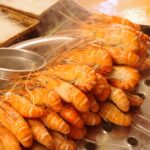
- Shrimp
- Cod
- Canned light tuna (limit to 6 ounces per week)
- Tilapia
- Pollock
Albacore (white) tuna should be limited to 6 ounces per week because it has more mercury than light tuna. Avoid bigeye tuna entirely.
One clarification worth making: the old advice to limit all fish during pregnancy was based on concern about mercury, but the evidence now shows that avoiding fish altogether deprives the fetus of important nutrients. The current guidance is to eat low-mercury fish regularly, not to avoid it.
Can You Drink Caffeine During Pregnancy?
Yes, but in limited amounts. Most major health organizations — including ACOG and the CDC — recommend staying under 200 milligrams of caffeine per day during pregnancy.
That is roughly one 12-ounce cup of coffee. The amounts in common sources break down like this:
| Source | Approximate Caffeine |
|---|---|
| 12 oz brewed coffee | ~120-200 mg |
| 8 oz black tea | ~40-60 mg |
| 12 oz cola | ~30-50 mg |
| 1 oz dark chocolate | ~20 mg |
| 12 oz decaf coffee | ~2-5 mg |
The evidence on caffeine and miscarriage is mixed. Some studies suggest a link at higher intakes, others do not. The 200 mg threshold is a conservative guideline based on the available evidence, not a proven safe limit. Staying under it is reasonable. Going slightly over occasionally is not a known cause for alarm.
What Foods Do People Avoid Unnecessarily?
Several foods get avoided during pregnancy based on fear rather than evidence. Here is what the research actually shows.
Pasteurized soft cheese. Brie, feta, and camembert made with pasteurized milk are considered safe. The risk comes from unpasteurized versions, which are increasingly rare in US grocery stores. Check the label.
Peanuts and tree nuts. Current evidence does not support avoiding nuts during pregnancy to prevent allergies in the child. In fact, some research suggests that eating peanuts during pregnancy may reduce the risk of peanut allergy in offspring, though the evidence is not definitive.
Spicy food. No evidence links spicy food to miscarriage, preterm labor, or harm to the baby. If it gives you heartburn, that is a comfort issue, not a safety issue.
Papaya. Ripe papaya is generally considered safe. Unripe (green) papaya contains latex and a compound called papain that some research suggests may affect uterine contractions, but the evidence is limited and mostly from animal studies. Most clinicians say ripe papaya is fine.
Pineapple. No credible evidence supports the idea that pineapple causes miscarriage. This is a persistent myth.
How Should You Handle Food Safely at Home?
Food safety practices matter more during pregnancy than at any other time. The basics are simple.
- Wash hands with soap and water before and after handling raw meat, poultry, or eggs.
- Rinse all produce under running water before eating, cutting, or cooking — even if you plan to peel it.
- Use separate cutting boards for raw meat and ready-to-eat foods.
- Cook meat to safe internal temperatures: 145°F for whole cuts of beef, pork, and lamb (with a 3-minute rest), 160°F for ground meats, and 165°F for all poultry.
- Refrigerate leftovers within two hours.
- Avoid unpasteurized juices, ciders, and milk.
- Check restaurant food is cooked thoroughly — send back anything undercooked.
These steps reduce risk. They do not eliminate it. Listeria outbreaks have occurred in foods that were handled properly by consumers. That is why the avoidance list exists alongside the safety practices.
Frequently Asked Questions
Can I eat sushi while pregnant?
No, raw fish sushi is not recommended during pregnancy because of parasite and bacteria risk. Cooked sushi rolls or vegetarian rolls are generally considered safe.
Is it safe to eat deli meat if I heat it up?
Yes, deli meat heated until steaming hot is considered safe because the heat kills Listeria. Cold deli meat straight from the refrigerator is not recommended.
How much caffeine is safe during pregnancy?
Most health organizations recommend staying under 200 milligrams per day, which is about one 12-ounce cup of coffee. The evidence on higher intakes is mixed, so this is a conservative guideline.
Can I eat runny eggs while pregnant?
No, eggs should be cooked until both the yolk and white are firm. Raw or runny eggs can carry Salmonella, which can cause serious illness during pregnancy.
