

You cannot target belly fat with crunches. Spot reduction is a myth — no exercise burns fat from the specific area you’re working. The workout that actually reduces belly fat is one that creates a calorie deficit while building and preserving muscle: a mix of regular aerobic exercise and full-body strength training, done consistently over months, paired with a modest calorie deficit. Ab exercises build core strength but will not strip fat from your waistline.
That is the honest, evidence-based answer. Belly fat — especially the visceral fat packed around your organs — responds to overall fat loss, not to targeted moves. How you train affects how much of that fat you lose and how well you keep muscle while you do it.
Why Can’t You Burn Fat From Your Belly With Crunches?
Fat is stored and released by the body as a whole, not region by region. When you exercise, your body mobilizes fat from stores across your entire system, driven by hormones and energy demand — not by which muscle is contracting.
Researchers have tested this directly. Studies that put people on ab-focused training programs found the abdominal muscles got stronger, but fat in the belly area did not decrease more than in other regions. The muscle underneath may tighten, but the fat layer on top does not shrink because you worked the muscle below it.
This is where a lot of people waste months. Hundreds of crunches a day will build endurance in your core. They will not flatten your stomach. Fat loss comes from a calorie deficit — burning more energy than you take in — and where your body draws that fat from is largely genetic and hormonal.
One clarification worth knowing: you cannot choose where you lose fat first. For some people the belly is the last place to go. That is frustrating but normal, and it does not mean your workout is failing.
What Workout To Lose Belly Fat Actually Works?
The most effective approach combines aerobic exercise with resistance training, supported by a calorie deficit. Each piece does a different job, and the combination outperforms either one alone.
Aerobic exercise burns a meaningful number of calories per session and, over time, improves how well your body uses fat for fuel. Brisk walking, jogging, cycling, swimming, and rowing all count. The key is duration and consistency, not intensity on any single day.
Resistance training — lifting weights or doing bodyweight strength work — preserves and builds muscle while you lose fat. Muscle burns more energy at rest than fat does, so keeping muscle helps protect your metabolic rate during weight loss. It also keeps you from losing muscle along with the fat, which is a common problem on calorie-restricted diets alone.
Current physical activity guidance for adults generally points to at least 150 minutes of moderate-intensity aerobic activity per week, plus muscle-strengthening activity on two or more days per week. That is a reasonable foundation, though losing fat often requires more total activity or a tighter calorie deficit than that baseline alone.
How Much Cardio Do You Need to Lose Belly Fat?
More than the minimum helps, but there is a point of diminishing returns. Cardio burns calories, and a bigger weekly volume of moderate-intensity work generally produces more fat loss — up to a point.
The problem with relying on cardio alone is that it does not protect muscle. Long, high-volume cardio combined with a steep calorie deficit can cost you muscle mass, which slows your resting metabolism and makes fat loss harder to sustain. That is why cardio works best paired with strength training, not instead of it.
Practical structure that holds up:
- Build toward a weekly total of moderate-intensity cardio that feels sustainable — many people do well somewhere above the 150-minute baseline.
- Keep sessions long enough to matter. Short bursts burn less total energy than steady, sustained work.
- Mix intensities. Some harder intervals, some easy longer sessions. Variety keeps you consistent and spreads the stress on your joints.
- Pick activities you will actually repeat. Adherence beats optimization every time.
Walking deserves a mention. It is low-impact, easy to sustain, and adds up. A daily walk is not glamorous, but total weekly energy expenditure is what moves the needle.



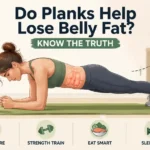

Does Strength Training Help You Lose Belly Fat?
Strength training is the part most people skip, and it matters. It will not burn as many calories during a session as a hard cardio workout, but it changes your body composition in ways cardio alone does not.
When you lose weight, you lose both fat and muscle unless you give your body a reason to keep the muscle. Lifting signals your body that the muscle is needed. Preserving muscle keeps your resting metabolic rate higher and helps you look leaner at the same body weight.
Full-body strength work — movements that use large muscle groups like squats, hinges, pushes, pulls, and carries — gives you the most return per session. Two or three sessions a week is a reasonable starting point. You do not need a gym; bodyweight and resistance bands can build real strength.
Here is a point worth separating from marketing: strength training does not “spot burn” belly fat either. Its value is preserving muscle and supporting the calorie deficit, not melting fat off your midsection directly.
What About HIIT and Intervals?
High-intensity interval training can produce fat loss and does it in less time per session. The catch is that the total calories burned per session are often lower than a longer moderate session, and the recovery cost is higher.
Some studies suggest interval training can be effective for reducing belly fat, particularly visceral fat, but the evidence is not strong enough to call it superior to steady cardio for everyone. It is a useful tool, not a magic shortcut.
Intervals make sense if time is your main barrier or you enjoy intensity. They are a poor fit if you are new to exercise, carrying joint issues, or recovering poorly between sessions. For most people, a mix — some steady cardio, some intervals, plus strength work — is the most sustainable plan.
How Long Until You See Results?
Expect weeks, not days. Fat loss is gradual, and belly fat — especially visceral fat — often changes before the mirror shows it. Early changes are usually in how clothes fit and how you feel, not in a flat stomach.
Progress depends on your starting point, how consistent you are, and how large your calorie deficit is. Two people doing the same workout can see very different timelines. There is no reliable way to promise a specific number of weeks to a visible change, and anyone who does is guessing.
What is well established: consistency over months is what produces results. Sporadic intense weeks followed by nothing do not. Track something objective — waist measurement, photos, how your clothes fit — rather than the scale alone, since strength training can add muscle while you lose fat and keep your weight steady.
What Else Matters Besides Exercise?
Exercise is only part of the equation. Belly fat, particularly visceral fat, is strongly influenced by what you eat and how you live. No workout overcomes a diet that consistently exceeds your energy needs.
A modest calorie deficit is what drives fat loss. Protein helps preserve muscle and keeps you full. Sleep and stress matter too — poor sleep and chronic stress are associated with higher visceral fat, and the relationship is well documented even if the exact mechanisms are still being studied.
Alcohol is worth an honest look. Heavy drinking is linked to belly fat accumulation, and cutting back is one of the more effective changes many people can make.
One thing to be clear about: if you have a medical condition, are pregnant, or are managing a chronic disease, talk to a clinician before starting a new exercise or diet program. General guidance does not account for individual circumstances.
Frequently Asked Questions
Can you lose belly fat with just walking?
Walking can contribute to fat loss if it helps create a calorie deficit, but it usually needs to be paired with dietary changes and strength training for meaningful belly fat reduction. Walking alone rarely produces fast results.
Are crunches useless for belly fat?
Crunches are not useless for core strength, but they do not reduce belly fat. Spot reduction does not work, so ab exercises build muscle without stripping fat from your waist.
What is the best exercise to lose belly fat fast?
There is no single fast exercise, because fat loss depends on a sustained calorie deficit over weeks to months. A combination of regular cardio, strength training, and dietary changes is the most reliable approach.
How often should I work out to lose belly fat?
Most adults benefit from aerobic activity on most days and strength training two or more times per week. Consistency across the week matters more than any single intense session.
