

The single-celled organism is the only cell type naturally prepared to live on its own. A bacterium or a protozoan like an amoeba carries out every life function within one cell. It finds food, breaks it down for energy, removes waste, and reproduces — all without help from neighboring cells. This is the fundamental difference between a single-celled organism and the cells inside your body. Your cells are specialists. They depend on other cells for survival. A single-celled organism is a complete, self-sufficient package.
What Makes a Cell Self-Sufficient?
For a cell to live independently, it must perform all the basic tasks of life. It needs a way to take in nutrients. It needs machinery to convert those nutrients into energy. It needs to sense its environment and respond to it. And it needs to reproduce to continue its species.
Bacteria do all of this. They have a cell wall that gives them structure and protection. They have ribosomes to build proteins. They have enzymes to digest food. Many have flagella — tiny tails that act like motors — to move toward food or away from danger. Every piece of equipment required for survival is packed inside that single cell.
Your body’s cells cannot do this. A liver cell cannot hunt for food. A skin cell cannot swim toward nutrients. They have given up these abilities in exchange for specialization. They rely on your bloodstream to deliver oxygen and glucose and to carry away carbon dioxide and waste. Without that support system, they die within minutes.
How Do Single-Celled Organisms Survive Alone?
Single-celled organisms are incredibly adaptable. They live in soil, in water, in extreme heat, and even inside your digestive tract. Their survival depends on a few key strategies.
First, they are efficient at absorbing nutrients. Many bacteria release enzymes into their surroundings to break down large molecules into smaller ones they can absorb through their cell membrane. This is external digestion — breaking food down outside the cell, then pulling it in.
Second, they are quick to respond to environmental changes. Bacteria can sense shifts in temperature, pH, or nutrient availability. They can move toward favorable conditions and away from harmful ones. This behavior is called chemotaxis, and it is a genuine survival skill.
Third, they are masters of reproduction. A single bacterium can divide into two identical cells in as little as 20 minutes under ideal conditions. This rapid doubling allows a population to explode in number quickly, which improves the odds that at least some cells will survive a sudden environmental threat.
What About Cells That Leave the Body?
Some cells from multicellular organisms can survive outside the body, but they are not truly prepared to live on their own. They are merely enduring. They do not thrive.
Sperm cells are a good example. A sperm cell leaves the male body and travels through the female reproductive tract. It is motile — it can swim. But it depends on fluids in the reproductive tract for nutrients and energy. It does not feed itself. It does not grow. It carries a limited fuel supply and either fertilizes an egg or dies within a few days.
Skin cells shed from your body die quickly. They have no food source and no way to protect themselves. Red blood cells survive only a few weeks even inside your body because they lack a nucleus and most internal machinery. They are delivery vehicles, not independent organisms.
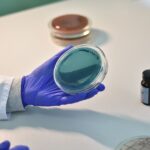
Even cells grown in a laboratory — cultured cells — require a carefully controlled environment. They need specific nutrients, the right temperature, and the right pH. They need a surface to attach to or a liquid medium to float in. Remove any of these conditions and they die. They are not living on their own. They are being supported by a human-made system.


Why Are Your Cells Not Independent?
Your body contains trillions of cells, and nearly all of them are specialized. This specialization is what makes multicellular life possible — but it comes at a cost. Each cell has lost the ability to do everything.
Consider a muscle cell. It is built to contract. It is packed with mitochondria to generate energy for that work. But it cannot digest food on its own. It cannot sense danger. It cannot repair itself without signals from other cells. It depends on your nervous system to tell it when to contract. It depends on your circulatory system to bring it oxygen and glucose. It depends on your liver to process nutrients and your kidneys to filter waste.
This division of labor is the defining feature of multicellular organisms. Each cell type performs a specific job, and no single cell type can survive alone. The whole system works because every cell contributes and every cell receives support.
This is why your body is not a collection of independent cells. It is a coordinated community. Cells communicate through chemical signals. They cooperate to maintain a stable internal environment — a concept called homeostasis. They even sacrifice themselves when necessary. When a cell becomes damaged beyond repair, it can trigger its own death through a process called apoptosis. This protects the organism as a whole, even though it destroys an individual cell.
Are There Cells That Are Both Independent and Part of a Body?
There is one remarkable exception worth understanding: stem cells. Some stem cells can leave their niche in the body and survive in a laboratory dish. They are not fully committed to a single job, which gives them flexibility. But even stem cells are not truly independent. They still require carefully controlled conditions to survive and divide.
There are also organisms that blur the line between single-celled and multicellular. Slime molds, for example, live as single cells when food is abundant. When food runs low, thousands of individual cells aggregate into a single slug-like structure that can move to a better location. This is a temporary cooperation, not a permanent body. Each cell remains capable of living on its own.
These examples show that the line between independence and interdependence is not always sharp. But the general rule holds: cells that are truly prepared to live on their own are single-celled organisms. Everything else needs help.
What Happens When Body Cells Try to Live Independently?
Cancer is what happens when a body cell begins to behave like an independent organism. A cancer cell stops responding to the signals that keep normal cells in check. It grows without restraint. It stops cooperating with surrounding tissue. It can even break away and travel to other parts of the body — a process called metastasis.
This is a useful way to understand cancer. Cancer cells are not stronger or more advanced than normal cells. They are broken. They have lost the ability to function as part of a community. They consume resources without contributing. They ignore signals to stop dividing. They essentially hijack the body’s support systems for their own growth.
This is why cancer is so difficult to treat. Cancer cells are still human cells. They are not foreign invaders like bacteria. They use the same machinery as healthy cells. Treatments must target the differences between cancer cells and normal cells — differences that are often subtle.
Understanding that your cells are interdependent by design helps explain why cancer is such a fundamental disruption. It is not a single disease. It is a breakdown of the social contract that makes multicellular life possible.
Can Any Human Cell Ever Be Truly Independent?
No human cell is prepared to live on its own in the natural world. Every cell in your body is tuned to a specific role within a larger system. That is not a weakness. It is the strategy that allowed complex life to evolve.
Single-celled organisms are the pioneers of life on Earth. They appeared billions of years before multicellular organisms. They remain the most abundant form of life on the planet. They are complete, self-sufficient units that need nothing but their own machinery and a suitable environment.
Your cells traded that independence for something else: the ability to build tissues, organs, and bodies capable of extraordinary things. A single bacterium can survive alone. But it cannot think, feel, or remember. Your cells cannot survive alone. But together, they make you who you are.
Frequently Asked Questions
What type of cell is prepared to live on its own?
A single-celled organism, such as a bacterium or amoeba, is the only cell type naturally prepared to live independently. It performs all life functions — feeding, energy production, waste removal, and reproduction — within one cell.
Can any human cells survive outside the body?
Some human cells can survive briefly outside the body under specific conditions, but none are truly independent. Sperm cells can swim for a few days, and cultured cells can live in laboratory dishes, but both require external support and die without it.
Why can’t human cells live on their own?
Human cells are specialized. Each type performs a specific job and depends on other cells for nutrients, oxygen, waste removal, and communication. This interdependence is what allows complex organs and tissues to function.
Are cancer cells independent?
Cancer cells behave independently by ignoring normal growth signals and dividing without restraint, but they still depend on the body’s blood supply for nutrients. They are broken cells that have lost their role in the community, not truly self-sufficient organisms.
