
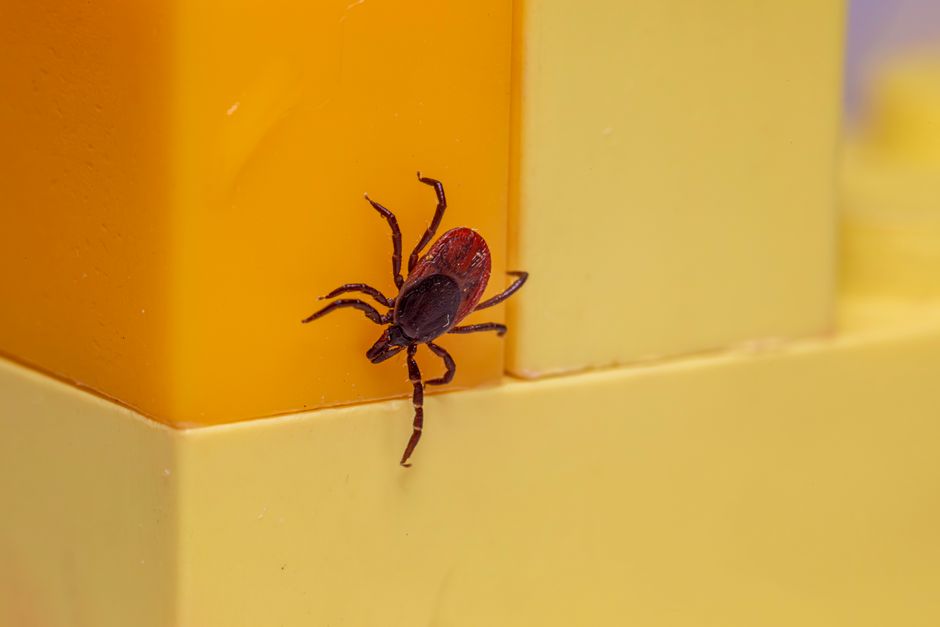
You found a tick on your skin and you need to know what to do next. The right move is to remove the tick with fine-tipped tweezers, clean the bite area with soap and water or rubbing alcohol, and then apply an antibiotic ointment like bacitracin or Neosporin. The wrong move — and the one that spreads disease — is using heat, petroleum jelly, nail polish, or any folk remedy that tries to make the tick “back out.” Do not twist, jerk, or crush the tick. Do not wait to see if it gets infected. Remove it. Clean it. Watch for symptoms for 30 days.
How Do You Remove a Tick the Right Way?
The first thing to understand is that the goal is not to kill the tick while it is attached. The goal is to remove the entire tick, including its mouthparts, as quickly as possible. Every minute the tick stays attached increases the chance of disease transmission.
Use fine-tipped tweezers. Grasp the tick as close to your skin as possible. Pull upward with steady, even pressure. Do not jerk or twist. The mouthparts are barbed, so twisting can break them off and leave them in your skin.
If the mouthparts do break off, leave them alone. Your body will push them out naturally over a few days. Digging around in the skin with a needle is more likely to cause infection than the retained mouthparts themselves.
Once the tick is out, drop it in rubbing alcohol or flush it down the toilet. Do not crush it with your fingers. Tick body fluids can carry bacteria, and you do not want that on broken skin.
What To Put On A Tick Bite And What To Avoid
After removal, clean the bite area with rubbing alcohol or soap and water. This reduces the chance of bacterial infection from your own skin, not from the tick. Then apply an over-the-counter antibiotic ointment like bacitracin or Neosporin. The CDC recommends this step. It is simple and it works.
Cover the bite with a clean bandage if it is in an area that will get dirty or rub against clothing. Most tick bites do not need a bandage, but it keeps the ointment on the bite and protects it.
Do not apply heat, matches, cigarette butts, or any hot object to the tick or the bite. This is not a wart. Heat does not make the tick release. It makes the tick regurgitate its stomach contents into your bloodstream, which increases the risk of disease dramatically.
Do not use petroleum jelly, nail polish, gasoline, kerosene, or any substance meant to suffocate or irritate the tick. These methods do not work. They take too long. The tick stays attached and continues feeding while you wait for it to “back out.” That waiting time is exactly when disease transmission happens.
Do not apply essential oils, tea tree oil, lavender oil, or any undiluted essential oil directly to the bite. Some people report that these help with itching, but strong evidence is limited. More importantly, undiluted essential oils can cause contact dermatitis and chemical burns on broken skin. The risk of making the bite worse is higher than any proven benefit.
What Does Research on Tick Bite Care Show?
The evidence on tick bite care is clear about one thing: removing the tick quickly is the only intervention that prevents Lyme disease and other tick-borne illnesses. Research published in the Journal of Medical Entomology found that transmission of Lyme bacteria typically takes 24-48 hours of attachment. Powassan virus can transmit in as little as 15 minutes. Speed matters.
A study in the New England Journal of Medicine looked at people who found attached ticks and removed them. Those who removed ticks within 24 hours had a near-zero rate of Lyme disease. Those who waited longer had higher rates. The takeaway is simple: the clock starts when the tick bites, not when you find it.
There is no high-quality evidence that any topical treatment, including antibiotic ointment, prevents tick-borne disease. Antibiotic ointment prevents skin infection from bacteria on your skin. It does not kill bacteria that the tick already injected into your bloodstream. That distinction matters.
The CDC does recommend a single dose of doxycycline for adults who meet specific criteria: the tick is identified as a black-legged tick (deer tick), it was attached for at least 36 hours, and the person is in an area where Lyme disease is common. This is called prophylactic doxycycline. It is not for everyone. It is a prescription decision made by a doctor.



What Are the Side Effects of Tick Bite Treatments?
Antibiotic ointments like Neosporin can cause allergic contact dermatitis in some people. The reaction looks like a red, itchy rash that can be mistaken for a tick-borne rash. If you develop a rash after applying ointment, stop using it and call your doctor. About 1 in 10 people have some reaction to topical antibiotics with prolonged use.
Bacitracin is less likely to cause allergic reactions than Neosporin, but it is still possible. If you have sensitive skin, use bacitracin alone rather than triple-antibiotic ointment. Plain petroleum jelly is also acceptable if you cannot tolerate antibiotic ointments, though it does not provide antibacterial protection.
Oral doxycycline has side effects including nausea, vomiting, sun sensitivity, and esophageal irritation. The single-dose prophylactic regimen has fewer side effects than a full course, but they still occur. You should take it with food and a full glass of water and avoid direct sunlight for several days.
Some people report that antihistamines like Benadryl help with itching at the bite site. Evidence indicates that antihistamines reduce histamine response but do not prevent infection. They are safe for symptom relief but do not replace proper wound care.
| Treatment | What It Does | What It Does Not Do |
|---|---|---|
| Fine-tipped tweezers | Removes tick completely | Does not prevent disease if tick was attached long |
| Rubbing alcohol | Cleans skin and kills surface bacteria | Does not kill bacteria already in bloodstream |
| Antibiotic ointment | Prevents skin infection at bite site | Does not prevent Lyme or other tick-borne diseases |
| Prophylactic doxycycline | Reduces Lyme risk when taken within 72 hours | Does not prevent all tick-borne diseases |
| Heat or suffocation methods | Nothing beneficial | Increases disease transmission risk |
When Should You See a Doctor for a Tick Bite?
Most tick bites do not require a doctor visit. If you removed the tick within 24 hours and the bite looks clean, you can monitor at home. But there are specific situations where you should seek medical attention.
If the tick was attached for more than 36 hours and the tick is a black-legged tick (deer tick) in an area where Lyme is common, call your doctor about prophylactic doxycycline. This is time-sensitive. The medication must be taken within 72 hours of tick removal to be effective.
If you develop a rash at the bite site, especially a bullseye rash (erythema migrans), see a doctor. The bullseye rash is diagnostic for Lyme disease in most cases. It appears 3-30 days after the bite. It is not always a bullseye — it can be a solid red oval or blotch. If you see any new rash, get it checked.
If you develop fever, chills, headache, muscle aches, joint pain, or fatigue within 30 days of a tick bite, see a doctor. These are symptoms of multiple tick-borne diseases, including Lyme, anaplasmosis, babesiosis, and ehrlichiosis. Mention the tick bite when you call so the doctor considers these diagnoses.
Do not wait for a rash. About 30% of people with Lyme disease never develop a rash. The absence of a rash does not mean you are safe if you have symptoms.
Common Misconceptions About Tick Bites
One of the most persistent myths is that you can tell if a tick carries disease by looking at it. You cannot. Ticks are tiny. The black-legged tick nymph that transmits Lyme is the size of a poppy seed. You cannot see bacterial infection on a tick’s body. The only way to know if a tick carried disease is to test it, and even that has limitations.
Another widespread claim is that you should save the tick in a jar to show the doctor. This is widely claimed though strong evidence is limited that it helps clinical decisions. Most doctors will not test the tick. Testing ticks is expensive and not always reliable. The CDC does not recommend routine tick testing. Instead, watch for symptoms and treat based on clinical signs.
Some people believe that a tick bite always leaves a visible mark. It does not. Many tick bites are painless and leave no mark at all. People often find ticks crawling on them or discover them while showering, with no idea how long they have been attached. This is why checking your entire body after being outdoors is important.
The idea that ticks fall from trees is also incorrect. Ticks do not jump, fly, or fall from above. They wait on grass and low shrubs in a behavior called “questing.” They grab onto passing animals or humans that brush against the vegetation. Most tick bites occur on the legs, waist, armpits, and behind the knees.
Frequently Asked Questions
Should I put hydrogen peroxide on a tick bite?
Hydrogen peroxide can be used to clean the bite after removal, but rubbing alcohol or soap and water work just as well and are less irritating to the skin.
Can I use a tick removal tool instead of tweezers?
Yes, tick removal tools work well if used correctly, but fine-tipped tweezers are more widely available and just as effective when you pull straight up.
How long should I watch a tick bite for symptoms?
Watch the bite site and your overall health for 30 days after the tick bite, as symptoms of tick-borne diseases can appear up to a month later.
Does toothpaste help remove a tick?
No, toothpaste does not help remove a tick and the waiting time it requires increases the risk of disease transmission.
