
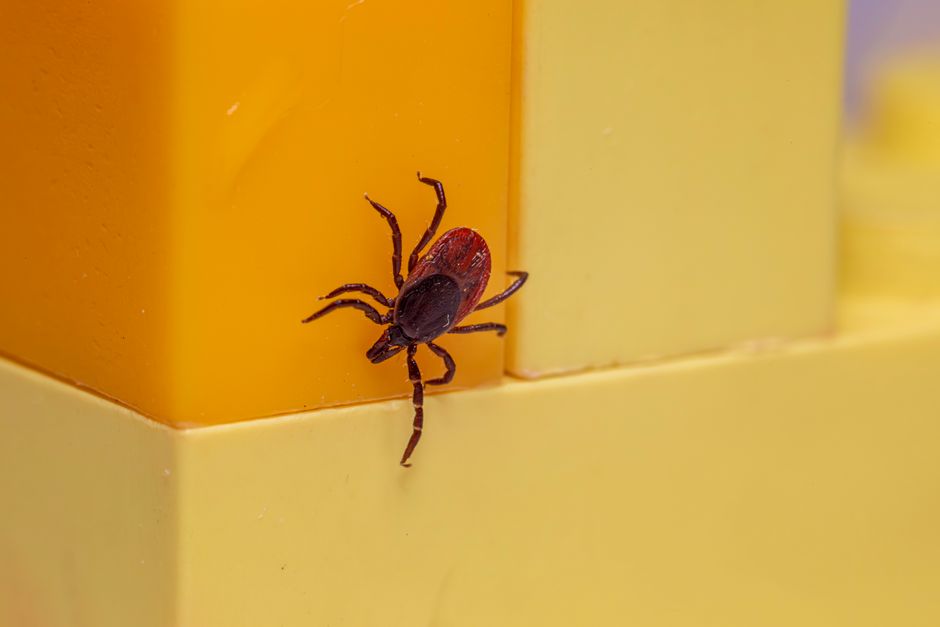
A tick bite rash is not one thing. It can be a flat red patch, a raised itchy bump, or a slowly expanding ring. What the rash looks like, and how it changes over days, is one of the most useful clues doctors have when deciding whether a tick bite needs treatment. The single most important thing to look for is a rash that keeps growing over several days, especially one that clears in the center to form a ring. That pattern is the classic sign of Lyme disease and warrants a prompt call to a clinician.
What Does a Lyme Disease Rash Look Like?
The Lyme disease rash is called erythema migrans. Most descriptions call it a bullseye, but that can be misleading. In practice it often appears as a solid red or pink oval that expands steadily, and only some develop a clear center.
What matters is the behavior of the rash, not just its shape:
- It usually appears within days to a few weeks after the bite.
- It expands slowly over days, often reaching several inches across.
- It is usually not very itchy or painful.
- It feels warm but is rarely raised much above the surrounding skin.
- It does not fade when you press on it in many cases, though this varies.
One detail people often get wrong: the tick that transmits Lyme disease is usually a tiny nymph, roughly the size of a poppy seed. Many people with erythema migrans never saw a tick on their skin. The CDC notes that the rash can appear without any memory of a bite. So a rash that fits this pattern should be taken seriously even if you never found a tick.
Erythema migrans is the one rash that clinicians can diagnose Lyme disease from directly, without a lab test, when it has the typical expanding appearance. In that situation, treatment is generally started based on the rash alone. This is one of the few infections where a physical sign alone can be enough.
What To Look For After A Tick Bite Rash Symptoms?
Beyond the rash itself, watch for a cluster of symptoms that can appear with or shortly after it. These matter because Lyme disease can affect more than the skin, and early symptoms can show up before any joint or nerve problems develop.
Common early symptoms to watch for include:
- Fever or chills
- Fatigue that feels out of proportion
- Muscle aches and joint pain
- Headache
- Swollen lymph nodes near the bite
These symptoms overlap heavily with many common viral illnesses, which is exactly why the rash matters so much. A flu-like feeling plus an expanding rash is a much stronger signal than either one alone.
Later signs, which can appear weeks to months after a bite if the infection goes untreated, include joint swelling (often in a large joint like the knee), facial nerve weakness, and problems with memory or concentration. These later stages are less common when early infection is treated, so recognizing the rash early is the practical priority.
How Do You Tell a Lyme Rash From a Normal Bug Bite Reaction?
Most tick bites cause a small red bump that appears within a day or two, itches, and fades over about a week. That is a local reaction to the bite itself, not an infection. The tricky part is that early Lyme rashes can start looking like that bump.
The distinction usually comes down to timing and growth:
- Normal reaction: small, stays roughly the same size, often itchy, peaks in a day or two, then fades.
- Lyme rash: starts small but keeps getting bigger over several days to a couple of weeks, often not very itchy, sometimes with a clearing center.
Size alone can be confusing because allergic reactions to bites can also swell. The reliable clue is a rash that is still expanding a week after it appeared. A bite reaction that is getting bigger, not smaller, after several days deserves medical attention.
Other tick-borne illnesses cause different rashes. Rocky Mountain spotted fever, for example, often produces a spotted rash that typically starts on the wrists and ankles and spreads, and it is frequently accompanied by fever and headache. That rash pattern is quite different from erythema migrans. If you have a fever and a spreading spotted rash after time outdoors in an area where these ticks live, that is a reason to seek care quickly, because Rocky Mountain spotted fever can become serious fast.





When Should You See a Doctor After a Tick Bite?
See a clinician promptly if an expanding rash appears, if you develop fever or flu-like symptoms after a bite, or if you cannot remove a tick cleanly. Early treatment of Lyme disease is generally more effective than treatment started later, and most people treated early recover fully.
Specific situations that call for urgent care rather than a routine appointment include:
- A spreading spotted rash with high fever, especially after time in areas where Rocky Mountain spotted fever occurs
- Severe headache, neck stiffness, or confusion
- Facial drooping or new weakness
- Signs of a severe allergic reaction, such as trouble breathing or widespread hives
There is honest uncertainty about what to do when you find an attached tick but have no rash and no symptoms. Guidance varies. In some regions where Lyme disease is common, some clinicians offer a single preventive dose of an antibiotic after a high-risk bite, but this is a decision made case by case based on the tick species, how long it was attached, and local disease rates. It is not a universal recommendation, and it is not something to self-treat. Ask a clinician or your local health department about what applies where you live.
How Long After a Tick Bite Can a Rash Appear?
Erythema migrans typically appears within about three to thirty days after a bite. Most cases show up in the first week or two. That window is why watching the bite site for a couple of weeks after removing a tick is reasonable.
A rash that shows up within hours of a bite is almost always a local reaction, not Lyme disease. Infection takes time to develop after the bacteria enter the skin, so a rash that appears the same day is not the classic Lyme pattern. That timing difference is a genuinely useful clue, and it is one many people do not know.
This is also why the old advice to watch for a rash for a set number of days can be too rigid. If a rash appears at any point in that several-week window and it is expanding, it should be evaluated.
Can You Have Lyme Disease Without a Rash?
Yes. Not everyone who develops Lyme disease gets the rash, and estimates of how often it is missed vary widely. Some people never notice a rash, or it appears somewhere they cannot see, like the scalp or back.
That means the absence of a rash does not rule out Lyme disease. If you develop fever, fatigue, muscle aches, or joint pain after time in a tick habitat, tell your clinician about the possible exposure. Diagnosis in that situation usually relies on symptoms, exposure history, and blood tests, and testing has real limitations, especially early in infection when it can be negative even in someone who is infected. Clinicians generally interpret tests alongside the clinical picture rather than in isolation.
What Should You Do After Removing a Tick?
Clean the bite area with soap and water, note the date, and watch the site for the next few weeks. Removing a tick promptly reduces, though does not eliminate, the chance of transmission, because the bacteria that cause Lyme disease generally take many hours of attachment before they move into the person.
Save or photograph the tick if you can. Knowing the species can help a clinician assess risk, since not all ticks carry the same diseases. Write down where on your body it was attached and roughly how long it may have been there.
Do not assume a negative test right after a bite means anything. Early testing can miss infection, and testing is generally most useful when done at the right time and interpreted with symptoms in mind. If a rash or symptoms develop, contact a clinician rather than relying on a home test.
Frequently Asked Questions
Does a tick bite rash always look like a bullseye?
No. Many Lyme rashes are solid red or pink expanding patches without a clear center. The steady growth over days is more telling than the ring shape.
How soon after a tick bite does a rash appear?
The Lyme rash usually appears within about three to thirty days after the bite. A rash that shows up within hours is more likely a local reaction to the bite itself.
Should I see a doctor for a small red bump after a tick bite?
Not always. A small itchy bump that fades over about a week is usually a normal bite reaction, but a bump that keeps growing or comes with fever should be checked.
Can you have Lyme disease with no rash at all?
Yes. Some people never develop or notice a rash, so fever, fatigue, and joint pain after tick exposure still warrant medical evaluation.
