
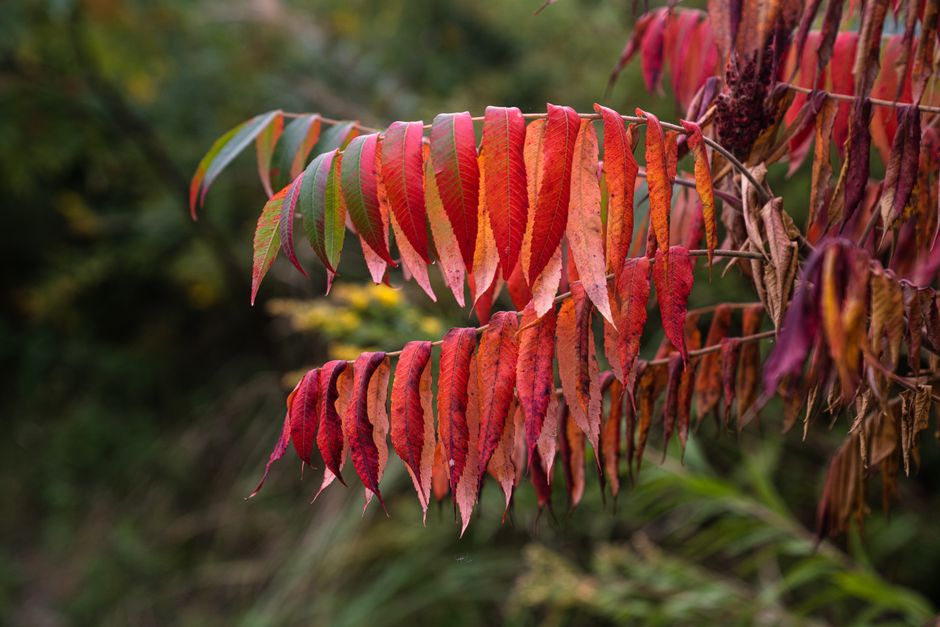
Poison sumac is a woody shrub or small tree that grows in wet, swampy areas of the eastern United States. Its leaves are made of 7 to 13 smooth-edged leaflets arranged in pairs with one leaflet at the tip. The berries are small, round, and whitish or grayish, hanging in loose clusters that point downward. The rash from poison sumac is an itchy, blistering skin reaction caused by an oil called urushiol, which is found in all parts of the plant. This red, blistering rash typically appears 8 to 48 hours after contact and can last 2 to 3 weeks.
What Does Poison Sumac Look Like?
Poison sumac (Toxicodendron vernix) looks different from harmless sumacs. Its leaves are compound, meaning each leaf is divided into separate leaflets along a central stem. The number of leaflets ranges from 7 to 13, and they are arranged in pairs with one leaflet at the very tip. Leaflets have smooth edges — no teeth or lobes — and are oval or oblong with a pointed end. They are green in spring and summer and turn orange, red, or yellow in fall. The leaf stems (petioles) are often reddish.
The berries are one of the easiest ways to tell poison sumac apart from non-poisonous varieties. Poison sumac produces small, round, whitish-gray fruits that hang in loose clusters that droop downward. Each berry has a hard pit inside. In contrast, harmless sumacs like staghorn sumac (Rhus typhina) have upright clusters of red fuzzy berries.
The stems are smooth and grayish-brown. Young stems may have small dark spots or streaks. The overall shape of the plant is a shrub or small tree that can reach 15 to 25 feet tall. It grows in wet soil, often near streams, marshes, or swamps.
Where Does Poison Sumac Grow?
Poison sumac is found throughout the eastern and southern United States, especially in wet, boggy areas. Common habitats include swamps, marshes, bottomlands, and floodplains. It grows in USDA hardiness zones 3 through 8. States with the highest concentrations include Florida, Georgia, Louisiana, Mississippi, Alabama, and the Carolinas. It also appears along the Atlantic coast up to parts of New England and in the Midwest near the Great Lakes. In drier areas it is much less common.
Unlike poison ivy and poison oak, which are more widespread, poison sumac is restricted to wetlands. If you are hiking in a dry forest or grassland, you are very unlikely to encounter it.
What Does Poison Sumac Rash Look Like?
The rash from poison sumac is a classic allergic contact dermatitis. It appears as red, swollen skin covered with small or large blisters. The blisters may ooze clear fluid and later crust over. The rash is intensely itchy. It often forms in streaks or patches where the plant brushed against the skin. It can also appear as scattered spots if the urushiol oil was spread by fingers or clothing.
The rash does not appear immediately. It typically develops 8 to 48 hours after contact, but can sometimes appear within 4 hours or up to 10 days in people who are less sensitive. The rash peaks in severity after a few days and then gradually heals over 2 to 3 weeks. Scratching the blisters does not spread the rash — the fluid inside is not the cause of the reaction. Only the urushiol oil itself triggers the rash, and if that oil has been washed off, scratching cannot make it spread.





How Is Poison Sumac Rash Treated?
If you know you touched poison sumac, wash the skin immediately with soap and water or with a specialized urushiol-removing cleanser. Rubbing alcohol can also remove the oil, but it can sting. Washing within 30 minutes is most effective — after that, the oil has already bound to skin proteins and the reaction is underway. Wash clothing, tools, and pets that may have been exposed.
For an existing rash, treatment focuses on reducing itching and inflammation. Over-the-counter options include calamine lotion, hydrocortisone cream (0.5% to 1%), and oral antihistamines like diphenhydramine (Benadryl) or loratadine (Claritin). Cool compresses and oatmeal baths can soothe the itch. For severe cases or rashes covering large areas of the body, a doctor may prescribe prescription-strength corticosteroid creams or oral steroids. Some small studies suggest that applying apple cider vinegar or bleach may cause irritation and are not recommended. No large clinical trial has confirmed benefit from these home remedies.
How to Prevent Poison Sumac Exposure
Learn to identify poison sumac in every season. In winter, the plant loses its leaves but still contains urushiol oil, so it remains a hazard. When walking in swampy areas, wear long sleeves, long pants, and boots that can be washed. Do not touch any plant you cannot identify. Do not burn poison sumac — breathing the smoke can cause severe lung irritation.
Barrier creams containing bentoquatam (such as Ivy Block) are FDA-approved for preventing poison ivy and poison oak, but their effectiveness against poison sumac specifically has not been separately studied. Some dermatologists recommend them for use in high-risk situations. If you cannot avoid exposure, these creams may offer some protection, but washing off the oil remains the most reliable prevention method.
When to See a Doctor
Most poison sumac rashes can be managed at home. But you should see a doctor if the rash covers a large area of your body (more than 10% of skin), involves the face, genitals, or eyes, or does not improve after 7 to 10 days of home treatment. Also see a doctor if you have difficulty breathing after smoke exposure from burning poison sumac, or if you develop signs of infection such as increased pain, pus, red streaks, or fever.
Oral steroids are often prescribed for severe cases. Do not try to treat a severe rash with high-dose topical steroids without a doctor’s guidance — they can cause skin thinning and other side effects when used incorrectly.
Frequently Asked Questions
Can poison sumac rash spread by scratching?
No, scratching does not spread the rash because the fluid in blisters does not contain urushiol. However, scratching can break the skin and lead to infection.
How long does poison sumac rash last?
A poison sumac rash typically lasts 2 to 3 weeks. Mild cases may clear in 1 week, while severe cases can take up to 4 weeks.
Is poison sumac the same as staghorn sumac?
No, staghorn sumac (Rhus typhina) is a harmless tree with red, velvety berry clusters and toothed leaflets. Poison sumac has white or gray berries and smooth leaflets.
Can you get poison sumac in winter?
Yes, urushiol oil remains active in bare stems and branches even after leaves have fallen. You can still get a rash from touching any part of the dead plant.
