
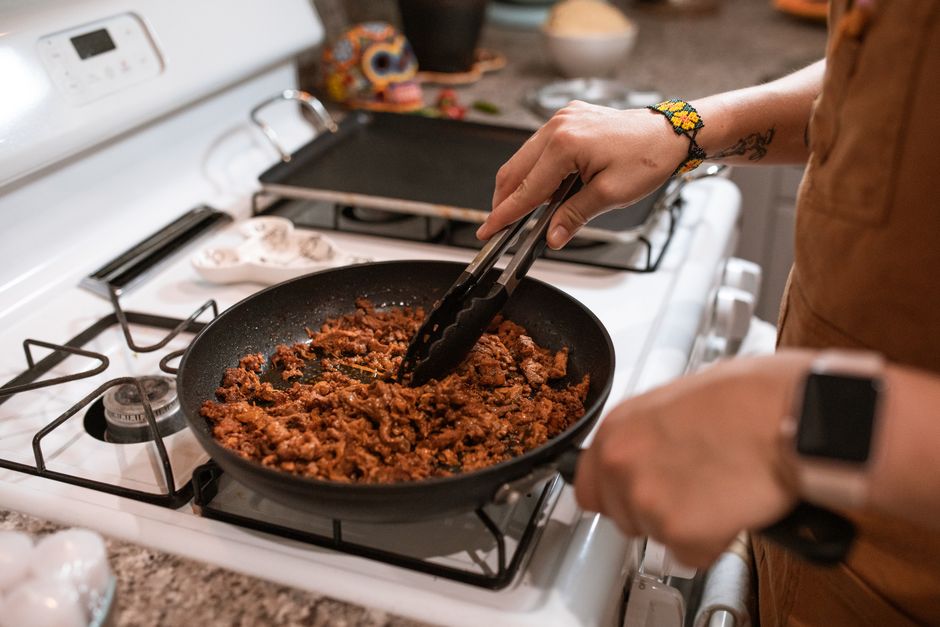
Ground beef is done at 160°F. That is the temperature recommended by food safety authorities to kill harmful bacteria like E. coli and Salmonella. Use an instant-read thermometer inserted into the thickest part of the patty or loaf to check.
Why Is 160°F the Standard for Ground Beef?
Whole cuts of beef, like a steak or roast, are different from ground beef. Bacteria live on the outside surface of a whole cut. When you cook a steak to medium-rare, the outside still gets hot enough to kill those surface bacteria.
Ground beef is not like that. The grinding process mixes the outside surface of the meat throughout the entire batch. Any bacteria present on the original cut are now distributed inside the patty, not just on the outside. This is why the center of ground beef must reach a higher temperature than the center of a steak.
At 160°F, the heat is sufficient to destroy the pathogens that cause foodborne illness. Cooking to this temperature is a food safety measure, not a preference for doneness. The color of the meat is not a reliable indicator of safety. A patty can look brown on the outside and still be undercooked in the center.
What About the 165°F Rule?
You may have seen 165°F mentioned in relation to ground beef. That number applies to poultry, not beef. Chicken and turkey must reach 165°F because they carry different pathogens, including Salmonella and Campylobacter, which are more heat-resistant.
Ground beef is held to a lower standard because the target pathogens are less heat-resistant. Do not confuse the two. If you are cooking a meatloaf that contains ground beef and ground pork, the safe temperature changes again. Pork requires 160°F as well, so a beef-pork blend is safe at 160°F.
Is It Safe to Eat Ground Beef at 155°F or Lower?
No. Serving ground beef below 160°F carries a real risk of foodborne illness. Some restaurants serve burgers cooked to medium or medium-rare, which means the internal temperature is lower than 160°F. This is a known risk, and it is why many food safety experts advise against ordering undercooked burgers in restaurants.
Some people argue that high-quality meat from a trusted source is safe to eat less cooked. The evidence does not support this position. The bacteria that cause illness are invisible and do not change the smell or taste of the meat. A clean butcher shop and fresh meat reduce risk but do not eliminate it.
If you choose to eat ground beef below 160°F, you are accepting a risk that public health agencies advise against. This is a personal choice, but it should be an informed one.





How to Measure the Temperature Correctly
Using a thermometer correctly matters as much as using one at all. Insert the probe into the side of the patty, not the top. The center of the patty is the last part to reach the target temperature, and that is where you need to measure.
For thin patties, insert the probe horizontally through the side until the tip reaches the middle. For meatloaf or a thick burger, insert the probe at an angle or vertically from the top, making sure the tip is in the center of the meat.
Avoid touching bone, fat, or the pan with the probe. These will give you a false reading. Wait for the temperature to stabilize on the display before making a decision. Digital instant-read thermometers are more accurate than dial thermometers and give readings in seconds.
Clean the probe with hot soapy water between readings, especially if you are checking multiple patties. This prevents cross-contamination.
Resting Time and Carryover Cooking
Ground beef continues to cook after you remove it from the heat. This is called carryover cooking. The internal temperature can rise by 5 to 10 degrees during the first few minutes off the heat.
If you pull the meat at 155°F and let it rest, it may reach 160°F on its own. However, relying on carryover cooking is not a reliable safety strategy. The amount of temperature rise depends on the cooking method, the thickness of the meat, and the ambient temperature.
The safest approach is to cook the meat until the thermometer reads 160°F while it is still on the heat source. Then remove it and let it rest for a few minutes. Resting allows juices to redistribute, which improves texture and flavor. It is not a substitute for reaching the target temperature during cooking.
Does the Type of Ground Beef Matter?
Ground beef comes in different fat percentages. Common labels include 80/20, 85/15, and 93/7. The first number is the lean meat percentage, and the second is the fat percentage. The safe cooking temperature is the same for all of them.
Fat content affects cooking time and moisture, not food safety. A leaner patty cooks faster and can dry out more easily. A higher-fat patty takes longer to reach the same internal temperature because fat conducts heat differently than lean meat.
Organic, grass-fed, or locally sourced ground beef is not safer than conventional ground beef. These labels describe farming practices, not pathogen presence. Any ground beef can carry harmful bacteria regardless of how the animal was raised.
Can You Cook Frozen Ground Beef Without Thawing?
Yes, but it takes longer. Cooking frozen ground beef directly from the freezer is safe as long as the internal temperature reaches 160°F. The challenge is that the outside may brown before the inside is fully cooked.
If you cook a frozen patty, use a lower heat setting and give it more time. Check the temperature in the center before serving. Do not assume that a browned exterior means the meat is done.
Thawing in the refrigerator is the preferred method because it is the most controlled. Thawing in cold water or the microwave is faster but requires immediate cooking afterward. Never thaw ground beef on the counter at room temperature. Bacteria multiply rapidly in the danger zone between 40°F and 140°F.
Common Mistakes People Make
- Judging doneness by color. Ground beef can turn brown before reaching 160°F, especially if it is older or has been exposed to oxygen. The only reliable test is temperature.
- Cutting into the patty to check. This releases juices and dries out the meat. It also does not give you an accurate temperature reading.
- Using the grill marks as a guide. Dark grill marks show where the meat touched the hot surface. They say nothing about the center temperature.
- Trusting the “clear juices” rule. Clear juices do not mean the meat is safe. The color of the juices is not a reliable indicator of internal temperature.
- Skipping the thermometer for thin patties. Thin patties cook fast, but they can still be undercooked in the center. Use a thermometer every time.
These mistakes are common because people want to avoid dry, overcooked meat. The solution is not to guess. The solution is to use a good thermometer and practice. Over time, you will learn how long your cooking method takes to reach 160°F, and you will produce consistently safe, juicy burgers.
What About Smoked or Slow-Cooked Ground Beef?
Smoking and slow-cooking are different from grilling or pan-frying. In a smoker, the meat is exposed to low heat for a long time. The internal temperature still needs to reach 160°F, but the process takes hours, not minutes.
Smoked meatloaf and smoked burgers are popular, and they are safe as long as the center reaches 160°F. The smoke flavor does not change the food safety requirements. Use a probe thermometer that can stay in the meat while it cooks, so you can monitor the temperature without opening the smoker.
Slow cookers and sous vide are also options. A slow cooker will bring ground beef to 160°F over several hours. Sous vide requires a different approach because the water bath is set to a specific temperature. If you use sous vide for ground beef, the water bath temperature must be at least 160°F to be safe.
Food Safety After Cooking
Reaching 160°F kills the bacteria present at the time of cooking. It does not protect the meat from new contamination after cooking. Once the meat is done, it should be eaten within two hours. If you are not eating it immediately, refrigerate it in a shallow container.
Leftover cooked ground beef is safe for three to four days in the refrigerator. Reheat leftovers to 165°F before eating. This is the same standard used for all reheated foods. The 165°F rule for reheating is different from the 160°F rule for initial cooking, and the distinction matters.
When transporting cooked ground beef, such as to a picnic or potluck, keep it above 140°F in a chafing dish or insulated container. Below 140°F, bacteria can begin to multiply again.
Frequently Asked Questions
What temperature kills bacteria in ground beef?
160°F is the temperature that kills the harmful bacteria commonly found in ground beef. This is the minimum safe internal temperature recommended by food safety authorities.
Can ground beef be pink at 160°F?
Yes. Ground beef can remain pink even after reaching 160°F due to chemical reactions during cooking. Color is not a reliable indicator of doneness or safety.
Is it safe to eat a burger that is medium-rare?
No. Medium-rare burgers are cooked below 160°F and carry a risk of foodborne illness. Public health agencies advise against consuming ground beef that has not reached 160°F.
How long should ground beef rest after cooking?
Rest ground beef for three to five minutes after it reaches 160°F. Resting allows juices to redistribute, but it is not required for food safety.
