
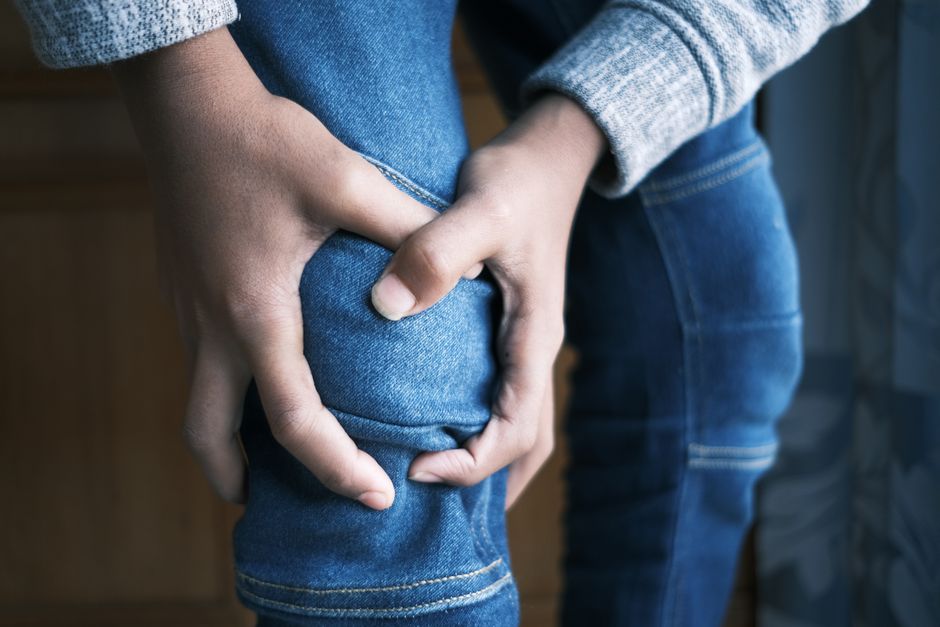
The knee is a synovial hinge joint, but that simple label does not capture how complex it really is. It bends and straightens like a door hinge, yet it also rotates slightly and handles forces many times your body weight. Understanding what kind of joint the knee is helps you make sense of why it gets injured so often and what you can actually do to keep it healthy. Most people think of the knee as a simple hinge, but the real structure is more interesting — and more useful to know.
What Kind of Joint Is the Knee Exactly?
The knee is a synovial hinge joint with some special features. A pure hinge joint, like the elbow, only moves in one plane — flexion and extension. The knee does that too, but it also has a small amount of rotation when it is bent. The American Academy of Orthopaedic Surgeons classifies the knee as a modified hinge joint for this reason.
Three bones meet at the knee: the femur (thighbone), the tibia (shinbone), and the patella (kneecap). The fibula, the smaller bone next to the tibia, does not actually form part of the knee joint itself. That is a common mistake. The joint surfaces are covered with articular cartilage, a smooth white tissue that allows bones to glide against each other with almost no friction.
Between the femur and tibia sit two C-shaped pieces of cartilage called the menisci. They act as shock absorbers and help distribute weight evenly across the joint. Without them, the bones would grind directly against each other. The entire joint is enclosed in a capsule lined with synovial membrane, which produces a fluid that lubricates and nourishes the cartilage.
What Makes the Knee Different From Other Joints?
The knee is the largest joint in the human body and one of the most complex. Unlike the hip, which is a ball-and-socket joint with deep bony stability, the knee relies heavily on soft tissues — ligaments, tendons, and muscles — to stay stable. The hip socket surrounds more than half of the ball. The knee has no such deep socket. It is essentially two flat surfaces balanced on top of each other.
This design gives the knee great mobility but less built-in stability. The trade-off is worth it. Walking, running, squatting, and climbing stairs all depend on the knee’s ability to bend and straighten while bearing weight. The hip cannot bend as far. The ankle cannot handle as much rotational force. The knee sits in the middle and manages both.
The patella is another unique feature. It is the largest sesamoid bone in the body, meaning it forms inside a tendon — in this case, the quadriceps tendon. The patella increases the leverage of the quadriceps muscle by about 30 percent. Without it, straightening your leg against resistance would require much more force from the thigh muscles.
What Are the Main Parts of the Knee Joint?
Understanding the knee means knowing its key structures. Here is what each part does:
- Articular cartilage — covers the ends of the femur, tibia, and the back of the patella. It is smooth, white, and about 2 to 4 millimeters thick. It has no blood supply, which is why cartilage damage heals poorly or not at all.
- Menisci — two crescent-shaped fibrocartilage pads between the femur and tibia. The medial meniscus is on the inside of the knee. The lateral meniscus is on the outside. They distribute load, absorb shock, and help stabilize the joint.
- Ligaments — four main ligaments connect bone to bone. The anterior cruciate ligament (ACL) and posterior cruciate ligament (PCL) cross inside the joint and control forward and backward movement. The medial collateral ligament (MCL) and lateral collateral ligament (LCL) run along the sides and control side-to-side stability.
- Tendons — connect muscle to bone. The quadriceps tendon connects the quadriceps muscle to the patella. The patellar tendon connects the patella to the tibia. Together they form the extensor mechanism that straightens the knee.
- Synovial fluid — a thick, egg-white-like liquid produced by the synovial membrane. It lubricates the joint, reduces friction, and supplies nutrients to the cartilage.
Each of these structures can be injured individually or together. That is why knee pain can come from so many different sources. A problem with the meniscus feels different from a problem with the ACL, and both feel different from arthritis.



How Does the Knee Move?
The knee moves in two main ways: flexion and extension. Flexion is bending the knee, which brings the heel toward the buttock. The average person can flex the knee to about 135 degrees, though this varies. Extension is straightening the knee. Full extension brings the leg to a straight line, which is 0 degrees. Some people can hyperextend a few degrees beyond that, especially women and younger people.
When the knee bends past about 30 degrees, it also rotates slightly. This rotation happens because the shape of the femur and tibia is not perfectly round. The femur rolls and glides across the tibia during movement. The ACL and PCL control this motion precisely. If the rotation exceeds normal limits, ligament tears can happen.
Walking puts about 2.5 times your body weight through the knee. Running increases that to 4 to 6 times. Squatting can exceed 7 times body weight at the deepest point. The knee handles these forces through a combination of bone shape, cartilage, menisci, and muscle control. Weak muscles force the ligaments and cartilage to absorb more load, which increases injury risk.
Research published in the Journal of Biomechanics has shown that the knee experiences the highest forces during the stance phase of running, just after the foot hits the ground. The quadriceps and hamstrings must work together to control this force. If one muscle group is significantly weaker than the other, the joint moves unevenly and stress concentrates on specific areas.
What Sort of Joint Is the Knee Compared to the Hip and Ankle?
The knee is often compared to the hip and ankle because these three joints work together in the lower body. They are all synovial joints, but each type has a different structure and function.
| Joint | Type | Movements | Stability |
|---|---|---|---|
| Hip | Ball-and-socket | Flexion, extension, rotation, abduction, adduction | Very stable due to deep socket |
| Knee | Modified hinge | Flexion, extension, slight rotation when bent | Moderate — relies on soft tissues |
| Ankle | Hinge (talocrural) | Flexion (pointing down), extension (pointing up) | Moderate — bony structure helps |
The hip is the most stable of the three because the femoral head sits deep inside the acetabulum. The ankle has a mortise-and-tenon structure formed by the tibia and fibula wrapping around the talus bone. The knee has no such bony enclosure. It relies almost entirely on ligaments and muscles for stability. This is why knee injuries are more common than hip injuries in sports and daily life.
The knee also has a larger range of motion than the ankle but less than the hip. The trade-off is clear: more mobility means less inherent stability. The body compensates with strong quadriceps and hamstring muscles, which act as dynamic stabilizers during movement.
What Are the Most Common Knee Problems?
Because the knee is a complex weight-bearing joint with limited bony stability, it is vulnerable to several common problems. The most frequent issues include:
- Osteoarthritis — the progressive loss of articular cartilage. The CDC reports that about 32.5 million U.S. adults have osteoarthritis, and the knee is the most commonly affected joint. Risk factors include age, obesity, previous injury, and genetics.
- ACL tears — a rupture of the anterior cruciate ligament, often from sudden stops or direction changes. About 200,000 ACL injuries occur each year in the United States, according to the American Orthopaedic Society for Sports Medicine.
- Meniscus tears — damage to one or both menisci, often from twisting motions. These are very common in athletes and older adults. The medial meniscus tears more often than the lateral because it is less mobile.
- Patellofemoral pain syndrome — pain around or behind the kneecap, often from overuse or muscle imbalance. This is common in runners and cyclists. The exact cause is not always clear, but weak quadriceps and tight hamstrings are frequent contributors.
- Bursitis — inflammation of the fluid-filled sacs (bursae) that cushion the knee. Prepatellar bursitis is common in people who kneel frequently, like gardeners or carpet layers.
Some people report that knee popping or clicking is a sign of a serious problem. This is widely claimed though strong evidence is limited. Many healthy knees make noise without pain or dysfunction. A 2018 study in Arthroscopy found that knee crepitus (cracking sounds) was not associated with pain or reduced function in most people. The key question is whether the noise is accompanied by pain, swelling, or instability. If not, it is usually harmless.
How Can You Keep Your Knee Joints Healthy?
There is no magic pill for knee health, but evidence points to a few things that genuinely help. The strongest evidence supports exercise, weight management, and avoiding high-risk movements when the knee is weak or fatigued.
Strengthen the muscles around the knee. The quadriceps, hamstrings, glutes, and calves all cross or influence the knee joint. A 2014 meta-analysis in the British Journal of Sports Medicine found that strengthening exercises significantly reduced pain and improved function in people with knee osteoarthritis. The effect was comparable to anti-inflammatory medications but without the side effects.
Maintain a healthy body weight. Each extra pound of body weight adds about 3 to 4 pounds of force across the knee during walking. For a person with a body mass index over 30, the additional force on the knees during stair climbing can exceed 10 pounds per pound of body weight. The Framingham Osteoarthritis Study found that losing just 11 pounds reduced the risk of developing symptomatic knee osteoarthritis by 50 percent in women.
Move through the full range of motion. Regular movement keeps the synovial fluid circulating and nourishes the cartilage. Prolonged sitting or immobilization causes the cartilage to thin and weaken. Studies on astronauts have shown that even short periods of weightlessness lead to measurable cartilage changes in the knee.
Avoid sudden increases in activity. The knee adapts slowly to new loads. Increasing running mileage by more than 10 percent per week is associated with higher injury rates. The same principle applies to squatting, jumping, or any weight-bearing activity. Gradual progression gives the cartilage, ligaments, and tendons time to strengthen.
Some people report that supplements like glucosamine and chondroitin help their knees. Evidence is mixed at best. A large 2016 study funded by the National Institutes of Health found that glucosamine and chondroitin were no better than placebo for knee pain from osteoarthritis. Some people report benefits, but the clinical trials do not consistently support it. The same is true for collagen supplements. Some small studies show modest benefits, but the evidence is not strong enough to recommend them broadly.
Frequently Asked Questions
Frequently Asked Questions
Is the knee a hinge joint or a ball-and-socket joint?
The knee is a modified hinge joint, not a ball-and-socket joint. It primarily bends and straightens but allows slight rotation when bent.
What type of cartilage is in the knee joint?
The knee contains two types of cartilage: hyaline cartilage on the joint surfaces and fibrocartilage in the menisci. Hyaline cartilage is smooth and slippery, while fibrocartilage is tougher and more shock-absorbent.
Can the knee rotate like the hip?
The knee can rotate only about 5 to 15 degrees when bent. The hip can rotate much more because it is a ball-and-socket joint with a different structure.
What is the largest ligament in the knee?
The anterior cruciate ligament (ACL) is the most well-known, but the posterior cruciate ligament (PCL) is actually the strongest and largest ligament inside the knee joint.
