
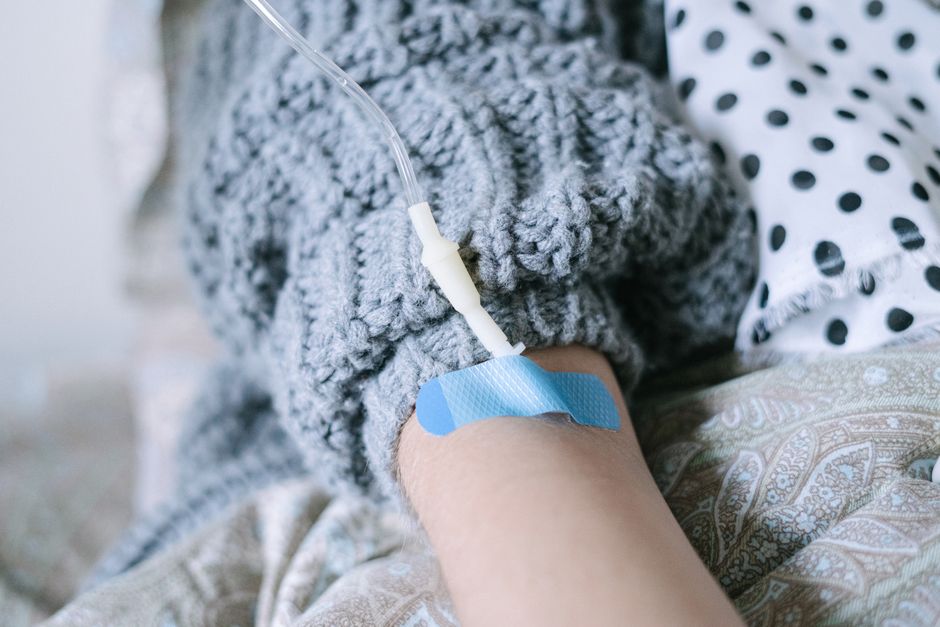
A PICC line is a long, thin, flexible tube placed into a vein in the upper arm and threaded so its tip sits in a large vein near the heart. PICC stands for peripherally inserted central catheter. It is used when a patient needs intravenous therapy for weeks or months, when the medicine itself is too harsh for a small vein, or when reliable vein access is hard to keep. Unlike a standard IV that lasts a few days, a PICC line can stay in place for weeks to months with proper care.
What Is a PICC Line and How Does It Work?
A PICC line is a central catheter. That means its tip rests in a large central vein — usually the superior vena cava, the big vein that returns blood to the heart — rather than in a small vein in the hand or forearm.
To place it, a trained clinician inserts the catheter into a vein in the upper arm, often near the bend of the elbow or slightly above it. The tube is threaded through progressively larger veins until the tip reaches the central circulation. Placement is confirmed with imaging, usually a chest X-ray, before the line is used for anything important.
The reason location matters comes down to blood flow and vein size. Central veins carry a large volume of blood quickly. That fast flow dilutes medications and fluids, which matters because some drugs are irritating to smaller veins. A concentrated or caustic solution that would damage a small peripheral vein can be tolerated in a central vein where it mixes into a much larger stream.
A PICC line typically has one or more separate channels, called lumens. A single-lumen line allows one thing to be given at a time. A double- or triple-lumen line allows several incompatible medications or tasks — like drawing blood while infusing a drug — to happen through separate channels. More lumens can be convenient, but each additional channel is another potential route for infection, so clinicians often use the fewest lumens needed.
What PICC Lines Used For?
PICC lines are used to deliver treatments and fluids that a standard IV cannot safely or practically handle. The most common uses fall into a few clear categories.
- Long courses of antibiotics. Serious infections such as bloodstream infections, bone infections (osteomyelitis), and endocarditis often require weeks of intravenous antibiotics. A PICC line allows this to continue at home or in an outpatient setting.
- Chemotherapy. Many chemotherapy drugs are strong irritants to small veins. A central line delivers them where blood flow dilutes them quickly.
- Total parenteral nutrition (TPN). This is intravenous nutrition for people who cannot eat or absorb food through the gut. TPN solutions are concentrated and must go into a central vein.
- Long-term fluids and medications. People who need extended intravenous fluids, pain medication, or other drugs may use a PICC line instead of repeated needle sticks.
- Frequent blood draws. A PICC line can sometimes be used to draw blood, sparing patients repeated venipuncture.
- Difficult vein access. Some patients have veins that are hard to reach because of past treatments, chronic illness, or other factors. A PICC line provides dependable access.
One clarification worth making: a PICC line is not the only type of central line. Other central catheters include those placed in the neck or chest (such as internal jugular or subclavian lines) and surgically implanted ports. The choice depends on how long access is needed, what is being given, the patient’s anatomy, and the risk of infection. A PICC line is often chosen when access is needed for weeks to months and the patient does not need a surgically implanted device.
How Is a PICC Line Placed?
Placement is usually done at the bedside, in a procedure room, or under image guidance. It does not typically require general anesthesia.
The clinician cleans the skin and numbs the insertion site with a local anesthetic. Using ultrasound to locate a suitable vein, they insert the catheter and advance it toward the central circulation. A chest X-ray or other imaging confirms the tip is in the right position. The whole procedure often takes under an hour, though this varies.
Once placed, the line is secured and covered with a sterile dressing. The external portion of the catheter stays outside the arm, where it can be accessed for treatment. A small clamp or cap keeps the line closed when not in use.
Because the tip sits near the heart, correct positioning is not optional. A misplaced tip can cause problems, which is why imaging confirmation is standard practice before the line is used.





What Are the Risks and Possible Complications?
Any central line carries real risks. These are well documented, and this is not a procedure without downsides.
Infection is the most significant concern. Because the catheter sits in a central vein and stays in place for a long time, bacteria can travel along it and enter the bloodstream, causing a central line-associated bloodstream infection. Careful sterile technique during insertion and ongoing line care reduces but does not eliminate this risk.
Blood clots can form around the catheter. A clot in a central vein is a serious event because it can block flow and, in some cases, travel to the lungs. Clinicians sometimes use preventive measures in higher-risk patients, though practice varies.
Blockage or damage to the line can occur. Clots, medication deposits, or kinks can block it. The catheter itself can crack or break, which is uncommon but requires prompt attention.
Insertion-related problems include bleeding, bruising, and, rarely, injury to nearby structures such as nerves or arteries. Because the catheter passes through several veins, there is also a small chance it ends up in the wrong vessel, which is why imaging is used.
Air entering the vein (air embolism) is a rare but serious risk if the line is open to air. This is one reason the line is always clamped or capped when not in use.
The evidence on how these risks compare across different types of central lines is mixed and depends heavily on the patient, the setting, and how well the line is cared for. No single line type is universally safest for every situation.
How Long Can a PICC Line Stay In?
A PICC line can typically remain in place for weeks to months when it is cared for properly and there are no complications. The exact duration depends on why it was placed, what is being given through it, and whether problems develop.
The line is removed as soon as it is no longer needed, because the risk of infection and clots rises the longer any central line stays in. There is no fixed maximum that applies to everyone. Some patients keep a PICC line for a few weeks; others need one for several months. The decision to remove or replace it is made by the care team based on the patient’s situation.
Daily and weekly care matters. Dressings are changed on a schedule, the line is flushed to keep it open, and the insertion site is checked for signs of infection such as redness, swelling, pain, or drainage. Patients and caregivers are often taught how to manage the line at home, including what warning signs to report.
What Is It Like to Live With a PICC Line?
Most people with a PICC line can carry on with many normal activities, but some adjustments are needed.
The line is covered by a dressing, and the external tubing is usually secured so it does not pull. Showering requires covering the site to keep it dry, since the dressing and the line must stay clean and dry. Heavy lifting, repetitive arm motion, and contact sports are generally discouraged because they can dislodge or damage the line. Swimming is not possible while the line is in.
Some people report mild discomfort at the insertion site, but many describe the line as mostly unobtrusive once they adjust. The bigger adjustment is often the routine of line care and the awareness that the site needs regular attention.
It helps to know the warning signs that require contacting a clinician: fever, chills, redness or swelling at the site, pain in the arm, drainage, or a line that feels different or stops working. These are not things to wait out.
PICC Line vs. Other IV Access Options
Choosing a PICC line is a comparison against alternatives, not a default.
| Access Type | Typical Use | Duration |
|---|---|---|
| Standard peripheral IV | Short-term fluids, medications, blood draws | A few days |
| PICC line | Weeks of antibiotics, chemotherapy, TPN, difficult access | Weeks to months |
| Central line (neck/chest) | Critical care, emergency access, certain treatments | Days to weeks |
| Implanted port | Long-term intermittent therapy, such as repeated chemotherapy cycles | Months to years |
The general principle is to match the device to the need. A short course of antibiotics does not justify a central line. A long course that cannot be given peripherally does. A port may be better when access is needed intermittently over a long period, since it sits under the skin and requires less daily care. A PICC line may be preferred when therapy is continuous and can start soon.
The evidence does not support one option as best for all patients. The choice depends on the treatment, the timeline, the patient’s veins, and the risk of infection — and it is a decision made with the care team.
Frequently Asked Questions
What is a PICC line used for?
A PICC line delivers intravenous therapy that a standard IV cannot handle, such as weeks of antibiotics, chemotherapy, or intravenous nutrition. It is also used when a patient’s veins are hard to access.
How long can a PICC line stay in?
A PICC line can typically stay in for weeks to months with proper care. It is removed as soon as it is no longer needed because the risk of infection and clots rises over time.
Is a PICC line the same as a regular IV?
No. A regular IV sits in a small vein and lasts a few days, while a PICC line’s tip rests in a large central vein near the heart and can remain for weeks to months.
Can you go home with a PICC line?
Yes, many patients go home with a PICC line and receive treatment there with training and support. The line still requires regular care and monitoring for warning signs like fever or redness at the site.
