
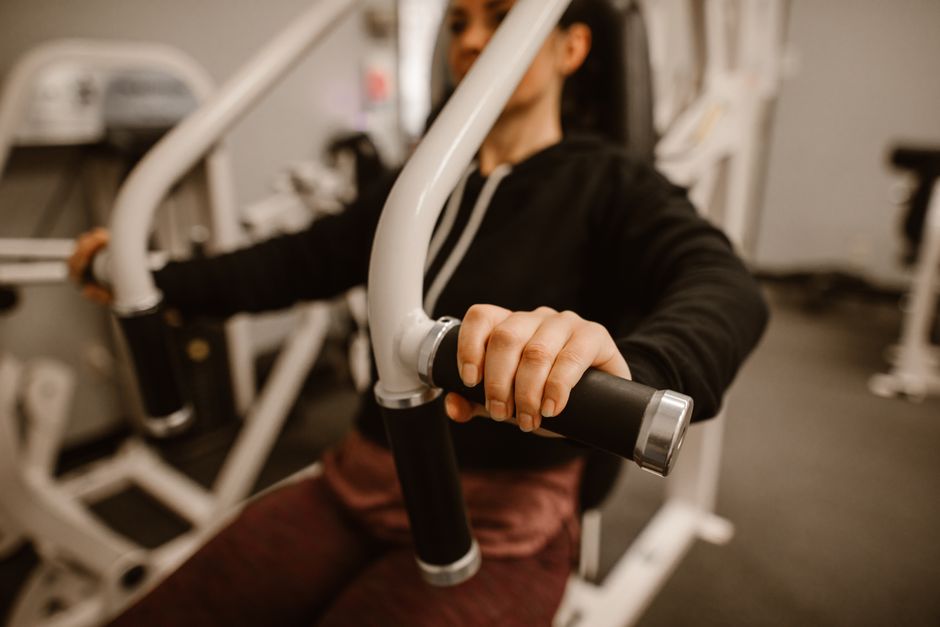
The leg press is a staple in most gyms, and for good reason. It is a compound exercise that targets the major muscle groups of your lower body. The primary muscles worked are the quadriceps, glutes, and hamstrings, with the calves acting as secondary movers. Because the movement is performed on a fixed machine, it allows you to lift heavy weight with less demand on your core and lower back compared to a barbell squat.
What Muscles Do A Leg Press Work?
The leg press primarily targets three large muscle groups. The quadriceps, located on the front of your thigh, are the primary drivers. The gluteus maximus, the largest muscle in your body, powers the hip extension. The hamstrings, on the back of your thigh, assist in the movement and help control the lowering phase.
Your calf muscles also engage to help stabilize your foot and ankle throughout the motion. While the leg press is excellent for building lower body strength and size, it does not require the same level of balance or core stabilization as a free-weight squat.
How Foot Placement Changes The Muscles Worked
One of the biggest advantages of the leg press is the ability to shift emphasis between muscle groups simply by changing where you place your feet on the platform. This is not a marketing gimmick; it is basic biomechanics.
A high foot placement on the platform increases hip flexion. This places more of the workload on your glutes and hamstrings. A low foot placement increases knee flexion, which drives more of the tension into your quadriceps.
A narrow stance primarily targets the outer quadriceps. A wide stance shifts more of the work to the inner thighs and glutes. Pointing your toes outward slightly can also increase glute activation, but the change is modest compared to altering foot height.
Quadriceps: The Primary Driver
The quadriceps are a group of four muscles on the front of your thigh. They are responsible for extending your knee. In the leg press, they work to straighten your legs against the resistance.
The rectus femoris is one of the four quad muscles. It is unique because it also crosses the hip joint. This means it assists in hip flexion. The other three muscles—the vastus lateralis, vastus medialis, and vastus intermedius—only cross the knee joint.
To maximize quadriceps engagement, place your feet lower on the platform and use a shoulder-width stance. You should also avoid locking your knees at the top of the movement to keep constant tension on the muscle.



Glutes: The Powerhouse For Hip Extension
The gluteus maximus is the primary muscle responsible for hip extension. This is the motion of driving your hips forward and straightening your body. In the leg press, your glutes activate forcefully as you push the platform away.
Your glutes are recruited most effectively when your hips are in a flexed position. This is why a higher foot placement on the platform is more effective for glute activation. The deeper the range of motion, the more your glutes are stretched and forced to work.
Some research suggests that a deeper range of motion in the leg press leads to greater glute muscle growth. However, this requires adequate ankle mobility and can place more stress on the lower back if you round your pelvis. Always maintain a neutral spine against the backrest.
Hamstrings: The Supporting Role
The hamstrings are a group of three muscles on the back of your thigh. They have two main functions: flexing your knee and extending your hip. In the leg press, they assist the glutes during the pushing phase and control the descent as you lower the weight.
The hamstrings are not the primary movers in a standard leg press. They are significantly more active during exercises like the Romanian deadlift or leg curl. However, they do contribute to the movement, particularly when you use a higher foot placement.
If you are looking to specifically strengthen your hamstrings, the leg press should not be your main exercise. It is better suited as a supplementary movement. Dedicated hamstring exercises are more effective for targeting this muscle group directly.
Calves and Stabilizer Muscles
Your calf muscles, specifically the gastrocnemius and soleus, act as stabilizers during the leg press. They help control the movement of your ankle as you push. They are not the primary target, but they do receive some stimulation.
Other stabilizer muscles include the adductors, or inner thighs, which help keep your knees tracking in line with your feet. The core muscles also activate to a degree to keep your body stable against the backrest, although far less than in a free-weight squat.
If your goal is to build your calves, you are better off doing seated or standing calf raises. The leg press does not provide enough isolated tension on the calves to promote significant growth on its own.
Leg Press vs. Squat: Key Differences
The leg press and the squat both work the same major muscle groups. However, they are not interchangeable exercises. They place different demands on your body.
The barbell back squat is a free-weight exercise. It requires significant core strength, balance, and coordination to stabilize the barbell. It also loads your spine directly. The leg press removes most of these demands because the machine supports your back and guides the movement path.
This makes the leg press a safer option for people with lower back issues or those new to lifting. However, it also means you are not training your core or balance to the same degree. For athletic performance and overall functional strength, the squat is generally considered the superior exercise.
For pure lower body muscle isolation, the leg press allows you to push heavier loads with less systemic fatigue. Many lifters use both exercises in their routine—the squat for overall strength and the leg press for additional quad and glute volume.
Common Mistakes To Avoid On The Leg Press
Using a full range of motion is critical for muscle growth, but only if your form allows it. Lowering the weight too far can cause your pelvis to tuck under, rounding your lower back. This places dangerous stress on your spine. Stop the descent when your lower back begins to lift off the pad.
Locking your knees at the top of the movement is another common error. This takes tension off your muscles and places it on your knee joints. Keep a slight bend in your knees at the top of the rep.
Placing your hands on your knees to help push is a sign that you are using too much weight. The leg press is a leg exercise. If you need to use your arms, reduce the load. Also, never place your feet too low on the platform, as this can force your knees into an uncomfortable position.
Frequently Asked Questions
Is the leg press better than squats for building muscle?
Both are effective for building lower body muscle. Squats train more muscles overall, including the core, while the leg press allows for heavier loads with less spinal stress.
Does the leg press work the lower back?
The lower back acts as a stabilizer, but it is not a primary mover. Unlike squats, the leg press supports your back, so it does not significantly strengthen the spinal erectors.
How often should I do the leg press?
Most people can perform the leg press 1 to 2 times per week as part of a balanced leg routine. Allow at least 48 hours of rest between sessions for muscle recovery.
