
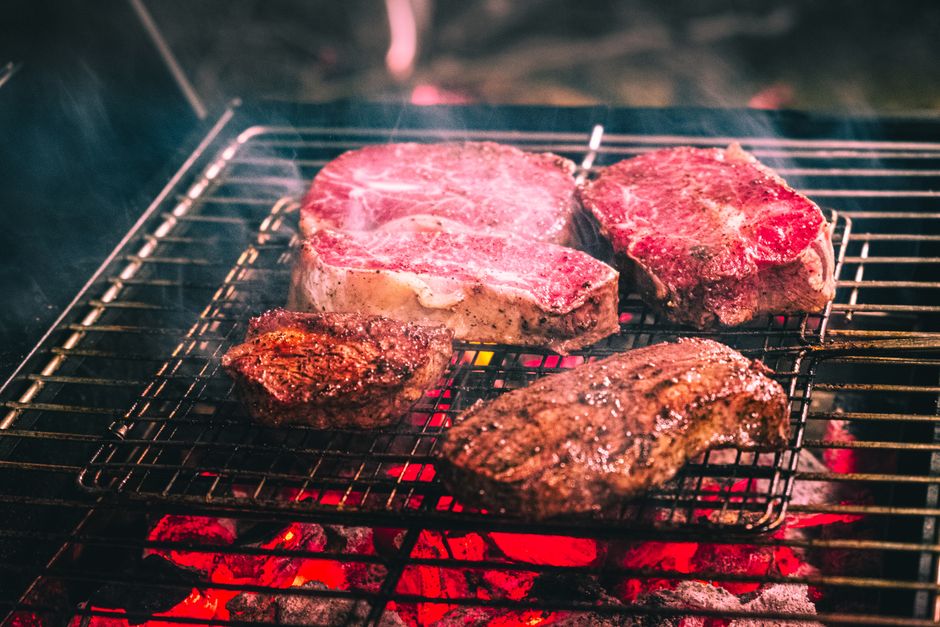
Creatine is one of the most studied compounds in sports nutrition, and red meat is its richest natural food source. Among common meats, beef and game meats like venison and bison rank highest in creatine content, followed by pork, then chicken and turkey, with fish falling in a similar range to poultry. The exact amount depends on the species, the cut, and how the meat was cooked or processed.
What Meats Have Creatine Ranked By Content?
If you lined up common meats by creatine content per serving, the order would look roughly like this: game meats and beef at the top, pork in the middle, and poultry and fish lower but still meaningful. Organ meats like heart and liver also contain creatine, though the amounts vary.
Here is a general ranking based on the ranges reported in food composition research:
- Beef and game meats (venison, bison, elk): typically the highest, often in the range of 3 to 5 grams per kilogram of raw meat.
- Pork: generally slightly lower than beef, often around 3 to 4 grams per kilogram.
- Chicken and turkey: lower still, often in the range of 2 to 3 grams per kilogram.
- Fish (herring, salmon, tuna): variable, but often comparable to or slightly below poultry.
These ranges come from food composition studies, and they are approximate. The numbers shift depending on the animal’s diet, age, and muscle type. A working muscle holds more creatine than a less active one, which is part of why the cut matters.
One point worth clarifying: creatine is not evenly spread through an animal. It concentrates in skeletal muscle, so a steak and a piece of liver from the same animal will not match. Muscle tissue is the reliable source.
How Much Creatine Is Actually In A Serving Of Meat?
A typical serving of meat delivers far less creatine than a creatine supplement. This is the part most people miss.
Take beef at roughly 4 grams of creatine per kilogram of raw meat. That works out to about 0.45 grams (450 milligrams) in a 4-ounce (113-gram) serving. A standard creatine monohydrate dose used in research is 3 to 5 grams per day. So a single serving of beef provides roughly a tenth of that.
To reach 3 grams of creatine from beef alone, you would need to eat well over a pound of meat. That is possible but not practical for most people, and it comes with a lot of saturated fat and calories depending on the cut.
This is why supplements exist. Food is a real source, but it is a modest one compared to a concentrated powder.
Does Cooking Destroy The Creatine In Meat?
Cooking reduces creatine content, and the longer and hotter you cook, the more you lose. Creatine is not heat-stable. When meat is cooked, some creatine converts to creatinine, a related compound that your body cannot use to replenish muscle creatine stores.
Well-done meat, or meat cooked for a long time in liquid, tends to have less usable creatine than meat cooked quickly. Grilling a steak to medium retains more than boiling it for hours. This is a general pattern from food science, not a precise rule with exact percentages you can rely on.
The loss is real but usually not dramatic for normal cooking. If you eat meat primarily for creatine, cooking methods that use less heat and time preserve more of it. If you eat meat for protein and other nutrients, cooking method matters far less.



Is Meat A Practical Way To Get Creatine?
Meat is a genuine dietary source of creatine, but it is not an efficient way to load your muscles with it. The amounts are simply too small per serving to match what supplements deliver.
That said, people who eat meat regularly tend to have higher baseline muscle creatine than vegetarians and vegans. This is a consistent finding in the research. Vegetarians often start with lower muscle creatine stores, which is one reason they may respond more strongly to creatine supplementation.
For most meat eaters, diet alone keeps creatine stores in a normal range but does not push them to the upper end. Supplements do that. Food maintains; supplements load.
There is no established health requirement for dietary creatine. Your body makes some on its own, mostly in the liver, kidneys, and pancreas, and recycles it. Meat is a bonus source, not an essential one.
Which Cuts And Types Of Meat Have The Most Creatine?
Within any animal, the most active muscles tend to hold the most creatine. Muscles that work hard and continuously have higher creatine stores than muscles used less often.
In practical terms:
- Lean, active muscle cuts from the leg and shoulder tend to be higher than fattier, less active cuts.
- Game animals that roam and move constantly often have higher creatine than farmed animals that move less.
- Organ meats like heart are muscle tissue and contain creatine, while liver contains less.
- Processed meats, sausages, and cured products often have lower creatine because of dilution with fat, water, and fillers, plus the effects of processing.
These are general tendencies. The differences between cuts of the same animal are usually smaller than the differences between species.
How Does Meat Compare To Creatine Supplements?
Creatine monohydrate supplements deliver a concentrated, consistent dose that food cannot match. A 5-gram scoop of creatine monohydrate provides more creatine than a pound of most meats.
Creatine monohydrate is the form with the most research behind it. It is widely considered the most effective and best-studied form. Other forms sold in stores, such as creatine ethyl ester or buffered creatine, do not have the same depth of evidence.
This does not make meat inferior as a food. Meat provides protein, iron, zinc, B vitamins, and other nutrients that a creatine powder does not. The two serve different purposes. If your goal is to raise muscle creatine, supplements are the direct route. If your goal is overall nutrition, meat covers far more ground.
For people who do not eat meat, creatine is also found in fish and, in very small amounts, in some other animal products. Plant foods contain essentially none. This is a key reason vegetarians and vegans tend to have lower muscle creatine.
Does The Creatine In Meat Survive Digestion?
Yes, dietary creatine is absorbed, but not all of it reaches your muscles. When you eat meat, the creatine is taken up from your gut into your bloodstream, then delivered to tissues including muscle.
Your muscles have a limited capacity to store creatine. Once they are full, extra creatine is largely excreted in urine. This is why loading with huge amounts does not keep building stores indefinitely. The muscle has a ceiling.
This ceiling is also why food and supplements both hit a limit. You cannot force more creatine into muscle than it can hold, no matter the source.
Frequently Asked Questions
Which meat has the most creatine?
Beef and game meats like venison and bison generally contain the most creatine, often around 3 to 5 grams per kilogram of raw meat. These are approximate ranges from food composition research, not fixed values.
Does chicken have creatine?
Yes, chicken contains creatine, but generally less than beef or pork, often in the range of 2 to 3 grams per kilogram. It is still a real dietary source, just a more modest one.
Can you get enough creatine from meat alone?
You can maintain normal muscle creatine from meat, but reaching the higher levels that supplements produce would require eating well over a pound of meat daily. Most people find that impractical.
Is creatine in meat destroyed by cooking?
Cooking reduces creatine content because heat converts some of it to creatinine, which your muscles cannot use. Longer, hotter cooking methods tend to reduce it more than quick cooking.
