
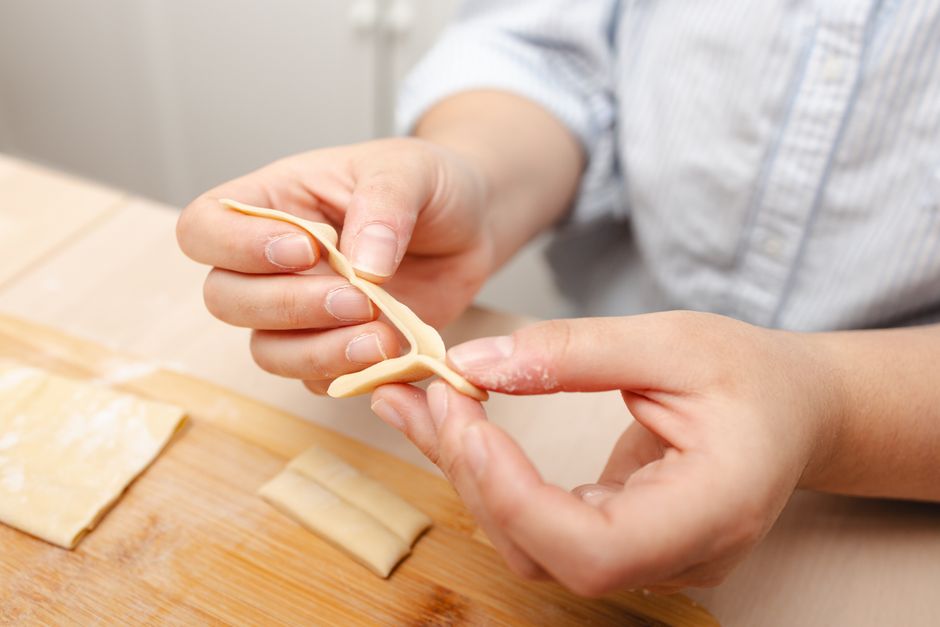
Pasta is a simple mixture of flour and water or eggs, and what makes it pasta rather than bread or noodles is durum wheat, its gluten network, and the specific way that dough is shaped and dried. The “law” part of the question points to something real: Italy has actual legal rules about what can be called pasta and how it must be made. So the answer sits at the intersection of food science and food law.
What Makes Pasta Pasta Wheat Gluten And Law?
Three things separate pasta from every other wheat product: the type of wheat, the gluten structure that forms when it is mixed, and the legal definitions that govern its name.
Start with the wheat. Most dried pasta is made from durum wheat (Triticum durum), a hard, high-protein variety. Durum differs from the common bread wheat used in sandwich loaves. It has a dense, vitreous endosperm — the starchy inner part of the grain — and its flour is ground into what is called semolina. Semolina has a coarse, sandy texture and a golden color, which is why good dry pasta looks amber rather than white.
Durum’s protein content matters. It is high in gluten-forming proteins, and the gluten it forms is unusually strong and elastic. That strength lets pasta dough be extruded through metal dies into long shapes without tearing, and it lets cooked pasta hold its bite instead of turning to mush.
Then there is the law. In Italy, dried pasta made from durum semolina and water is the legally protected standard for basic pasta. Products made with soft wheat flour must be labeled differently. The European Union has similar rules about what can carry the name “pasta” in certain protected categories. This is not trivia. It is why a package labeled “pasta” in Rome means something more specific than a package labeled “pasta” in a US grocery aisle.
Why Does Gluten Matter So Much in Pasta?
Gluten is the protein network that gives pasta its structure, its chew, and its ability to survive boiling without dissolving.
Here is what happens at the dough level. When flour meets water, two protein groups — glutenin and gliadin — link up and form a stretchy, web-like matrix. Kneading and extrusion align these proteins into long strands. In pasta, that network is what traps starch granules and holds the shape together.
The extrusion process is a big part of why pasta behaves the way it does. Industrial pasta is pushed through bronze or Teflon dies under pressure. Bronze dies create a rougher surface that grabs sauce; Teflon dies create a smoother, glossier surface. Neither is “better” in a health sense — this is a texture and tradition difference, not a nutrition one.
Drying matters too. Traditional low-temperature drying lets the gluten network set slowly, which produces a firmer cooked texture. Fast high-temperature drying is common in mass production and changes the surface and cooking behavior somewhat. Again, this is about quality and texture, not about whether the pasta is good for you.
One clarification worth making: gluten is not a nutrient in the vitamin-and-mineral sense, and it is not something your body requires. It is a structural protein. People with celiac disease, wheat allergy, or certain other conditions must avoid it entirely. For everyone else, gluten is simply part of what wheat foods are.
Is Semolina the Same as Regular Flour?
No. Semolina is coarser, more golden, and higher in protein than standard all-purpose flour. All-purpose flour is typically milled from soft or hard red wheat and has a finer, softer texture.
This difference is why you cannot always swap one for the other. Semolina’s protein content and particle size are what let pasta dough extrude cleanly and cook to a firm texture. Fresh egg pasta, by contrast, is often made with softer wheat flour plus eggs, which is why it cooks faster and feels more tender.
Semolina is also used for couscous and some breads. So semolina is not exclusive to pasta, but pasta is where it is most familiar.



Is Fresh Pasta Different From Dried Pasta?
Yes, and the difference is more about ingredients and moisture than about nutrition.
Dried pasta is usually durum semolina and water, dried to a very low moisture content so it keeps for years. Fresh pasta typically includes eggs and is often made with softer flour. The eggs add fat and protein, which change the texture and the cooking time. Fresh pasta generally cooks in a few minutes; dried pasta takes longer.
There is a common belief that fresh pasta is automatically healthier. That is not supported. Both are made from wheat, both contain gluten, and both are largely carbohydrate. Egg pasta has slightly more protein and fat from the eggs. Beyond that, the nutritional difference is small.
What Does the Law Actually Say?
Italy’s rules are the clearest example. By law, basic dried pasta sold in Italy must be made from durum wheat semolina and water. If soft wheat is used, the product cannot simply be called pasta — it has to be labeled as containing soft wheat.
This is not a marketing gimmick. It reflects a long-standing national position that durum pasta is the real thing, and that anything else is a different product. The rules also cover things like the use of certain additives and the labeling of egg pasta.
In the United States, there is no equivalent single legal standard for the word “pasta.” US labeling rules for pasta are looser, which means a product labeled pasta in the US may contain soft wheat, added ingredients, or other grains. Reading the ingredient list is the only reliable way to know what you are buying.
This is where the “law” part of the question earns its place. What counts as pasta is partly a scientific question and partly a legal one, and the answer depends on which country’s rulebook you are reading.
What About Gluten-Free Pasta?
Gluten-free pasta is made from flours that do not form gluten — commonly rice, corn, quinoa, buckwheat, or legume flours like chickpea. These products exist for people who cannot eat wheat for medical reasons.
The texture challenge is real. Without gluten, there is no elastic network to hold the shape, so manufacturers use starches, gums, or protein blends to mimic it. The result varies widely. Some gluten-free pastas cook to a firm bite; others fall apart.
Nutritionally, gluten-free pasta is not automatically healthier. Some versions are lower in protein and fiber than wheat pasta, while legume-based versions can be higher in protein. It depends entirely on the flour blend. For people without a medical reason to avoid gluten, there is no established health advantage to choosing gluten-free pasta.
Does Cooking Change the Gluten in Pasta?
Cooking does not remove gluten. It changes its structure.
When pasta boils, water is absorbed, starch gelatinizes, and the gluten network sets into a firm, chewy texture. The proteins are still there. Boiling does not destroy them, and it does not make pasta safe for someone with celiac disease.
This matters because a persistent myth claims that cooking or drying “breaks down” gluten. It does not. Anyone with a gluten-related medical condition needs pasta made without wheat, full stop.
One related point: pasta that is cooked and then cooled forms resistant starch, a type of carbohydrate that is not fully digested. Some research suggests this may modestly affect blood sugar response compared with freshly cooked pasta. The effect is small and should not be treated as a reason to eat more pasta or as a diabetes strategy. It is a genuine but minor finding, and the evidence is not strong enough to build dietary advice on.
What Should You Take Away From This?
Pasta is defined by durum wheat, a gluten network built through mixing and extrusion, and — in some countries — actual legal rules about what the word can mean.
The gluten is structural, not nutritional. Semolina is not the same as all-purpose flour. Fresh and dried pasta differ mainly in ingredients and moisture. Gluten-free pasta is a real option for people who need it, but it is not a health upgrade for everyone else.
And the “law” in the question is not a metaphor. In Italy, it is on the books.
Frequently Asked Questions
Is pasta always made from durum wheat?
No. Dried pasta in Italy is legally required to use durum semolina, but pasta sold in the US and many other countries can be made from soft wheat or other grains. The ingredient list is the only reliable way to know.
Does cooking pasta destroy gluten?
No. Boiling changes the structure of gluten but does not remove or destroy it, so regular pasta is not safe for people with celiac disease or wheat allergy.
Is semolina flour gluten-free?
No. Semolina is made from durum wheat, so it contains gluten and is not suitable for anyone who must avoid wheat.
Is fresh pasta healthier than dried pasta?
Not in any established way. Both are wheat-based and mostly carbohydrate, and the nutritional difference is small even when eggs are added to fresh pasta.
