
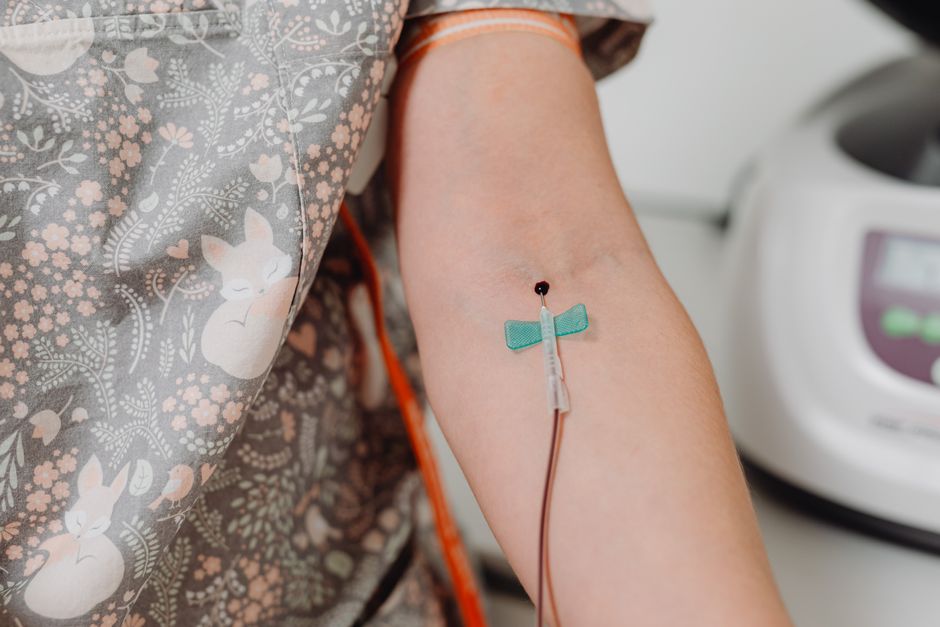
Anemia is not a disease. It is a finding — a sign that something in the body is off. And the way doctors confirm it is almost always through a small set of blood tests, starting with a complete blood count. That test measures hemoglobin, the oxygen-carrying protein in red blood cells. When hemoglobin drops below the reference range, anemia is present. From there, additional labs help identify the type and cause. Some cases trace back to iron deficiency. Others involve vitamin B12, folate, chronic disease, kidney problems, or inherited conditions. The blood work narrows it down.
What Labs Show Anemia Key Blood Tests Explained
The complete blood count, or CBC, is the first test ordered when anemia is suspected. It is a workhorse panel that reports several measurements at once.
Hemoglobin is the core number. Reference ranges vary slightly by lab, but common cutoffs are below 13.5 g/dL for adult men and below 12.0 g/dL for non-pregnant adult women. These thresholds are established in standard hematology references. Pregnancy, altitude, and smoking status can shift what counts as normal.
Hematocrit is the percentage of blood volume made up of red blood cells. It tracks closely with hemoglobin and usually moves in the same direction.
Red blood cell count is the number of red blood cells per volume of blood. It is sometimes low in anemia, but not always — the size and hemoglobin content of each cell matter too.
Mean corpuscular volume (MCV) measures the average size of red blood cells. This single number often points toward the cause. Small cells suggest iron deficiency or thalassemia. Large cells suggest B12 or folate deficiency, alcohol use, or certain medications. Normal-sized cells can occur with chronic disease, kidney disease, or acute blood loss.
Red cell distribution width (RDW) describes how much red blood cells vary in size. A high RDW means the cells are uneven — a pattern often seen early in iron deficiency or in mixed deficiencies.
The CBC alone can confirm that anemia exists. It rarely confirms why. That requires a second layer of testing.
What Does a Low MCV Tell You?
A low MCV means the red blood cells are smaller than normal. The most common cause worldwide is iron deficiency. But it is not the only one.
Thalassemia — an inherited group of hemoglobin disorders — also produces small red blood cells. So does anemia of chronic disease in some cases, and lead poisoning. The MCV value alone cannot distinguish between these. Additional tests are needed.
Iron studies are the next step. They typically include:
- Serum ferritin — reflects iron stores. A low ferritin is the most specific indicator of iron deficiency in most clinical settings.
- Serum iron — the amount of iron circulating in the blood at the time of the draw.
- Total iron-binding capacity (TIBC) — how much iron the blood could carry if fully saturated.
- Transferrin saturation — a calculated percentage of how much transferrin is carrying iron.
Ferritin is an acute-phase reactant. That means it rises during inflammation, infection, or liver disease, even when iron stores are low. In those situations, a normal ferritin does not rule out iron deficiency. Some clinicians also check soluble transferrin receptor or use the ferritin-to-TIBC ratio to clarify the picture. These approaches are used in practice but are not universally standardized.
What About B12, Folate, and a High MCV?
When red blood cells are larger than normal — generally an MCV above 100 fL — the search shifts toward causes of macrocytic anemia.
Vitamin B12 deficiency and folate deficiency are the classic nutritional causes. Both impair DNA synthesis in developing red blood cells, leading to large, immature cells that do not function properly.
Testing typically includes serum B12 and serum folate. Serum B12 has known limitations — some people with deficiency have levels in the low-normal range. Methylmalonic acid (MMA) and homocysteine are more sensitive markers. They rise when B12 is functionally deficient, even if serum B12 looks borderline. These tests are not ordered routinely but are used when clinical suspicion remains high despite a normal B12 result.
Other causes of a high MCV include alcohol use disorder, hypothyroidism, certain medications (including some chemotherapy agents and antivirals), and myelodysplastic syndromes. A high MCV does not automatically mean B12 deficiency. The full context matters.





What Other Labs Help Identify the Cause?
Beyond the CBC and nutritional panels, several other tests help clarify the picture.
Reticulocyte count measures how many young red blood cells are being produced. A high reticulocyte count suggests the bone marrow is responding to blood loss or destruction. A low count suggests the marrow is not keeping up — which points toward nutritional deficiency, kidney disease, or bone marrow problems.
Peripheral blood smear is a microscope examination of the blood. It can reveal cell shape abnormalities, parasites, or clues to inherited conditions. It is often the test that changes the entire diagnostic direction.
Kidney function tests — particularly creatinine and eGFR — matter because the kidneys produce erythropoietin, the hormone that signals the bone marrow to make red blood cells. In chronic kidney disease, erythropoietin production drops, and anemia follows. This is called anemia of chronic kidney disease.
Inflammatory markers such as CRP or ESR may be checked when anemia of chronic disease is suspected. This type of anemia is common in people with autoimmune conditions, chronic infections, or cancer. It involves iron being trapped in storage despite adequate total body iron.
Stool tests for occult blood may be ordered when gastrointestinal bleeding is a concern. Iron deficiency in an adult man or a postmenopausal woman often prompts evaluation for a bleeding source in the digestive tract.
How Do Doctors Use These Results Together?
No single lab test diagnoses anemia on its own. The pattern across multiple tests is what matters.
A classic iron deficiency picture: low hemoglobin, low MCV, low ferritin, low serum iron, high TIBC, low transferrin saturation, and often a high RDW. A B12 deficiency picture: low hemoglobin, high MCV, low B12, possibly elevated MMA. Anemia of chronic disease: low hemoglobin, normal or slightly low MCV, normal or high ferritin, low serum iron, low TIBC, and elevated inflammatory markers.
These patterns are well established in clinical hematology. But overlap exists. A person can have both iron deficiency and B12 deficiency. Chronic disease can coexist with nutritional deficiency. That is why doctors interpret the full panel together — not one number in isolation.
Age and sex also guide the workup. In young women, menstrual blood loss and pregnancy are common contributors. In older adults, the cause is more often chronic disease, kidney disease, or a bone marrow disorder. In men and postmenopausal women, iron deficiency raises concern for gastrointestinal bleeding until proven otherwise.
When Should You Ask About Anemia Testing?
Anemia can develop slowly. Symptoms like fatigue, shortness of breath with activity, pale skin, dizziness, or cold hands and feet are easy to attribute to stress or aging. Blood work is the only way to know for certain.
If you have risk factors — heavy menstrual periods, a vegetarian or vegan diet, a history of gastrointestinal bleeding, chronic kidney disease, or a family history of blood disorders — it is reasonable to ask your doctor whether a CBC is appropriate. It is a low-cost, widely available test.
Do not self-diagnose or self-treat with iron supplements based on symptoms alone. Iron overload is a real risk when supplements are taken without confirmed deficiency. The blood tests exist precisely to prevent that.
Frequently Asked Questions
What is the first blood test for anemia?
A complete blood count (CBC) is the first test ordered. It measures hemoglobin, hematocrit, red blood cell count, and red cell indices like MCV and RDW.
Can a CBC tell you what is causing anemia?
A CBC confirms that anemia is present and gives clues about the type based on cell size. It does not identify the underlying cause — that usually requires iron studies, vitamin levels, or other follow-up tests.
What ferritin level indicates iron deficiency?
A ferritin below 30 ng/mL generally indicates low iron stores, and some clinical guidelines use a threshold below 15 ng/mL for diagnosing iron deficiency anemia. Ferritin can be falsely normal during inflammation or infection.
Can you have anemia with normal hemoglobin?
Early iron deficiency can exist before hemoglobin drops below the reference range. In that stage, ferritin and other iron markers may be abnormal while hemoglobin is still normal.
