
Dust mites do not live on your skin. That single fact changes the answer to this question. The crawling, itching sensation people blame on mites is almost always an allergic reaction to proteins in mite waste, not an infestation of your body. So what actually “kills” the problem? For your skin, the fix is usually treating the allergic reaction and removing mites from your surroundings. For the mites themselves, the reliable killers are heat, low humidity, and physical removal — not soap, oils, or sprays on your body.
Do Dust Mites Live On Human Skin?
No. Dust mites cannot live on or burrow into human skin. They are not parasites of people.
Dust mites are tiny arachnids — relatives of spiders and ticks — that feed on shed human skin cells. That detail is where the confusion starts. They eat dead skin flakes, but they live in soft surfaces like bedding, pillows, mattresses, carpets, and upholstered furniture. They do not feed on living skin, and they do not bite.
What people often mistake for a mite problem on the skin is actually one of two things:
- An allergic reaction to proteins in dust mite feces and body fragments
- A different skin condition entirely, such as eczema, scabies, or contact dermatitis
Scabies is worth separating out clearly. Scabies is caused by a different organism — a burrowing mite called Sarcoptes scabiei — that does live in the skin and causes an intensely itchy rash. Dust mites are not scabies mites. If you have an unexplained itchy rash, that distinction matters, because scabies requires prescription treatment and dust mite control does not.
What Kills Dust Mites On Skin The Real Answer
Nothing needs to “kill” dust mites on your skin, because they are not there. The real issue is stopping the allergic reaction and removing mites from the places they actually live.
If your skin is reacting, the trigger is exposure to mite allergens — the proteins in their waste. These proteins are light and become airborne when you move around on bedding or walk across carpet. When they contact your skin or you breathe them in, an allergic person’s immune system responds.
So the practical answer has two parts:
- For your skin: treat the allergic or irritant reaction. A gentle wash, a cool compress, and — for many people — an over-the-counter antihistamine or hydrocortisone cream can ease itching. For persistent or severe reactions, a doctor can advise on stronger options.
- For the mites: reduce them in your environment. That is where real, evidence-based methods exist.
There is no product you apply to your body that “kills dust mites on skin,” because that is not where they are. Any product marketed that way is solving a problem that does not exist.
What Actually Kills Dust Mites In Your Home?
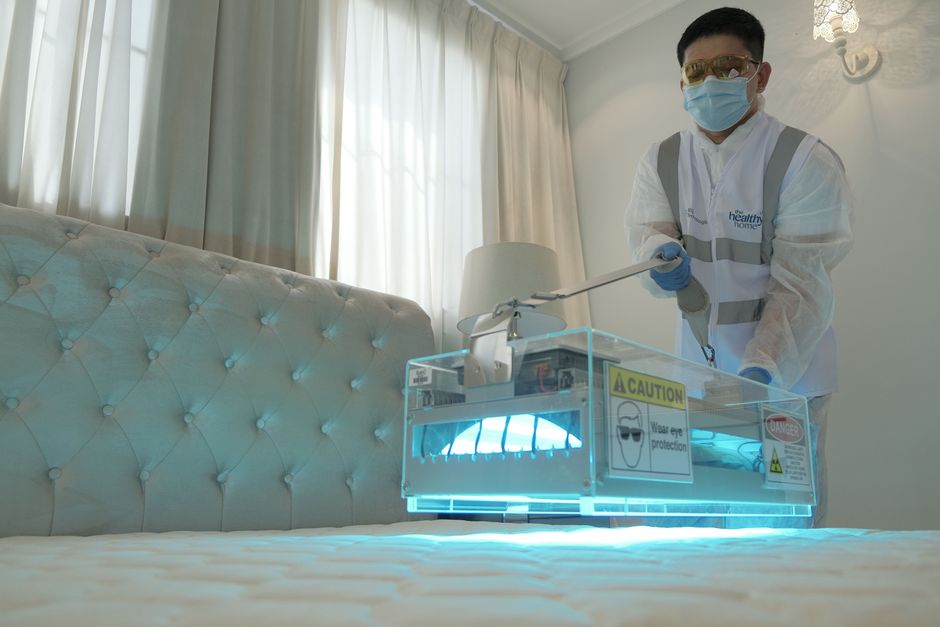
Heat and dryness are the two most reliable mite killers. Dust mites thrive in warm, humid conditions and die when those conditions are removed.
Here is what the evidence supports:
- Washing bedding in hot water. Washing at a high temperature — commonly cited as around 130°F (54°C) — kills dust mites. Cold water does not reliably kill them, though it does rinse away allergens.
- Drying on high heat. A hot dryer cycle also kills mites. This is useful for items you cannot wash hot.
- Lowering indoor humidity. Dust mites cannot survive well when relative humidity stays low, generally below about 50%. Dehumidifiers and air conditioning help here.
- Physical removal. Vacuuming with a high-efficiency (HEPA) filter and using allergen-proof mattress and pillow covers reduce allergen exposure.
One non-obvious point: killing the mites is not the same as removing the allergens. Dead mites and their waste still contain the proteins that trigger reactions. So cleaning and allergen removal matter as much as killing.





Does Freezing Or Sunlight Kill Dust Mites?
Freezing can kill dust mites, but it is less practical than heat. Putting a small item in a freezer for an extended period — often cited as at least 24 hours — can kill mites on that item. The catch is that household freezers vary, and the method works best for small, soft objects, not mattresses.
Sunlight is a weaker option. Direct, strong sunlight and the drying effect of open air can reduce mites on items left outside, but this is not a dependable method on its own and depends heavily on conditions. Heat-based methods are more consistent.
Do Essential Oils Or Sprays Kill Dust Mites?
Some laboratory studies suggest certain essential oils can kill dust mites on contact. That does not mean they are a reliable or safe solution for your skin or your home.
There are real problems with this approach:
- Essential oils can irritate skin and trigger allergic reactions — the opposite of what a person with sensitive, itchy skin needs.
- Concentration, contact time, and real-world effectiveness are not well established.
- No major clinical guideline recommends applying oils to the body to address dust mites, because the mites are not on the body.
If you have an allergy, the goal is to reduce exposure to allergens, not to apply a substance that could itself cause a reaction. This is a case where the marketing runs well ahead of the evidence.
How Do You Stop The Itching And Reaction?
Reducing exposure to mite allergens is the foundation. For many people, symptoms improve when allergen levels in the bedroom drop.
Steps that help most people:
- Use allergen-proof covers on mattresses and pillows
- Wash bedding regularly in hot water and dry on high heat
- Keep indoor humidity low, ideally below about 50%
- Vacuum with a HEPA filter and reduce clutter that collects dust
- Consider removing carpets and heavy fabrics from the bedroom where practical
For the skin symptoms themselves, over-the-counter antihistamines and hydrocortisone creams help many people. If itching is severe, persistent, or comes with a spreading rash, see a doctor. That is important because conditions like scabies, eczema, and other skin problems can look similar and need different treatment.
No clinical guidelines currently exist for using mite-killing products directly on human skin, because that is not how dust mite allergy works. The treatment is environmental control plus standard allergy or skin care.
When Should You See A Doctor?
See a doctor if you have a rash that spreads, is intensely itchy at night, or does not improve with basic measures. These can be signs of scabies or another condition that needs specific treatment.
Also see a doctor if you have ongoing nasal congestion, sneezing, or asthma symptoms that seem tied to your home environment. Dust mite allergy is a common trigger for allergic rhinitis and can worsen asthma. An allergist can confirm what you are reacting to with testing, which helps you target the right fixes instead of guessing.
The takeaway is simple and worth repeating: dust mites are not on your skin, so nothing needs to kill them there. Control them where they live, treat your skin reaction the way you would any allergy, and get medical help when symptoms do not fit the usual pattern.
Frequently Asked Questions
Can dust mites live on your skin?
No, dust mites cannot live on or in human skin. They feed on shed skin flakes but live in bedding, carpet, and upholstered furniture, not on people.
What kills dust mites instantly?
Heat is the most reliable killer — washing bedding in hot water around 130°F (54°C) or drying on high heat kills dust mites. Lowering indoor humidity below about 50% also stops them from surviving.
Why does my skin itch if dust mites are not on it?
The itch is usually an allergic reaction to proteins in dust mite waste, not a bite or infestation. If the itch is severe or comes with a spreading rash, see a doctor to rule out conditions like scabies.
Do essential oils kill dust mites on skin?
No clinical guidelines support applying oils to the skin for dust mites, because the mites are not on the skin. Essential oils can also irritate skin and trigger allergic reactions.
