
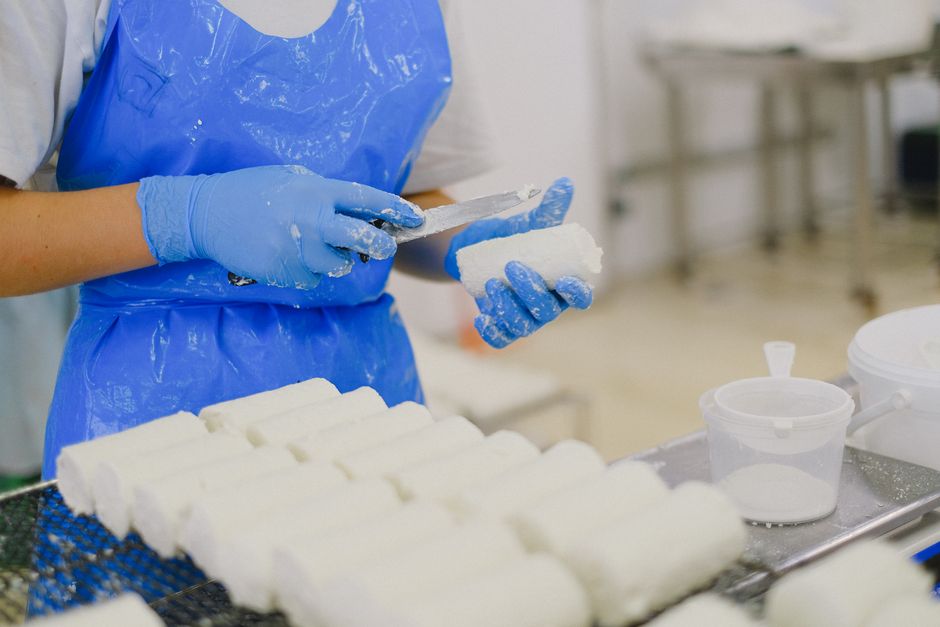
Unpasteurised cheese is cheese made from milk that has not gone through pasteurisation — the heat treatment that kills harmful bacteria like Listeria, Salmonella, and E. coli. The milk goes straight from the animal to the cheesemaking process, or is only warmed gently, never reaching the temperatures that pasteurisation requires. That single difference changes the cheese’s flavour, texture, and safety profile in ways that matter — especially for certain people.
What Is Unpasteurised Cheese?
Unpasteurised cheese — often called raw milk cheese — is made from milk that has not been heated to the temperature and duration required to kill disease-causing bacteria. Pasteurisation typically heats milk to at least 161°F (72°C) for 15 seconds, or 145°F (63°C) for 30 minutes. Raw milk cheese skips that step entirely.
The cheese can be made from cow, goat, sheep, or other animal milk. It may be soft, semi-soft, or hard. Some raw milk cheeses are aged for months; others are sold fresh within days. The ageing time matters for safety, and we’ll get into why.
People choose raw milk cheese for flavour. The argument is that pasteurisation strips out enzymes and beneficial bacteria that contribute to complexity. That’s a real phenomenon — heat does alter milk’s chemistry. Whether the flavour difference justifies the risk is a personal decision, but the risk itself is not imaginary.
How Is Unpasteurised Cheese Made?
The basic process looks similar to any cheesemaking: milk is warmed, cultures and rennet are added, curds form, whey is drained, and the cheese is shaped and aged. The critical difference is that the starting milk hasn’t been sterilised of pathogens.
Raw milk can carry bacteria from several sources. The animal’s udder, the milking equipment, the environment, and the hands of workers can all introduce contaminants. Even on farms with excellent hygiene, pathogens can be present. A cow can look perfectly healthy and still shed Listeria or E. coli in her milk.
Some raw milk cheeses are aged for 60 days or longer. The belief was that ageing would kill harmful bacteria. That belief is not well supported. Research has found that Listeria and E. coli O157:H7 can survive — and in some cases thrive — in aged raw milk cheeses. The 60-day rule is a regulatory threshold, not a guarantee of safety.
In the United States, raw milk cheese must be aged at least 60 days before sale. In the European Union, raw milk cheeses can be sold fresh if they meet certain health standards, but the rules vary by country. The regulatory picture is not uniform, and neither is the risk.
Is Unpasteurised Cheese Safe to Eat?
For most healthy adults, the risk of serious illness from raw milk cheese is low but not zero. The CDC and FDA both state that raw milk and products made from it can carry harmful bacteria. That position is based on documented outbreaks, not theoretical concern.
Between 1993 and 2012, the CDC linked 81 outbreaks of illness to raw milk consumption in the United States, causing over 1,700 illnesses and 160 hospitalisations. Those numbers include cheese made from raw milk. The actual number is likely higher because many foodborne illnesses are never reported.
Who faces the greatest risk?
- Pregnant women — Listeria can cross the placenta and cause miscarriage, stillbirth, or severe illness in a newborn
- Infants and young children — their immune systems are not fully developed
- Adults over 65 — immune function declines with age
- People with weakened immune systems — from illness, medication, or organ transplant
For these groups, public health agencies recommend avoiding raw milk cheese entirely. That’s not a cautious suggestion. It’s a direct recommendation based on documented harm.
If you’re healthy and not in a high-risk group, the decision is yours. But “low risk” is not “no risk.” A serious Listeria infection can land even healthy adults in the hospital, though it’s uncommon.


What Bacteria Can Be Found in Unpasteurised Cheese?
The main pathogens of concern are Listeria monocytogenes, E. coli O157:H7, Salmonella, and Campylobacter. Each causes different illnesses and carries different risks.
Listeria is the most dangerous in this context. It’s relatively rare but has a high hospitalisation rate. Symptoms can take weeks to appear, making it hard to trace back to a specific food. In pregnant women, it can cause flu-like symptoms that seem minor but lead to serious complications for the foetus.
E. coli O157:H7 can cause severe bloody diarrhoea and, in some cases, kidney failure. Children are especially vulnerable to the kidney complication, called haemolytic uraemic syndrome.
Salmonella and Campylobacter cause gastrointestinal illness — diarrhoea, fever, cramps — that usually resolves on its own but can require hospitalisation in severe cases.
These bacteria are not always present. A given piece of raw milk cheese may be perfectly safe. The problem is that you cannot tell by looking, smelling, or tasting. Contamination is invisible.
How Does Pasteurisation Change Cheese?
Pasteurisation kills harmful bacteria but also affects the milk’s natural enzymes and microbiota. Some cheesemakers say this results in a less complex flavour. That claim is subjective and hard to measure, but it’s not unreasonable.
What pasteurisation does not do is make cheese nutritionally empty. Pasteurised cheese still contains protein, calcium, fat, and vitamins. The nutritional difference between raw and pasteurised cheese is minor and not well studied.
Some people claim raw milk cheese has probiotic benefits. That claim is not supported by strong evidence. Lactic acid bacteria in cheese can survive digestion in small numbers, but whether they provide meaningful health benefits is unclear. No large human trials have confirmed probiotic effects from raw milk cheese.
Another common claim is that raw milk cheese is safer for people with lactose intolerance. There’s no consistent evidence for that. Ageing reduces lactose in both raw and pasteurised cheese, so a long-aged pasteurised cheddar may be just as low in lactose as a raw one.
How Can You Tell If Cheese Is Unpasteurised?
In the United States, the label must state if the cheese is made from raw milk. Look for terms like “raw milk,” “unpasteurised,” or “made with unpasteurised milk.” If the label says “pasteurised,” it’s not raw.
Some cheeses are traditionally made with raw milk but are also produced in pasteurised versions. Brie, Camembert, Roquefort, and certain Swiss cheeses can fall into either category. The label is the only reliable way to know.
Restaurant menus may not specify. If you’re in a high-risk group, ask. A server or chef should be able to tell you whether the cheese is made from raw milk. If they don’t know, that’s your answer.
Farmers’ markets and specialty shops often sell raw milk cheese. The vendor should be able to tell you the ageing time and the milk source. That information is not a guarantee of safety, but it’s a starting point.
What Is the Bottom Line on Unpasteurised Cheese?
Unpasteurised cheese is cheese made from milk that hasn’t been heat-treated to kill pathogens. It carries a real risk of foodborne illness, especially for pregnant women, young children, older adults, and people with weakened immune systems. For these groups, public health agencies recommend avoiding it.
For healthy adults, the risk is lower but not eliminated. If you choose to eat raw milk cheese, you’re accepting a small but documented chance of serious illness. That’s a personal decision, not a medical recommendation.
The flavour argument is real but subjective. The probiotic argument is weak. The safety argument is clear: pasteurisation reduces risk. Whether that trade-off is worth it depends on your health status and your priorities.
Frequently Asked Questions
Is unpasteurised cheese the same as raw milk cheese?
Yes, unpasteurised cheese and raw milk cheese are the same thing — cheese made from milk that has not been heat-treated to kill bacteria. The terms are used interchangeably.
Can you get sick from unpasteurised cheese?
Yes, unpasteurised cheese can carry harmful bacteria like Listeria, E. coli, and Salmonella that cause foodborne illness. The risk is highest for pregnant women, young children, older adults, and people with weakened immune systems.
Does ageing make raw milk cheese safe?
No, ageing does not reliably kill all harmful bacteria in raw milk cheese. Research has found that Listeria and E. coli can survive in cheeses aged for 60 days or longer.
Is unpasteurised cheese illegal in the US?
No, unpasteurised cheese is legal in the US if it is aged at least 60 days before sale. Fresh raw milk cheese — sold before 60 days — is not allowed under federal rules.
