

Collective behavior is what happens when people act together in ways that are not guided by an established rule or a formal leader. It includes crowds, fads, panics, rumors, and social movements. These behaviors tend to be short-lived, emotional, and shaped by the people around us rather than by a written plan.
The term comes from sociology, not medicine. That matters here because the same forces that drive a crowd can also shape how a community responds to a health scare, a product recall, or a new wellness trend. Understanding collective behavior helps explain why groups sometimes act in ways no single member would choose alone.
What Is Collective Behavior Definition Types Examples?
Collective behavior is the spontaneous, relatively unorganized activity of a group of people responding to a shared situation or stimulus. Sociologists define it as behavior that emerges outside established social structures, norms, and institutions. A line of people waiting for a bus is not collective behavior. A crowd that forms when a bus breaks down and people start directing traffic is.
The concept was developed in the early twentieth century by sociologists studying crowds, riots, and reform movements. It sits at the intersection of psychology and sociology. The core idea is that when people gather, something shifts. Individuals may act differently than they would alone.
Several features tend to show up:
- It is emergent, meaning it is not planned by an organization.
- It is often short-lived compared with institutions like governments or schools.
- It involves a shared focus, such as an event, a threat, or a piece of news.
- It spreads through imitation, emotion, and communication.
A note on a common misconception. Collective behavior is not the same as a mob. Mobs are one type. Feeding a stranger’s parking meter during a snowstorm is also collective behavior. So is a neighborhood that spontaneously organizes a search for a lost child.
What Are the Main Types of Collective Behavior?
Sociologists generally group collective behavior into a few broad categories. The lines between them are not sharp, and real events often blend several types.
Crowds. Crowds are temporary gatherings of people in one place. Researchers describe different kinds, including casual crowds, conventional crowds at a scheduled event, expressive crowds at a celebration or protest, and acting crowds that are moving toward a goal. The old idea of a “mob mind” that erases individual judgment has largely fallen out of favor. Modern research suggests crowd members often retain personal judgment and can even act more deliberately than outsiders assume.
Masses. A mass is a large group of people who share an interest but are not in the same place. People watching the same live broadcast or following the same viral story form a mass. The internet has made masses larger and faster to form.
Publics. A public is a group of people who discuss an issue and form opinions about it. Public opinion is a form of collective behavior because it emerges from discussion rather than from a formal decision.
Social movements. Social movements are more organized and longer-lasting than crowds. They pursue change and usually develop leaders, goals, and structures over time. This makes them a bridge between collective behavior and formal institutions.
Fads and fashions. These are short-lived shifts in what people buy, wear, or do. They spread quickly and fade just as quickly. A fad is often driven by novelty, while a fashion reflects a broader change in taste.
Panics and crazes. Panics are episodes of fear-driven behavior, such as a rush to exit a building. Crazes are episodes of intense, excited pursuit, such as a run on a product. Both can spread rapidly through a group.
Why Do People Act Differently in Groups?
Group settings change what people notice, feel, and do. Researchers have identified several mechanisms that help explain the shift.
Deindividuation. When people feel anonymous in a crowd, they may feel less personally accountable. This can loosen the usual restraints on behavior. It does not automatically produce bad behavior. Anonymous groups can also be generous, as seen in crowds that help after disasters.
Social contagion. Emotions and behaviors spread from person to person. Yawning, laughter, and fear can all spread through a group. This is one reason panic can build quickly once a few people start moving.
Emergent norms. Crowds often develop their own unwritten rules in the moment. People look to those around them to figure out what is appropriate. If the people nearby are calm, the group tends to stay calm.
Convergence. Some researchers argue that crowds do not transform people so much as attract people who already share certain traits. A protest may draw people who are already inclined to act that way. This view competes with the idea that the crowd itself creates the behavior.
The evidence is mixed on how much each mechanism matters in any given situation. Most researchers now see collective behavior as a mix of individual traits, group dynamics, and the specific situation.




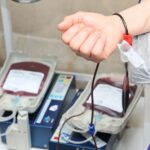
How Does Collective Behavior Apply to Health and Medicine?
Health is one of the areas where collective behavior shows up most clearly. Shared fear, shared hope, and shared information all shape how people respond to health issues.
Panic buying. When a health threat is announced, people may rush to buy supplies. This behavior is driven by fear and by watching what others do. It can create real shortages even when supply is adequate.
Rumors and misinformation. Health rumors spread through the same channels as other collective behavior. They often start with a kernel of truth and grow through retelling. Misinformation can lead people to skip proven care or pursue unproven remedies.
Fads in wellness. Supplement trends, diet fads, and detox products often follow the pattern of a fad. They spread through social proof, meaning people adopt them because others have. This is different from evidence of benefit. A behavior spreading quickly is not proof that it works.
Mass psychogenic illness. This is a documented phenomenon in which symptoms spread through a group without an identifiable physical cause. It has been reported in schools and workplaces. It is a real condition, not a sign that people are faking. It is also a reminder that group behavior can produce physical symptoms.
Collective response to emergencies. Crowds are not always panicked. Research on disasters has found that people often help each other and cooperate. The image of a purely selfish crowd is not well supported by the evidence.
What Causes Collective Behavior to Start and Stop?
Collective behavior usually begins when something disrupts the normal order. A sudden event, a new piece of information, or a shared frustration can all serve as a trigger. The key ingredient is often uncertainty. When people are unsure what to do, they look to others.
Several conditions make it more likely to occur:
- A situation that is unusual or unclear.
- A group of people who can see or hear each other, or who share a communication channel.
- A shared emotion, such as fear, anger, or excitement.
- A lack of clear guidance from authorities.
Collective behavior tends to fade when the situation becomes clear, when formal leaders step in, or when the emotional charge wears off. It can also become institutionalized. A protest movement may turn into an organization. A fad may become a lasting habit. This shift from spontaneous to structured is one of the most studied transitions in sociology.
How Is Collective Behavior Different From Groupthink?
These two terms are often confused, but they describe different things. Collective behavior is about spontaneous action outside formal structures. Groupthink is about faulty decision-making inside a formal group.
Groupthink happens when a cohesive group values agreement over honest evaluation. Members may suppress doubts, ignore outside information, and fail to consider alternatives. It is a pattern that shows up in committees, boards, and leadership teams. It can lead to poor decisions even when no crowd is involved.
The overlap is real. Both involve social pressure and both can lead groups astray. But the settings are different. A crowd forming at a concert is collective behavior. A hospital board that dismisses a safety concern to preserve harmony is groupthink. Keeping the terms separate helps avoid muddling the research on either one.
What Does the Evidence Say About Crowd Behavior?
Popular culture often portrays crowds as irrational and dangerous. The research tells a more mixed story. Studies of real crowds have found that people usually retain their judgment, help each other, and follow emerging social rules. Panic is less common than the stereotype suggests.
That does not mean crowds are always safe. Crowd crushes and stampedes are real and have caused deaths. These events are often linked to poor crowd management, blocked exits, and sudden pressure, not to a mysterious “mob mind.”
The evidence on why crowds turn violent is more contested. Some researchers emphasize the role of group identity and perceived injustice. Others focus on the actions of authorities and the physical layout of the space. Most agree that no single factor explains every case.
For readers thinking about health topics, the practical takeaway is this. A behavior spreading through a group is not evidence that the behavior is correct. It is evidence that it is spreading. Separating the two is the whole point of studying collective behavior.
Frequently Asked Questions
What is a simple definition of collective behavior?
Collective behavior is the spontaneous, relatively unorganized activity of a group of people responding to a shared situation. It happens outside formal rules and institutions, and it is usually short-lived.
What are three examples of collective behavior?
Three common examples are a crowd that forms at an accident scene, a fad that spreads through social media, and a panic that causes people to rush for supplies. Each involves shared attention and emotion rather than a formal plan.
Is collective behavior always negative?
No. Collective behavior can be helpful, such as neighbors organizing a search or a crowd cooperating during an emergency. It becomes harmful when fear, misinformation, or poor crowd management takes over.
How does collective behavior affect health decisions?
It can spread health rumors, fuel panic buying, and drive adoption of unproven remedies. A behavior spreading quickly through a group is not evidence that it works.
