
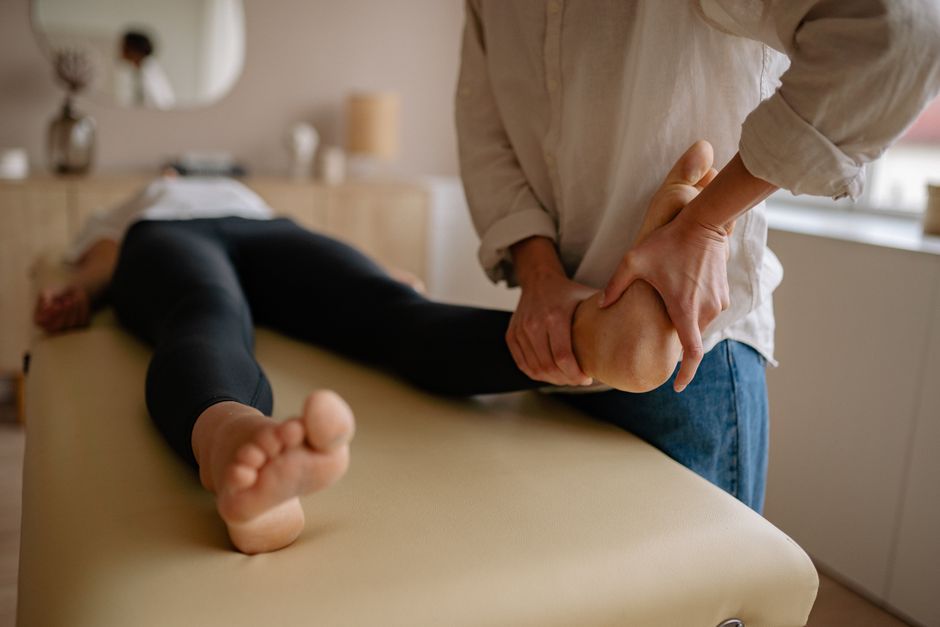
A varus stress test is a hands-on exam a clinician uses to check the stability of a joint by pushing it toward the inside of the body. It is used most often on the knee, where it tests the ligament on the outer side called the lateral collateral ligament. The same idea is also applied to the elbow and, less commonly, to other joints. The test helps a doctor or physical therapist find out whether a ligament has been stretched or torn.
What Is The Varus Stress Test?
The word “varus” describes a force that bends a joint inward, toward the midline of the body. In the knee, that means the lower leg is pushed toward the other leg. A varus stress test applies that force on purpose to see how much the joint opens up.
When the joint moves more than it should, it points to a problem with the ligament on the outer side. In the knee, that is the lateral collateral ligament, often shortened to LCL. The LCL runs along the outside of the knee and connects the thigh bone to the smaller lower leg bone. Its job is to stop the knee from bending too far inward.
Doctors use the test in two positions. In full extension, the knee is straight. At about 30 degrees of flexion, the knee is slightly bent. The bent position isolates the LCL more cleanly. The straight position can also involve other structures, so the two positions give different information.
The test is quick. It usually takes only a few seconds per side. The clinician compares the injured joint with the healthy one, because normal laxity varies from person to person.
How Is the Varus Stress Test Performed?
The person lies face up on an exam table with the leg relaxed. The clinician holds the thigh steady with one hand and grips the lower leg near the ankle or calf with the other. Then they gently push the lower leg inward while the knee stays in place.
The clinician repeats this with the knee straight and again with the knee bent to about 30 degrees. They watch and feel for how far the joint opens and where the movement stops. A firm, sudden stop is normal. A soft or mushy stop can suggest a ligament injury.
For the elbow, the setup is similar. The clinician stabilizes the upper arm and applies an inward force to the forearm. This checks the ligament on the inner side of the elbow, which is put under stress during throwing motions.
Grading is usually described in three levels:
- Grade 1: The joint opens slightly more than the other side, with a firm endpoint. This suggests a mild stretch.
- Grade 2: The joint opens more clearly, and the endpoint feels softer. This suggests a partial tear.
- Grade 3: The joint opens a lot, and there is no firm stop. This suggests a complete tear.
These grades are a clinical impression, not a precise measurement. Imaging is often needed to confirm what the hands felt.
What Does a Positive Varus Stress Test Mean?
A positive test means the joint opens more than it should when pushed inward. In the knee, that points to the lateral collateral ligament. A mild opening with a solid endpoint usually means a stretch or minor partial tear. A large opening with no endpoint usually means a full tear.
Doctors rarely rely on this test alone. A physical exam is one piece of the picture. The clinician also asks how the injury happened, checks other ligaments, and may order imaging. An X-ray can show bone injuries. An MRI can show the soft tissues, including the LCL, in more detail.
One thing worth knowing: the varus stress test is not the same as its mirror image. The valgus stress test pushes the joint the other way, toward the outside of the body, and checks the ligament on the inner side of the knee. The two tests look at opposite sides of the joint. Confusing them is a common mix-up.





What Injuries Does It Help Detect?
The main target in the knee is an injury to the lateral collateral ligament. LCL injuries are much less common than injuries to the ligament on the inner side of the knee, which is called the medial collateral ligament. The LCL is also sturdier in many people, so it often takes a strong force to damage it.
Because the LCL sits near other structures, a positive test can sometimes reflect more than one problem. In serious knee injuries, the LCL can be damaged along with other ligaments or with the structures at the back of the knee. This is why a full exam matters.
In the elbow, a varus stress test is used to check the ligament on the inner side, which is stressed during throwing. This is seen most often in athletes who throw overhead, such as baseball pitchers.
The test can also be used on other joints, but this is less common and less standardized. The knee and elbow are where it is best established.
How Reliable Is the Varus Stress Test?
As a hands-on test, its reliability depends on the skill and experience of the examiner. Research on the accuracy of physical tests for ligament injuries shows that results vary. Some studies find good agreement between examiners, while others find that the test is more useful for ruling an injury in than ruling it out.
The test tends to be more helpful when the findings are clear. A large, obvious opening is hard to miss. A small difference between the two sides is harder to judge, and different examiners may disagree.
This is not a flaw unique to this test. Many physical exams for joint injuries share the same limits. That is why doctors combine the exam with the person’s history and with imaging when the diagnosis is unclear or when surgery might be needed.
For a suspected complete tear, or when the plan depends on knowing exactly which structures are damaged, an MRI is usually the more reliable tool. The exam guides the thinking. The image confirms it.
What Happens After a Positive Test?
What comes next depends on how severe the injury is and what the person needs to do. A mild stretch or partial tear is often treated without surgery. A full tear, or one combined with other injuries, may need surgical repair, especially in people who want to return to demanding sports.
Rehabilitation usually focuses on restoring movement, building strength, and retraining balance and control around the joint. The timeline varies widely. A minor injury may settle in a few weeks. A major injury or surgery can take many months to recover from.
No single recovery timeline fits everyone. Age, overall health, the specific structures involved, and the level of activity a person wants to return to all affect the plan. A doctor or physical therapist sets the pace based on the individual.
It is worth saying plainly: no test or treatment guarantees a full return to the same level of activity. Most people recover well, but outcomes differ, and honest expectations matter more than promises.
When Should You See a Doctor?
Get medical care if a joint injury causes swelling, pain that limits movement, a feeling that the joint is giving way, or trouble bearing weight. These signs can point to a ligament injury that needs a proper exam.
Seek urgent care if the joint looks deformed, if there is numbness or tingling, if the skin is broken, or if you cannot use the limb at all. These can signal a more serious injury, including a broken bone or nerve damage.
Do not try to test your own ligaments by forcing the joint. Pushing a joint that may already be injured can make the damage worse. Let a trained clinician do the exam.
If you are unsure whether an injury is serious, it is reasonable to get it checked. A quick exam and, if needed, an image can answer the question and guide the next step.
Frequently Asked Questions
What does a positive varus stress test indicate?
A positive test means the joint opens more than it should when pushed inward, which points to an injury of the ligament on the outer side of the knee. The size of the opening and the feel of the endpoint help suggest whether the injury is a stretch, a partial tear, or a full tear.
Is the varus stress test the same as the valgus stress test?
No. The varus test pushes the joint inward and checks the ligament on the outer side of the knee, while the valgus test pushes it outward and checks the ligament on the inner side.
Can a varus stress test diagnose a torn LCL on its own?
It can raise strong suspicion, but it is usually combined with the person’s history and with imaging such as an MRI to confirm the diagnosis. Physical tests for ligament injuries vary in reliability between examiners.
Does the varus stress test hurt?
It can cause some discomfort, especially if a ligament is injured, but it is applied gently and briefly. Tell the clinician if the pain is severe so they can adjust.
