
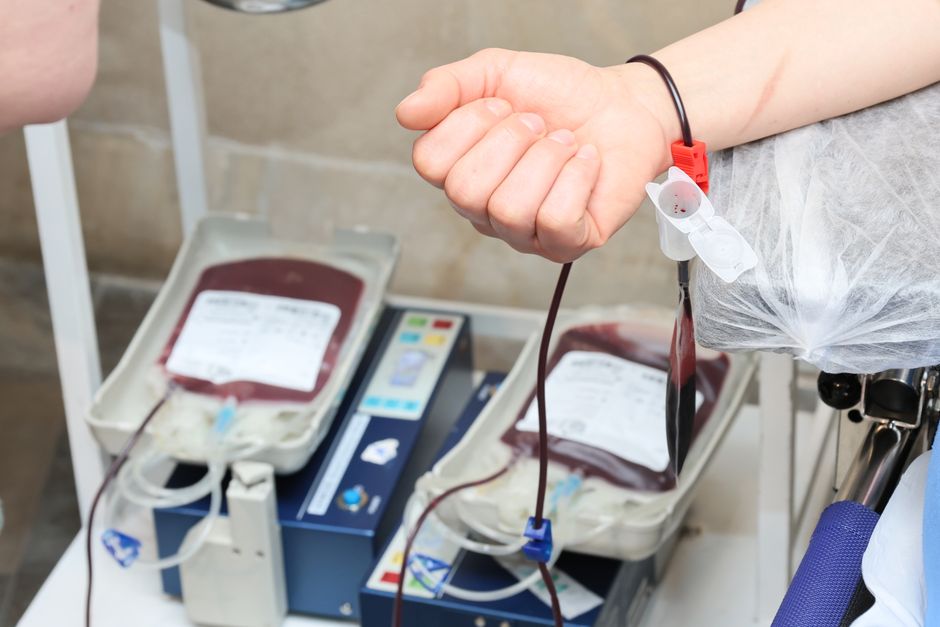
O negative blood is the universal donor blood type. This means red blood cells from an O negative donor can be transfused into nearly any patient, regardless of the patient’s own blood type. This makes O negative blood the most critical supply in hospital emergency rooms and trauma centers.
The universal donor status comes down to two specific features on the surface of red blood cells. O negative blood lacks A and B antigens. It also lacks the Rh factor protein. Because these cells carry no markers that could trigger a recipient’s immune system, they are safe to give in emergencies when there is no time to test the patient’s blood type.
What Makes O Negative Blood the Universal Donor?
Blood types are determined by antigens. Antigens are proteins and sugars that sit on the surface of red blood cells. Your immune system treats any antigen it does not recognize as foreign and attacks it.
There are four main blood groups: A, B, AB, and O. The A group has A antigens. The B group has B antigens. The AB group has both. The O group has neither.
The Rh factor is another antigen. If you have it, you are Rh positive. If you lack it, you are Rh negative. About 85 percent of people are Rh positive.
O negative blood has no A antigens, no B antigens, and no Rh factor. There is nothing on these red blood cells for a recipient’s immune system to attack. This is why O negative is called the universal donor.
When a patient in critical condition needs blood immediately, hospitals do not always have time to run a full blood type and crossmatch. That process can take 15 to 45 minutes. In a trauma situation, that delay can be fatal. O negative blood is given because it is safe for anyone.
How Common Is O Negative Blood?
O negative is not common. Only about 7 percent of the US population has this blood type. The exact percentage varies slightly depending on the population studied, but it consistently remains in the single digits.
The rarity is the problem. Only 7 percent of donors can supply blood for 100 percent of patients in an emergency. Blood banks constantly struggle to keep O negative units on the shelves.
O positive blood is much more common. About 38 percent of people are O positive. But O positive red cells can only be given to Rh positive patients. Giving Rh positive blood to an Rh negative patient can cause a serious immune reaction, especially in women of childbearing age.
Who Can Receive O Negative Blood?
Anyone can receive O negative red blood cells in an emergency. This includes patients with type A, B, AB, or O blood. It includes Rh positive and Rh negative patients.
There is one important exception to understand. O negative red blood cells are universally safe, but O negative whole blood is not always used the same way. In modern medicine, donated blood is usually separated into components: red cells, plasma, and platelets. The universal donor designation applies specifically to red blood cells.
O negative plasma is not universal. In fact, AB plasma is the universal plasma donor type because it contains no anti-A or anti-B antibodies. The terms get confused, but the distinction matters in clinical practice.
For emergency transfusions of red blood cells, O negative is the standard choice. For plasma transfusions, AB is preferred. For platelets, the rules depend on the specific product and whether the platelets have been pooled or treated.





Why Is O Negative Blood So Important in Emergencies?
Trauma centers and emergency departments rely on O negative blood for the most critical patients. Massive bleeding from car accidents, gunshot wounds, gastrointestinal hemorrhages, or complicated childbirth can drop blood pressure to dangerous levels within minutes.
When a patient is bleeding to death, every minute counts. The blood bank can issue O negative units immediately. No waiting for a blood type test. No risk of a transfusion reaction in most patients.
This is why blood banks keep a dedicated supply of O negative units in the emergency release refrigerator. These units are pre-tested and ready to go. The moment a trauma team requests blood, these units can be in the operating room within minutes.
Military medicine also relies heavily on O negative blood. In combat zones, medics often carry O negative units because they may encounter wounded soldiers with any blood type. The logistics of testing blood in the field are impractical, so universal donor blood is the safest option.
Can O Negative People Receive Any Blood Type?
No. This is a common misconception. O negative people can only receive O negative red blood cells. In a true emergency when no O negative is available, O positive may be used for some patients, but this is a calculated risk and not standard practice.
An O negative person has antibodies against A and B antigens in their plasma. If they receive type A blood, their immune system will attack the A antigens on the donated red cells. This can cause a severe hemolytic transfusion reaction, which can be fatal.
O negative patients also cannot receive Rh positive blood without risk. If an Rh negative person receives Rh positive blood, their immune system may produce anti-Rh antibodies. The first exposure usually does not cause an immediate severe reaction, but it sensitizes the immune system. A second exposure can be dangerous.
For women who are Rh negative and may become pregnant, this matters even more. Rh sensitization can affect future pregnancies if the baby is Rh positive. This is why Rh negative women receive Rh immunoglobulin injections during pregnancy and after delivery.
What Is the Rarest Blood Type?
The rarest blood type is not O negative. It is Rh null, sometimes called golden blood. People with Rh null blood have no Rh antigens at all, including the common Rh factor and dozens of other Rh system antigens.
Rh null is extremely rare. Fewer than 50 known cases exist worldwide. These individuals can only receive Rh null blood, which makes finding compatible donors nearly impossible.
Another rare type is AB negative. Only about 1 percent of people have AB negative blood. AB negative people are universal plasma donors, but they can only receive AB negative red cells.
O negative is rare enough to be valuable but common enough to be a realistic donation target. Blood banks specifically recruit O negative donors because of the constant demand.
How Does the Rh Factor Affect Pregnancy?
The Rh factor matters most during pregnancy. If an Rh negative mother carries an Rh positive baby, a small amount of fetal blood can enter the mother’s circulation during delivery or if there is bleeding during pregnancy.
The mother’s immune system may treat the Rh positive fetal cells as foreign and produce antibodies against them. This is called Rh sensitization. It usually does not harm the first pregnancy, but it can affect subsequent pregnancies.
In a later pregnancy with another Rh positive baby, the mother’s antibodies can cross the placenta and attack the baby’s red blood cells. This can cause hemolytic disease of the newborn, which leads to severe anemia, jaundice, and in extreme cases, brain damage or death.
This complication is now largely preventable. Rh negative women receive Rh immunoglobulin, commonly called RhoGAM, at specific points during pregnancy and after delivery. This injection prevents the mother’s immune system from producing anti-Rh antibodies.
This is also why trauma teams avoid giving Rh positive blood to Rh negative women of childbearing age whenever possible. Even if the transfusion saves the woman’s life, it can sensitize her immune system and complicate future pregnancies.
Frequently Asked Questions
Can O negative blood be given to anyone?
Yes, O negative red blood cells can be transfused into any patient in an emergency. This is because the cells lack A, B, and Rh antigens that could trigger an immune response.
Why is O negative blood always in short supply?
Only about 7 percent of people have O negative blood, but it is needed for any patient in an emergency when blood type is unknown. The mismatch between low supply and universal demand creates constant shortages.
Can O negative patients receive any blood type?
No, O negative patients should only receive O negative red blood cells. Their immune system will attack any blood that carries A, B, or Rh antigens.
Is O negative the rarest blood type?
No, O negative is uncommon but not the rarest. AB negative is rarer, and Rh null, known as golden blood, is the rarest with fewer than 50 known cases worldwide.
O negative blood is a life-saving resource that hospitals cannot stockpile fast enough. If you know your blood type and it is O negative, regular donation is one of the most direct ways to help trauma patients and emergency care. Blood banks prioritize O negative donors for good reason. A single donation can save multiple lives when separated into red cells, plasma, and platelets.
If you do not know your blood type, a simple blood test at a donation center will tell you. The next time you see a blood drive or a hospital appeal for donors, understand that the request for O negative is not marketing. It is a genuine, constant clinical need.
