
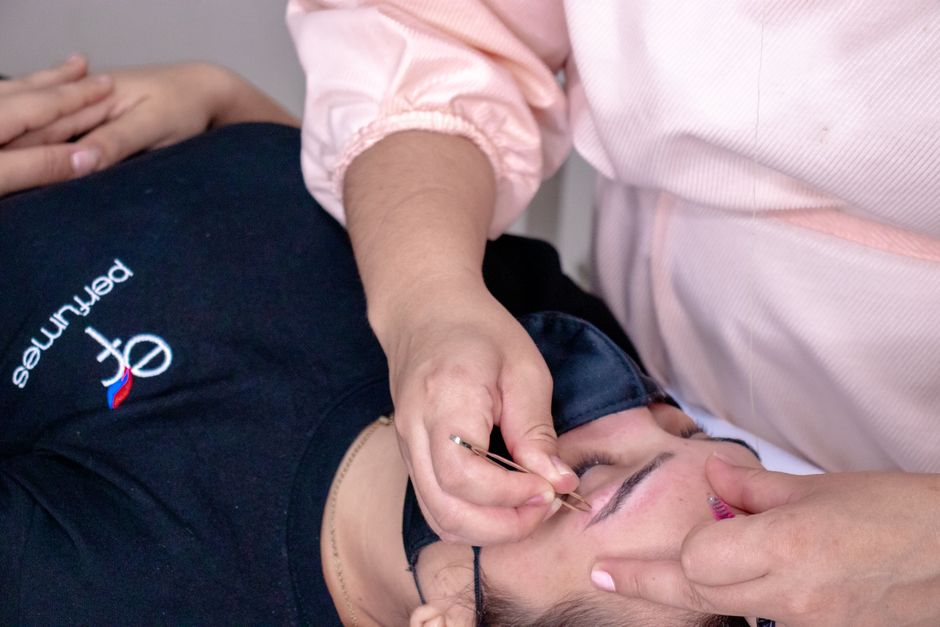
Eyebrows do far more than frame your face. They keep sweat and rain out of your eyes, help you communicate without words, and play a key role in how you recognize other people. These small patches of hair sit above the eye socket on a bony ridge called the brow ridge, and their position is no accident. Evolution shaped them for practical jobs that still matter every single day.
What Is The Purpose For Eyebrows? Simplified
The main purpose of eyebrows is protection. They redirect sweat, rainwater, and oil away from your eyes. Without them, moisture would flow straight down your forehead and into your eyes, blurring your vision and causing irritation.
Eyebrows also serve a second major function: social communication. Humans read emotions from eyebrow movements in a fraction of a second. Raised brows signal surprise or recognition. Lowered brows signal anger or concentration. These movements are so important that losing eyebrow function can make it harder for others to read your emotional state.
There is a third function that is easy to overlook. Eyebrows help with face recognition. Research has shown that removing eyebrows from a photo of a familiar face makes it harder to identify that person than removing the eyes themselves. Your brain uses the shape, arch, and position of eyebrows as a visual anchor point.
How Do Eyebrows Protect Your Eyes?
The arch shape of the eyebrow is not decorative. It is designed to channel moisture away from the center of your face. When sweat runs down your forehead, the brow bone and the hairs catch it and direct it toward the sides of your face. This keeps your eyes clearer during physical activity, hot weather, and rain.
The hairs themselves are coarse and angled. They point outward and downward, which helps deflect small particles like dust and debris. The brow ridge also provides a physical barrier. It absorbs impact from falls or bumps that might otherwise strike the eye directly.
This protective role is why eyebrows are among the first facial features to develop in the womb. They appear early in fetal development, before most other facial hair. Their early presence suggests they are not an afterthought but a functional necessity.
Why Are Eyebrows Important for Communication?
Humans have a remarkable ability to read emotion from eyebrows alone. A quick raise of both brows often signals greeting or recognition. A single raised brow can indicate skepticism or curiosity. Knitted brows usually mean concentration, confusion, or anger.
These movements are controlled by the frontalis muscle, which lifts the brows, and the corrugator and procerus muscles, which pull them together and down. These muscles are among the most expressive in the human body. They work automatically, often before you consciously decide to show an emotion.
Eyebrow movement is also tied to speech. People raise their brows to emphasize certain words or to signal that they are about to speak. Listeners raise their brows to show they are following along. This nonverbal layer of conversation is so deeply wired that even people born blind use eyebrow movements when they speak.
Some research suggests that exaggerated eyebrow movements may have helped early humans form larger social groups. A study published in Nature Ecology and Evolution proposed that highly mobile eyebrows allowed for more nuanced nonverbal communication, which supported cooperation among larger groups of people.





What Happens When Eyebrows Are Missing?
People who lose their eyebrows through alopecia, chemotherapy, burns, or over-plucking often report unexpected difficulties. Vision is less protected from sweat and rain. But the bigger complaint is usually social.
Without eyebrows, faces appear constantly surprised or blank. Other people struggle to read emotion. A person with no eyebrows may be perceived as tired, angry, or unapproachable even when they feel perfectly neutral. This is not vanity. It is a real breakdown in nonverbal communication.
Medical conditions that cause eyebrow loss include alopecia areata, an autoimmune condition that attacks hair follicles, and frontal fibrosing alopecia, a scarring condition that affects the hairline and brows. Chemotherapy can also cause temporary eyebrow loss. In most cases, brows grow back once the underlying cause is treated, but regrowth can take months.
Some people choose to draw on eyebrows or get microblading, a form of semi-permanent tattooing. These options restore the visual frame of the face and can improve both appearance and the ability to communicate nonverbally.
Do Eyebrows Grow Back?
Yes, eyebrows generally grow back, but they grow slowly. The eyebrow hair growth cycle lasts about four months, compared to several years for scalp hair. This means it can take three to six months to see full regrowth after over-plucking or temporary loss.
Repeated plucking can damage the hair follicle over time. If the follicle is permanently damaged, the hair may not return. This is why dermatologists advise against aggressive over-plucking. The same applies to waxing and threading, though these methods are less likely to cause permanent damage than repeated plucking of the same follicle.
There is no clinically proven topical treatment that speeds up eyebrow regrowth. Some dermatologists recommend applying a prescription medication called bimatoprost, which is approved for eyelash growth and sometimes used off-label for brows. Evidence is limited, and results vary. No over-the-counter serum has been proven in large clinical trials to regrow eyebrows.
Why Do Eyebrows Thin with Age?
Eyebrow thinning is a normal part of aging. Hair follicles produce thinner, shorter, and lighter hairs over time. The rate of hair growth also slows. This affects eyebrows just as it affects scalp hair, though the pattern is different.
Hormonal changes play a role. Lower levels of estrogen and thyroid hormones can contribute to hair thinning. So can nutritional deficiencies, though these are less common in people who eat a balanced diet.
Certain medications and medical conditions accelerate eyebrow thinning. Thyroid disorders, in particular, are known to cause thinning of the outer third of the eyebrows. If you notice sudden or patchy eyebrow loss, it is worth mentioning to your doctor. It can be a clue to an underlying health issue.
Do Eyebrow Shapes Matter for Health?
The natural shape of your eyebrows is determined by your bone structure and genetics. There is no single “correct” shape. Trends change, but the underlying anatomy does not.
What matters for health is avoiding damage to the hair follicles. Over-plucking, especially in the same spot repeatedly, can permanently stop hair growth in that area. Waxing can cause burns or infections if done improperly. Tattooing or microblading carries a risk of infection if tools are not sterile.
If you modify your eyebrows, the safest approach is to work with your natural shape. Pluck only stray hairs outside the main brow line. Avoid making the brow too thin, because thin brows provide less protection and are harder to read emotionally.
Frequently Asked Questions
Can you live without eyebrows?
Yes, you can live without eyebrows, but you lose some protection from sweat and debris and you lose a major channel of nonverbal communication.
Why did humans evolve eyebrows?
Eyebrows evolved primarily to protect the eyes from moisture and debris, and they later became important for social communication and face recognition.
How long does it take for eyebrows to grow back?
Eyebrows typically take three to six months to grow back after temporary loss, because the eyebrow hair growth cycle lasts about four months.
Do eyebrows stop growing at a certain age?
Eyebrows do not stop growing entirely, but they grow slower and thinner with age, and the hairs can become lighter and more sparse.
