
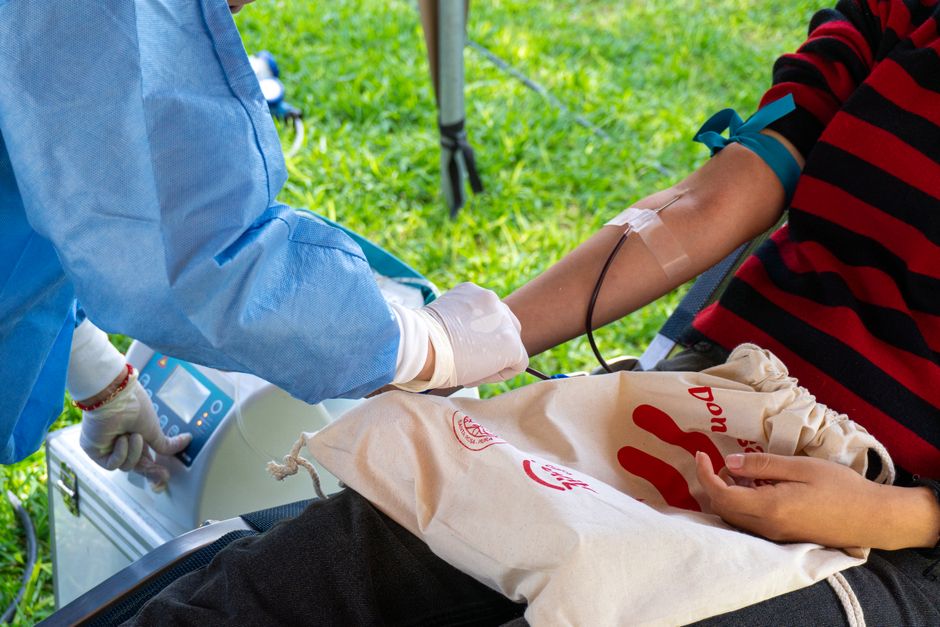
Donating plasma takes about 90 minutes from check-in to finish, though the plasma collection itself usually runs 30 to 45 minutes. The process starts with a health screening and a finger-stick blood test to check your protein and hemoglobin levels. If you pass, a needle goes into a vein in your arm, and a machine draws your blood, separates the plasma, and returns the blood cells and platelets to your body. You can donate plasma as often as twice in a seven-day period, with at least one day between donations, according to FDA guidelines for source plasma collection.
What Is The Process Of Donating Plasma?
Plasma is the liquid part of your blood. It is roughly 90 percent water, and the rest is proteins, salts, hormones, and waste products. The proteins in plasma do real work — clotting factors, albumin, and antibodies that fight infection. That is why plasma is collected: it becomes therapies for people with bleeding disorders, immune deficiencies, and other conditions.
The donation itself uses a process called plasmapheresis. The word breaks down simply: plasma removal. You sit in a reclining chair. A phlebotomist inserts a needle into a vein, usually in the crook of your arm. Tubing carries blood to a machine that spins it. Centrifugal force separates the heavier red cells and platelets from the lighter plasma.
The machine keeps the plasma — typically around 690 to 880 milliliters per donation, depending on your body weight — and returns the rest of your blood to you, mixed with a small amount of saline to replace the fluid volume. This draw-and-return cycle repeats several times during a single session.
Step by step, what happens
- Registration and identity check, including a photo ID and proof of address at many centers
- A health questionnaire covering medications, travel, and recent illness
- Vital signs: blood pressure, pulse, temperature, and weight
- A finger-stick test for total protein and hemoglobin or hematocrit
- A brief physical exam at your first donation, and a review of your health history
- Needle insertion and the plasmapheresis cycle
- A few minutes of rest, a snack, and fluids before you leave
The needle stays in for the whole session. Some people feel a cool sensation when saline or returned blood flows back in. That is normal. A tingling around the mouth or fingers can happen from a temporary drop in blood calcium caused by the citrate anticoagulant used to keep the blood from clotting in the tubing. Staff are trained to watch for it and slow the return rate if it occurs.
Who Is Eligible To Donate Plasma?
Basic eligibility centers on three things: age, weight, and health status. Most US collection centers require donors to be 18 or older, though some states allow 16- and 17-year-olds with parental consent. A minimum weight of 110 pounds (50 kilograms) is standard because plasma volume collected is scaled to body weight.
You generally need to be in good health and free of certain infections. Screening includes testing for HIV, hepatitis B and C, and syphilis. These tests are required, and a positive result leads to deferral and notification. Some centers also test for other markers depending on current guidance.
Certain conditions and medications disqualify you, at least temporarily. A history of certain cancers, organ transplants, or blood-borne infection is typically a permanent deferral. Recent tattoos or piercings may trigger a waiting period in some states, though this varies widely and has loosened in many places.
You should not donate if you are currently sick, running a fever, or recovering from an infection. Plasma carries antibodies and proteins, and collection centers want donors at baseline health.
How Often Can You Donate Plasma?
The FDA allows source plasma donation twice within a seven-day period, with at least 48 hours (two days) between the two donations. This is more frequent than whole blood donation, which is generally limited to every 56 days, because plasma is mostly water and your body replaces the fluid volume relatively quickly.
Plasma proteins take longer to rebuild than the water does. Albumin and antibodies are synthesized by the liver and immune cells, and full protein recovery takes days to weeks depending on the individual. That is why the two-per-week limit exists — it balances the need for plasma products against donor safety.
Some people donate for years without issue. Others find that frequent donation leaves them tired or lowers their protein levels enough that the finger-stick test fails. If your total protein reads low, the center will defer you for a period to let it recover. This is a safety mechanism, not a punishment.





What Should You Do Before And After Donating?
Preparation matters more than most people expect. Hydration is the single biggest factor in how a donation feels. Drink water in the hours before your appointment. Plasma is about 90 percent water, and replacing the volume you lose depends on how well hydrated you were going in.
Eat a normal meal within a few hours of donating, and include protein. Avoid high-fat meals right before — they can cloud the plasma and, in some cases, cause the sample to be rejected. Skip alcohol for at least 24 hours before and after.
After donating, drink more fluids than usual for the rest of the day. Keep the bandage on for several hours. Avoid heavy lifting or intense exercise for the remainder of the day. Most centers recommend this, and it is reasonable even though the evidence for a specific recovery protocol is limited.
If you feel lightheaded, sit or lie down and raise your legs. Tell staff before you leave if anything feels off. Serious reactions are uncommon, but they do happen, and the most frequent is a vasovagal response — a sudden drop in heart rate and blood pressure that causes faintness.
What Are The Risks And Side Effects?
Most plasma donations go smoothly. The most common side effects are mild and short-lived: bruising at the needle site, fatigue for a few hours, and lightheadedness.
Citrate reactions are the most frequent reaction specific to plasmapheresis. The anticoagulant binds calcium in your blood temporarily, which can cause tingling in the lips, fingers, or feet, and occasionally muscle cramps. Slowing the return rate or pausing usually resolves it. Severe reactions are rare.
More serious but uncommon risks include fainting with injury from a fall, nerve irritation from the needle, and hematoma — a collection of blood under the skin. Infection at the needle site is possible but rare with proper technique.
Longer-term concerns center on protein depletion and iron. Plasma donation removes proteins, and frequent donation can lower total protein and albumin levels if your body cannot keep up. Iron loss is lower than with whole blood donation because red cells are returned, but it is not zero. Some research suggests that very frequent plasma donors can develop low immunoglobulin levels, though the evidence is not conclusive and collection centers monitor for this through regular testing.
Is Donating Plasma Safe?
For eligible, healthy donors who follow the recommended schedule, plasma donation has a long track record. The FDA regulates collection centers, and the equipment used is sterile and single-use. You cannot catch a disease from the machine — there is no way for blood from a previous donor to reach you.
The safety profile is not the same for everyone. People who are underweight, anemic, dehydrated, or on certain medications may be deferred or advised against donating. If you have a chronic condition, check with your doctor before your first appointment.
Donation frequency is the variable most within your control. Staying within the two-per-week limit and giving your body time to rebuild protein between sessions is the core of safe practice. Pushing past that limit is where problems tend to show up.
How Does Plasma Donation Compare To Whole Blood Donation?
| Feature | Plasma donation | Whole blood donation |
|---|---|---|
| Time required | About 90 minutes total | About 30 to 45 minutes total |
| What is collected | Plasma only; cells returned | Whole blood (all components) |
| Frequency allowed | Twice in 7 days, 48 hours apart | Every 56 days |
| Volume per donation | About 690–880 mL | About 450–500 mL |
| Fluid replacement | Saline returned with cells | None during donation |
The frequency difference is the practical takeaway. Whole blood donation removes red cells, which take weeks to regenerate. Plasma donation returns those cells, which is why it can be done far more often.
Does Donating Plasma Pay?
Many US plasma collection centers compensate donors. Payment varies by center, by location, and by how often you donate. New donors often receive higher promotional rates for their first several donations. The amounts change frequently and are set by the companies, not by any medical standard.
Whole blood donation at community blood banks is almost always unpaid and voluntary. Plasma collection for manufacturing into therapies is a different model, and compensation is standard in that industry.
If payment is your main reason for donating, know that the health screening is real and not a formality. Centers turn away donors regularly for low protein, low hemoglobin, or elevated blood pressure. Passing the screen means your body is currently able to handle the donation.
Frequently Asked Questions
How long does a plasma donation take?
Plan for about 90 minutes from arrival to leaving, though the actual collection usually takes 30 to 45 minutes. First-time visits run longer because of the added screening and physical exam.
Can you donate plasma if you have low iron?
Low hemoglobin or hematocrit will typically cause a deferral at the finger-stick check. Plasma donation returns your red blood cells, so iron loss is lower than with whole blood donation, but centers still screen for anemia before every donation.
Is it safe to donate plasma twice a week?
The FDA permits two donations in a seven-day period with at least 48 hours between them, and this schedule has been used for years in regulated collection centers. Whether it is right for you depends on your protein levels, hydration, and how your body responds.
What disqualifies you from donating plasma?
Active infection, certain chronic conditions, some medications, and a history of blood-borne infection are common reasons for deferral. Specific rules vary by center and by state, so check with the location you plan to use.
