
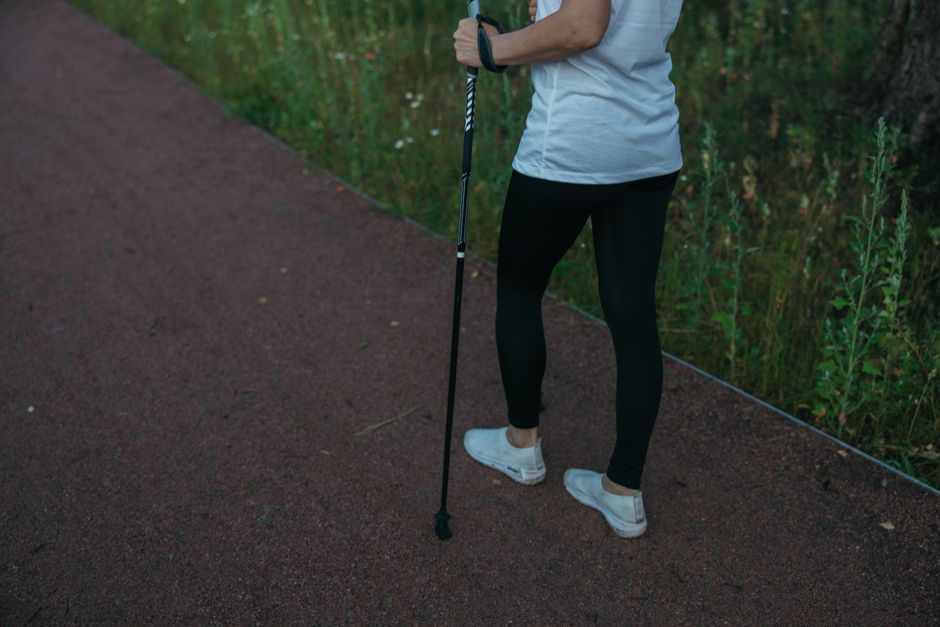
Good walking posture starts with a tall spine, relaxed shoulders, eyes forward, and a natural stride that lands under your body rather than far out in front of it. Your head should sit directly over your shoulders, not pushed forward. The goal is not a rigid military stance. It is a balanced position your muscles can hold without strain.
Most people can improve their walking posture by adjusting a few key points. But it helps to understand what good posture actually involves, why it drifts over time, and what the evidence does and does not support.
What Does Good Walking Posture Actually Look Like?
Good posture is a position of balance. When your body is aligned, your muscles work less to keep you upright. When it is not, certain muscle groups work harder to compensate.
Walking posture is not the same as standing posture. Walking adds movement, so the alignment has to hold while your legs swing and your weight shifts from side to side. That makes it a dynamic skill, not a fixed pose.
From head to toe, a balanced walking position generally involves:
- Head: Level and centered over the shoulders, not jutting forward or tilted down
- Eyes: Focused ahead, roughly 10 to 20 feet in front of you, not on your feet
- Shoulders: Relaxed and level, not pulled up toward the ears or rolled forward
- Spine: Tall with its natural curves intact, not flattened or overly arched
- Arms: Swinging naturally opposite the legs, elbows slightly bent
- Hips: Level, with a small natural rotation as you step
- Feet: Landing under your body, rolling from heel to toe
The spine has natural curves for a reason. They act like a spring, absorbing impact as you move. Trying to hold a perfectly flat back is neither natural nor helpful. The aim is to keep those curves in a balanced range, not to eliminate them.
Why Does Posture Drift Over Time?
Posture changes because of habit, not because your body is failing. The positions you hold most often shape which muscles feel normal to you.
Sitting for long stretches is one of the most common drivers. When you sit with your head forward and shoulders rounded, those positions become familiar. Your nervous system then treats them as your default, even when you stand up.
Muscle balance plays a role too. Some muscles may become tight while opposing muscles become weak. The tight side pulls, the weak side gives, and your alignment shifts. This is a gradual process, usually measured in months and years rather than days.
Age is another factor. Muscle mass and strength tend to decline with age, and this can affect how well you hold an upright position. This is not inevitable, but it is common.
One point worth clarifying: posture is not fixed. It is a set of habits, and habits can change. But change usually takes consistent practice, not a single adjustment.
How Do You Walk With Good Posture From Head To Toe?
Start from the top and work down. Each part builds on the one above it.
Head and neck
Imagine a string gently lifting the crown of your head. Your chin should stay level, not tucked down or pushed up. Avoid looking at your phone or the ground while walking. Your head weighs roughly 10 to 11 pounds, and holding it forward of your shoulders increases the load on your neck muscles.
Shoulders and upper back
Let your shoulders drop away from your ears. Roll them back slightly if they feel rounded forward. Keep them relaxed. Tense shoulders pull your whole upper body out of balance.
Spine and core
Stand tall without stiffening. Your deep abdominal muscles help stabilize your trunk, so a gentle engagement of the core supports the spine. This is not about sucking in your stomach. It is about a mild, steady sense of support.
Hips and pelvis
Keep your hips level. Avoid pushing your pelvis forward or tucking your tailbone under. A neutral pelvis lets your legs swing freely.
Legs and feet
Take natural steps. Your heel should contact the ground first, then your weight rolls forward through the foot to the toes. Avoid overstriding, which means landing with your foot far ahead of your body. Overstriding can increase braking forces and stress on your joints. A comfortable stride that lands under you is generally better.





Does Posture Really Affect Pain and Health?
The relationship between posture and pain is more complicated than most people assume. This is where honesty matters.
Many people believe that poor posture directly causes back and neck pain. The evidence for that claim is mixed. Some studies find a link between certain postures and discomfort. Others find that people with noticeably different postures have no pain at all, and some people with pain have no obvious postural problem.
What is well established is that staying in any one position for a long time, including a “good” one, can cause discomfort. Movement and variety matter. The best posture is often the next one.
Where posture does clearly matter is function. A balanced walking position can support efficient movement, breathing, and balance. Poor balance is a real concern as people age, since it raises the risk of falls. Walking with an upright, stable posture is part of maintaining that stability.
What the evidence does not support is the idea that one specific posture prevents all pain or disease. Claims that fixing your posture will resolve chronic pain are not well supported. Some clinicians focus on posture as part of treatment. Others focus on strength, movement, and gradual activity. Both approaches exist because the evidence is not settled.
Can You Improve Walking Posture at Any Age?
Yes. Posture habits can change at any age, though the process takes time and consistency.
A few approaches are commonly used:
- Body awareness: Simply noticing your position during the day can help. Brief check-ins are more useful than trying to hold perfect posture all day.
- Strengthening: Building strength in the back, core, and hips can support upright alignment. This is a general principle, not a guaranteed fix.
- Stretching: Loosening tight areas, particularly the chest and hip flexors, may help if those areas are limiting your alignment.
- Varying positions: Changing how you sit, stand, and move throughout the day reduces the strain of any single position.
There is no single exercise routine proven to correct posture in everyone. The evidence for specific programs is limited. What is reasonable is a general approach that combines movement, strength, and awareness.
If you have persistent pain, numbness, or balance problems, that is a reason to see a healthcare provider. Posture changes alone are not a substitute for medical evaluation.
What Are Common Posture Mistakes to Avoid?
Several habits work against good walking posture. Recognizing them can help.
- Looking down: Watching your feet or phone pulls your head forward and rounds your upper back.
- Overstriding: Reaching your foot too far ahead can stress your joints and disrupt your rhythm.
- Locking your knees: Keeping legs stiff reduces your natural shock absorption.
- Hunching shoulders: Tension in the neck and shoulders throws off your alignment.
- Clenching your core too hard: Gripping your stomach muscles can interfere with natural breathing.
- Wearing unsupportive shoes: Footwear affects how your whole body moves. Very flat or very worn shoes may change your gait.
None of these are catastrophic on their own. The point is that small habits add up over time.
Does Walking Posture Change How You Breathe?
It can. Your breathing depends partly on the position of your ribcage and diaphragm.
When you slump forward, your ribcage compresses and your diaphragm has less room to move. This can make breathing feel shallower. An upright position gives your lungs and diaphragm more space to work.
This does not mean posture is the main driver of breathing quality. Fitness, lung health, and other factors matter far more. But for everyday walking, staying upright supports easier, more natural breathing.
How Long Does It Take to Change a Posture Habit?
There is no fixed timeline, and anyone who gives you one is guessing. Habit change varies widely from person to person.
What is known about habits in general is that they form through repetition and consistency. Posture is no different. Brief, frequent reminders tend to work better than long, intense efforts. Trying to hold perfect posture for hours usually backfires, because the effort itself creates tension.
A more realistic approach is to check in with your posture several times a day, adjust gently, and let it go. Over weeks and months, the balanced position can start to feel more natural. The pace depends on your starting point, your habits, and how consistent you are.
Frequently Asked Questions
What is the correct posture for walking?
Keep your head level over your shoulders, shoulders relaxed, spine tall with its natural curves, and eyes forward. Land your feet under your body and let your arms swing naturally.
Does poor posture cause back pain?
The evidence is mixed. Some studies link certain postures to discomfort, but many people with poor posture have no pain, and some with pain have no postural problem.
Can you fix bad posture as an adult?
Yes, posture habits can change at any age through awareness, movement, and strengthening. Progress usually takes weeks to months and varies from person to person.
Should you look down while walking?
No. Looking down pulls your head forward and rounds your upper back. Keep your gaze ahead, roughly 10 to 20 feet in front of you.
