
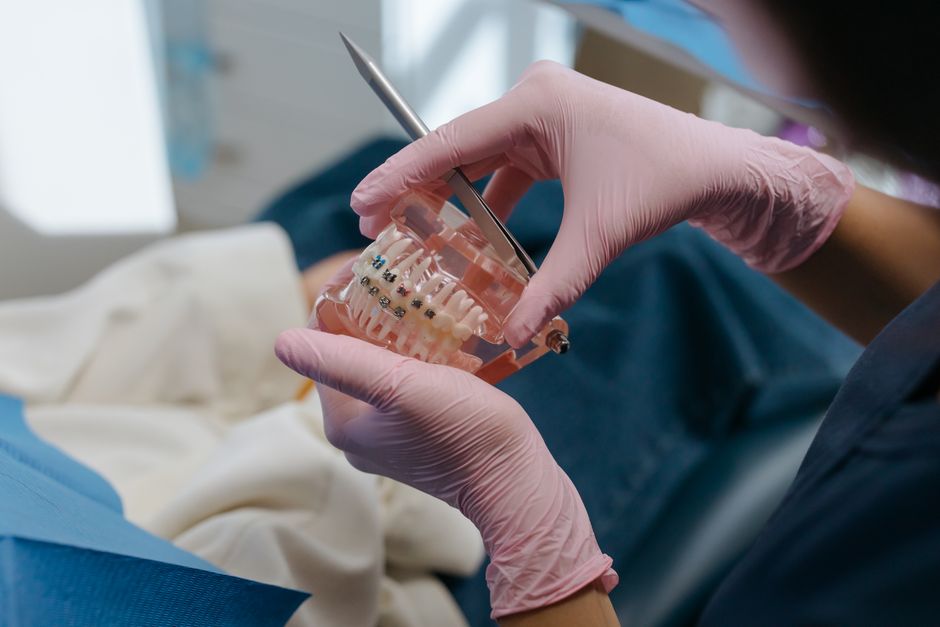
If your orthodontist has mentioned IPR, you may be picturing drills, pain, or permanent damage to your teeth. None of those are accurate. IPR stands for interproximal reduction, a controlled procedure that removes a very small amount of enamel from the sides of teeth to create space or reshape them. It is also called enamel reduction, slenderizing, or stripping. It is one of the most common procedures in orthodontics, and for many patients it is a routine part of treatment rather than a sign that something has gone wrong.
What Is IPR In Orthodontics Procedure Explained
IPR is the deliberate removal of a thin layer of enamel from the sides of teeth — the surfaces that face neighboring teeth, called proximal surfaces. The goal is to gain space or improve how teeth fit together.
Enamel is the hard outer layer of your teeth. It does not grow back. That single fact is why IPR is done conservatively, with strict limits on how much can be removed.
Orthodontists use IPR for a few main reasons:
- To create space when teeth are slightly crowded and there is not enough room for them to align
- To reduce the width of teeth so they fit together better, especially in the front of the mouth
- To help close small gaps or adjust tooth shape as part of a broader treatment plan
The procedure itself is usually quick. Your orthodontist may use a thin abrasive strip, a handheld rotary instrument, or a powered device that shaves a controlled amount from the side of each tooth. It often takes only minutes per area.
Most patients feel vibration or pressure rather than pain. The enamel itself has no nerve endings, so the removal of the outer layer is not painful. Sensitivity, when it happens, tends to come from the underlying dentin being closer to the surface afterward.
How Much Enamel Does IPR Remove?
The amount removed is small and carefully measured. This is not a guess — it is a controlled part of the treatment plan.
Typical IPR removes a fraction of a millimeter from each tooth surface. The exact amount depends on the tooth, the space needed, and the orthodontist’s plan. In most cases, the total reduction per tooth stays well within what is considered safe for long-term tooth health.
There is a limit to how much enamel can be removed before the tooth is at risk. Enamel thickness varies by tooth and by person, and the outer layer is thinner on some teeth than others. This is why IPR is planned rather than improvised.
Your orthodontist may measure enamel thickness beforehand, sometimes with imaging, to confirm there is enough to work with safely. If a tooth has thin enamel, a large filling, or a crown, that tooth may be skipped or handled differently.
Is IPR Painful?
For most people, IPR is not painful during the procedure. Enamel has no nerves, so the removal itself does not trigger pain signals.
What you may notice:
- A vibrating or grinding sensation
- Pressure against the tooth
- A brief scraping sound
Afterward, some patients report mild sensitivity, especially to cold. This usually fades as the tooth adjusts, though the timeline varies from person to person. If sensitivity persists or worsens, tell your orthodontist.
If you have concerns about discomfort, ask about it before the appointment. Some orthodontists apply a protective agent afterward to reduce sensitivity. Whether this helps consistently is not something the evidence settles firmly, so treat it as a comfort measure rather than a guaranteed fix.





Does IPR Damage Teeth?
When done within safe limits, IPR does not damage teeth. This is the position supported by decades of orthodontic use and clinical research.
The reason is straightforward: enamel is thick enough on most teeth to allow a small, controlled reduction without exposing the sensitive inner layers. The key words are small and controlled.
Problems arise when too much enamel is removed, when the wrong teeth are selected, or when the procedure is done without proper planning. In those cases, the tooth can become more sensitive or more vulnerable over time.
This is why the skill and judgment of the orthodontist matter more than the tool used. A conservative approach protects the tooth. An aggressive approach does not.
One point worth understanding: because enamel does not regenerate, any reduction is permanent. That is not a reason to fear IPR — it is a reason to make sure it is planned properly and done by someone qualified.
Why Do Orthodontists Choose IPR Instead of Extraction?
Extraction removes an entire tooth. IPR removes a sliver of enamel from several teeth. When the goal is to gain a small amount of space, IPR is often the less invasive option.
Orthodontists generally prefer to keep natural teeth when possible. Removing a tooth changes the bite, the arch shape, and sometimes the profile of the face. IPR avoids those changes when the space needed is modest.
IPR is not a replacement for extraction in every case. If crowding is severe, or if there is a significant size mismatch between the upper and lower teeth, extraction may still be the better choice. The decision depends on the specific case.
Some treatment plans use both. IPR may be applied in one area while an extraction is done in another. This is not unusual — it reflects the fact that different parts of the mouth may need different solutions.
Is IPR Safe Long-Term?
IPR has been used in orthodontics for many decades. The general clinical view is that when it is performed within established limits, it does not compromise the long-term health of the teeth.
That said, “safe” here means safe within the boundaries the profession has set. It does not mean IPR can be done freely or repeated without limit.
Long-term safety depends on several factors:
- How much enamel is removed from each tooth
- Whether the remaining enamel is thick enough to protect the tooth
- Whether the patient maintains good oral hygiene afterward
- Whether the tooth had pre-existing issues like cracks or large fillings
Patients with a history of tooth decay, gum disease, or enamel erosion may need extra care. In those cases, the orthodontist may limit IPR or avoid it on certain teeth.
The evidence on long-term outcomes is generally reassuring, but it is not unlimited. Most studies follow patients for a period of years, not decades. This is worth knowing if you want a complete picture.
What Should You Ask Before Agreeing to IPR?
You are allowed to ask questions before any procedure. A good orthodontist expects it.
Consider asking:
- How much enamel will be removed from each tooth?
- Why is IPR being recommended instead of another option?
- Have you measured my enamel thickness?
- What are the alternatives if I decline IPR?
- What happens if I decide not to do it?
If you are uncomfortable with the answers, you can ask for a second opinion. This is a normal and reasonable step.
One clarification that often helps: IPR is not a cosmetic shortcut. It is a mechanical tool for creating space. It is chosen because it solves a specific problem in a specific way, not because it is easier than other options.
If your orthodontist cannot explain why IPR is needed in your case, that is worth noting. You deserve a clear answer.
Frequently Asked Questions
Is IPR painful?
No, IPR is not typically painful because enamel has no nerve endings. You may feel vibration or pressure during the procedure, and some people notice mild sensitivity afterward.
Does enamel grow back after IPR?
No, enamel does not regenerate. Any enamel removed during IPR is permanently gone, which is why the procedure is done conservatively and within safe limits.
How much enamel does IPR remove?
IPR removes a fraction of a millimeter from each tooth surface, and the exact amount depends on the treatment plan. Your orthodontist may measure enamel thickness beforehand to confirm it is safe.
Can I refuse IPR?
Yes, you can decline IPR, but it may affect what your orthodontist can achieve with your treatment. Ask about alternatives and what the outcome might look like without it.
