

When people talk about “the pregnancy hormone,” they usually mean human chorionic gonadotropin, or hCG. This is the hormone that pregnancy tests detect. It is made by cells that form the placenta, and it appears in the blood and urine shortly after a fertilized egg attaches to the uterus. hCG is the earliest reliable chemical sign of pregnancy, but it is not the only hormone that matters during the nine months that follow.
What Does hCG Actually Do?
hCG has one main job in early pregnancy: it tells the ovaries to keep producing progesterone. Without hCG, the ovaries would stop making progesterone, the uterine lining would shed, and a pregnancy could not continue.
Progesterone is the hormone that keeps the uterine lining thick and stable. It prevents the uterus from contracting and expelling the embryo. In a non-pregnant cycle, progesterone levels drop and menstruation begins. In early pregnancy, hCG prevents that drop.
hCG also supports the growth of the placenta itself. Some research suggests it helps the uterine lining develop blood vessels to supply the embryo, though this is still being studied.
When Does hCG Appear and How Fast Does It Rise?
hCG first becomes detectable about 8 to 10 days after ovulation, which is around the time a fertilized egg implants in the uterus. Blood tests can detect it slightly earlier than urine tests. Home urine tests are generally reliable by the first day of a missed period, though some sensitive tests claim to work a few days earlier.
In a healthy early pregnancy, hCG levels double roughly every 48 to 72 hours. This rapid rise continues for the first 8 to 10 weeks. After that, levels peak and then slowly decline for the remainder of the pregnancy.
This doubling pattern is why doctors sometimes order two blood tests two days apart. If hCG is rising at the expected rate, it is a reassuring sign. If it is rising slowly or falling, it may indicate a problem such as an ectopic pregnancy or a miscarriage. One single hCG value is rarely enough to diagnose anything on its own.
What Is a Normal hCG Level?
There is no single normal hCG level for any given day of pregnancy. The range is very wide. One woman may have an hCG of 100 at four weeks while another has 500, and both may have perfectly healthy pregnancies.
What matters more than any single number is the trend over time. Still, general reference ranges are commonly used:
- 3 weeks: 5 to 50 mIU/mL
- 4 weeks: 5 to 426 mIU/mL
- 5 weeks: 18 to 7,340 mIU/mL
- 6 weeks: 1,080 to 56,500 mIU/mL
- 7 to 8 weeks: 7,650 to 229,000 mIU/mL
- 9 to 12 weeks: 25,700 to 288,000 mIU/mL
These ranges come from clinical reference data and are meant as general guidance, not a strict checklist. A single low reading does not automatically mean a problem. A single high reading does not automatically mean twins, despite what many people assume.



Why Do Some Pregnancy Tests Show a False Negative?
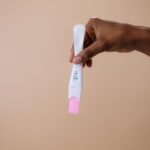
A false negative happens when a woman is pregnant but the test says she is not. The most common reason is testing too early. If hCG has not yet reached the detection threshold of the test, the result will be negative even though pregnancy is underway.
Most home tests detect hCG at levels of 20 to 25 mIU/mL. If a woman tests several days before her missed period, her hCG may still be below that level. Testing again a few days later usually solves the problem.
Another cause of false negatives is diluted urine. Testing first thing in the morning, when urine is most concentrated, gives the most accurate result. Drinking large amounts of fluid before testing can temporarily lower urine hCG concentration below the test’s cutoff.
What Are the Other Major Pregnancy Hormones?
hCG gets the attention because it is the diagnostic marker, but it is not the hormone that sustains pregnancy long-term. That role belongs to progesterone and estrogen.
After about the 8th to 10th week, the placenta takes over progesterone production from the ovaries. From that point forward, hCG levels decline because the placenta no longer needs the signal to keep producing progesterone. The placenta produces its own.
Estrogen levels also rise steadily through pregnancy. Estrogen helps the uterus grow, increases blood flow to the pelvic area, and stimulates breast tissue development. It also plays a role in preparing the body for labor at the end of pregnancy.
Two other hormones deserve mention. Relaxin softens the ligaments and joints in the pelvis to prepare for childbirth. Human placental lactogen, also called HPL, helps regulate the mother’s metabolism and directs nutrients to the growing fetus.
Can hCG Levels Predict Miscarriage or Ectopic Pregnancy?
hCG levels can provide important information, but they cannot predict miscarriage with certainty. A slow rise or a plateau may raise concern, but some pregnancies with irregular hCG patterns still continue normally.
Ectopic pregnancy is a different situation. In an ectopic pregnancy, the embryo implants outside the uterus, usually in a fallopian tube. hCG levels in ectopic pregnancies tend to rise more slowly than in normal uterine pregnancies, but this is not always the case.
If an ectopic pregnancy is suspected, doctors typically use a combination of hCG blood tests and ultrasound. An ultrasound can usually detect a gestational sac in the uterus once hCG reaches a certain level, often around 1,500 to 2,000 mIU/mL. If the sac is not visible at that level, it raises the possibility of an ectopic pregnancy or a failed pregnancy.
It is important to understand that hCG alone cannot diagnose either condition. Imaging and clinical evaluation are required.
What About hCG and Morning Sickness?
Many women assume hCG causes nausea and vomiting in early pregnancy. The connection makes sense because both peak around the same time. hCG levels are highest around weeks 8 to 10, and that is also when morning sickness is often worst.
However, the evidence is not completely clear. Some studies have found a correlation between higher hCG levels and more severe nausea, but other research has not confirmed a direct cause-and-effect relationship. Estrogen also rises steeply in early pregnancy, and estrogen is known to trigger nausea in some women, including those taking estrogen-containing medications.
What is clear is that morning sickness is common. It affects most pregnancies to some degree, and it typically improves by the end of the first trimester. Severe vomiting that prevents eating or drinking is called hyperemesis gravidarum and requires medical attention.
Can hCG Be Used for Weight Loss or Fertility Treatment?
hCG has been marketed as a weight loss aid for decades. The hCG diet typically combines very low-calorie eating with hCG injections or drops. The claim is that hCG suppresses hunger and causes fat to be burned from specific areas.
No large, well-designed study has confirmed that hCG improves weight loss beyond the effect of the severe calorie restriction alone. The Food and Drug Administration has not approved hCG for weight loss. The evidence does not support the marketing claims.
hCG does have legitimate medical uses. It is used in fertility treatment to trigger ovulation in women undergoing assisted reproduction. It is also used in some men to stimulate testosterone production. These uses are supported by clinical evidence and are prescribed by doctors for specific medical reasons.
How Long Does hCG Stay in the Body After Pregnancy?
After a pregnancy ends, whether by birth, miscarriage, or abortion, hCG levels gradually fall to zero. The speed depends on how high the levels were to begin with.
After a full-term birth, hCG typically becomes undetectable within 2 to 4 weeks. After a miscarriage, it may take a similar amount of time, depending on how far along the pregnancy was. After an early miscarriage, hCG may clear within a week or two.
Doctors sometimes monitor hCG after a miscarriage or abortion to confirm it has returned to zero. If levels remain elevated, it may indicate retained tissue that needs medical attention.
Are There Other Conditions That Raise hCG?
hCG is not exclusive to pregnancy. Certain tumors can produce hCG, including some cancers of the ovary, testicle, liver, lung, and stomach. This is rare, but it is why a positive pregnancy test in a woman who is not pregnant warrants medical evaluation.
Some women also have a condition called a molar pregnancy, where abnormal tissue grows in the uterus instead of a normal embryo. Molar pregnancies produce very high hCG levels. This condition requires treatment and follow-up because it carries a small risk of developing into cancer.
Certain medications containing hCG can also cause positive pregnancy tests. If you are taking fertility medications that include hCG, a positive test may simply reflect the medication rather than pregnancy.
Frequently Asked Questions
How soon after conception is hCG detected?
hCG can be detected in blood about 8 to 10 days after ovulation, which is a few days before a missed period. Urine tests typically become positive around the time of the missed period.
Can hCG levels be too high in early pregnancy?
High hCG levels can occur with multiple pregnancies, molar pregnancy, or simply normal variation. A single high reading is not a diagnosis and requires ultrasound evaluation to determine the cause.
Do low hCG levels always mean miscarriage?
No. Low levels might indicate a pregnancy that is earlier than expected, or they may be normal for that particular pregnancy. Serial measurements over time provide more information than a single reading.
Is the hCG diet safe and effective?
The hCG diet is not supported by clinical evidence for weight loss, and the severe calorie restriction it requires can be unsafe. hCG is not approved by the FDA for this purpose.
